
 Not a fan
I think I just didn't get it. The humor, the style, I don't think at that time it wasn't my cup of tea.
Review 1 of 2
 Others: Mostly positive
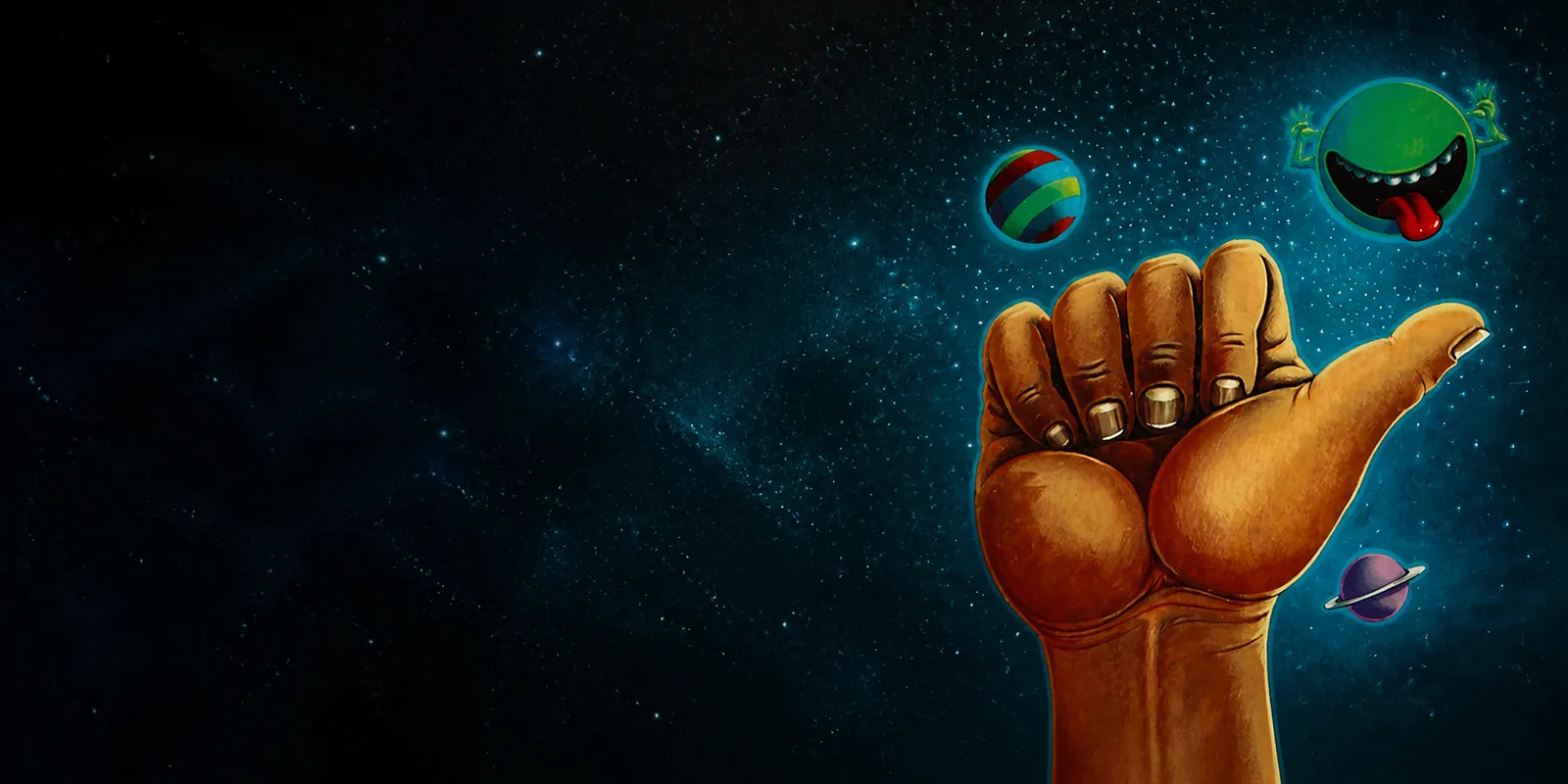
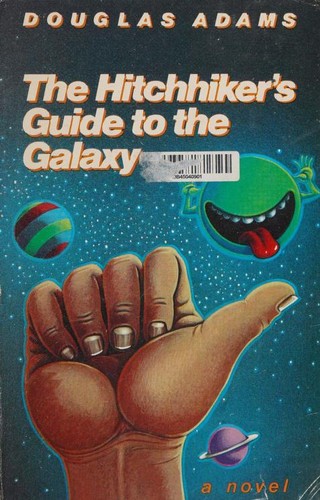
The Hitchhiker's Guide to the Galaxy is the first of six books in the Hitchhiker's Guide to the Galaxy comedy science fiction "hexalogy" by Douglas Adams. The novel is an adaptation of the first four parts of Adams's radio series of the same name. The novel was first published in London on 12 October 1979. It sold 250,000 copies in the first three months. The namesake of the novel is The Hitchhiker's Guide to the Galaxy, a fictional guide book for hitchhikers (inspired by the Hitch-hiker's Guide to Europe) written in the form of an encyclopaedia.
Genres: science fiction
Lists: …
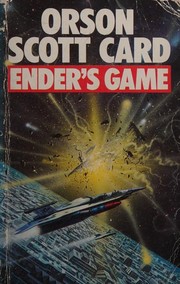
Orson Scott Card
1985 · 324 pages · 17 reviews
 Others: Overwhelmingly positive
Ender's Game is a 1985 military science fiction novel by American author Orson Scott Card. Set at an unspecified date in Earth's future, the novel presents an imperiled humankind after two conflicts with the Formics, an insectoid alien species they dub the "buggers". In preparation for an anticipated third invasion, children, including the novel's protagonist, Andrew "Ender" Wiggin, are trained from a very young age by putting them through increasingly difficult games, including some in zero gravity, where Ender's tactical genius is revealed. The book originated as a short story of the same name, published in the August 1977 issue of Analog Science Fiction and Fact. The novel was published on January 15, 1985. Later, by elaborating on characters and plotlines depicted in the novel, Card was able to write additional books in the Ender's Game series. Card also released an updated version of Ender's Game in 1991, changing some political facts to reflect the times more accurately (e.g., to include the recent collapse of the Soviet Union and the end of the Cold War). The novel has been translated into 34 languages. Reception of the book has been mostly positive. It has become suggested reading for many military organizations, including the United States Marine Corps. Ender's Game was recognized as "best novel" by the 1985 Nebula Award[3] and the 1986 Hugo Award[4] in the genres of science fiction and fantasy. Its four sequels—Speaker for the Dead (1986), Xenocide (1991), Children of the Mind (1996), and Ender in Exile (2008)—follow Ender's subsequent travels to many different worlds in the galaxy. In addition, the later novella A War of Gifts (2007) and novel Ender's Shadow (1999), plus other novels in the Shadow saga, take place during the same time period as the original.
What made the match, strongest first
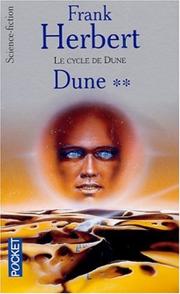
Frank Herbert
1969 · 256 pages · 12 reviews
 Others: Mixed
Book Two in the Magnificent Dune Chronicles—the Bestselling Science Fiction Adventure of All Time Dune Messiah continues the story of Paul Atreides, better known—and feared—as the man christened Muad’Dib. As Emperor of the known universe, he possesses more power than a single man was ever meant to wield. Worshipped as a religious icon by the fanatical Fremen, Paul faces the enmity of the political houses he displaced when he assumed the throne—and a conspiracy conducted within his own sphere of influence. And even as House Atreides begins to crumble around him from the machinations of his enemies, the true threat to Paul comes to his lover, Chani, and the unborn heir to his family’s dynasty...
What made the match, strongest first
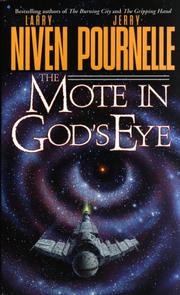
Larry Niven
1974 · 560 pages · 6 reviews
Others: Leaning positiveScience fiction classic about the rise, fall and subsequent rise of a civilization where the peak catastrophe is known as the "crazy eddy point". Introduces the concept of frictionless toilets that don't have any water in them but I suspect the authors didn't think it all the way through - I don't recall a negative air pressure that would keep odours in their rightfull place. Nevertheless a fascinating read. I haven't read this for donkeys years which is why I'm searching for an e-copy.
What made the match, strongest first
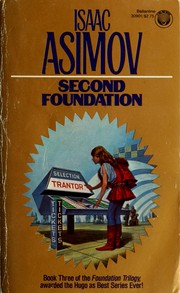
Isaac Asimov
1953 · 226 pages · 3 reviews
Others: Leaning negativeAfter years of struggle, the Foundation lay in ruins -- destroyed by the mutant mind power of the Mule. But it was rumored that there was a Second Foundation hidden somewhere at the end of the Galaxy, established to preserve the knowledge of mankind through the long centuries of barbarism. The Mule had failed to find it the first time -- but now he was certain he knew where it lay. The fate of the Foundation rests on young Arkady Darell, only fourteen years old and burdened with a terrible secret. As its scientists girded for a final showdown with the Mule, the survivors of the First Foundation began their desperate search. They too wanted the Second Foundation destroyed... before it destroyed them.
What made the match, strongest first
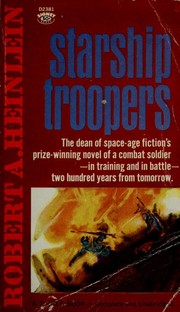
Robert A. Heinlein
1959 · 222 pages · 4 reviews
Others: Leaning positiveStarship Troopers takes place in the midst of an interstellar war between the Terran Federation of Earth and the Arachnids (referred to as "The Bugs") of Klendathu. It is narrated as a series of flashbacks by Juan Rico, and is one of only a few Heinlein novels set out in this fashion. The novel opens with Rico aboard the corvette Rodger Young, about to embark on a raid against the planet of the "Skinnies," who are allies of the Arachnids. We learn that he is a cap(sule) trooper in the Terran Federation's Mobile Infantry. The raid itself, one of the few instances of actual combat in the novel, is relatively brief: the Mobile Infantry land on the planet, destroy their targets, and retreat, suffering a single casualty in the process. The story then flashes back to Rico's graduation from high school, and his decision to sign up for Federal Service over the objections of his father. This is the only chapter that describes Rico's civilian life, and most of it is spent on the monologues of two people: retired Lt. Col. Jean V. Dubois, Rico's school instructor in "History and Moral Philosophy," and Fleet Sergeant Ho, a recruiter for the armed forces of the Terran Federation. Dubois serves as a stand-in for Heinlein throughout the novel, and delivers what is probably the book's most famous soliloquy on violence, and how it "has settled more issues in history than has any other factor." Fleet Sergeant Ho's monologues examine the nature of military service, and his anti-military tirades appear in the book primarily as a contrast with Dubois. (It is later revealed that his rants are calculated to scare off the weaker applicants). Interspersed throughout the book are other flashbacks to Rico's high school History and Moral Philosophy course, which describe how in the Terran Federation of Rico's day, the rights of a full Citizen (to vote, and hold public office) must be earned through some form of volunteer Federal service. Those residents who have not exercised their right to perform this Federal Service retain the other rights generally associated with a modern democracy (free speech, assembly, etc.), but they cannot vote or hold public office. This structure arose ad hoc after the collapse of the 20th century Western democracies, brought on by both social failures at home and military defeat by the Chinese Hegemony overseas (assumed looking forward into the late 20th century from the time the novel was written in the late 1950s). In the next section of the novel Rico goes to boot camp at Camp Arthur Currie, on the northern prairies. Five chapters are spent exploring Rico's experience entering the service under the training of his instructor, Career Ship's Sergeant Charles Zim. Camp Currie is so rigorous that less than ten percent of the recruits finish basic training; the rest either resign, are expelled, or die in training. One of the chapters deals with Ted Hendrick, a fellow recruit and constant complainer who is flogged and expelled for striking a superior officer. Another recruit, a deserter who committed a heinous crime while AWOL, is hanged by his battalion. Rico himself is flogged for poor handling of (simulated) nuclear weapons during a drill; despite these experiences he eventually graduates and is assigned to a unit. At some point during Rico's training, the 'Bug War' has begun to brew, and Rico finds himself taking part in combat operations. The war "officially" starts with an Arachnid attack that annihilates the city of Buenos Aires, although Rico makes it clear that prior to the attack there were plenty of "'incidents,' 'patrols,' or 'police actions.'" Rico briefly describes the Terran Federation's loss at the Battle of Klendathu where his unit is decimated and his ship destroyed. Following Klendathu, the Terran Federation is reduced to making hit-and-run raids similar to the one described at the beginning of the novel (which, chronologically would be placed between Chapters 10 and 11). Rico meanwhile finds himself posted to Rasczak's Roughnecks, named after Lieutenant Rasczak (his first name is never given). This part of the book focuses on the daily routine of military life, as well as the relationship between officers and non-commissioned officers, personified in this case by Rasczak and Sergeant Jelal. Eventually, Rico decides to become a career soldier and attends Officer Candidate School, which turns out to be just like boot camp, only "squared and cubed with books added."[15] Rico is commissioned a temporary Third Lieutenant as a field-test final exam and commands his own unit during Operation Royalty; eventually he graduates as a Second Lieutenant and full-fledged officer. The final chapter serves as more of a coda, depicting Rico aboard the Rodger Young as the lieutenant in command of Rico's Roughnecks, preparing to drop to Klendathu as part of a major strike, with his father (having joined the Service earlier in the novel) as his senior sergeant and a Third Lieutenant-in-training of his own under his wing.
What made the match, strongest first
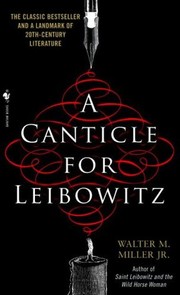
Walter M. Miller Jr.
1959 · 320 pages · 4 reviews
Others: MixedHighly unusual After the Holocaust novel. In the far future, 20th century texts are preserved in a monastery, as "sacred books". The monks preserve for centuries what little science there is, and have saved the science texts and blueprints from destruction many times, also making beautifully illuminated copies. As the story opens to a world run on a basically fuedal lines, science is again becoming fashionable, as a hobby of rich men, at perhaps 18th or early 19th century level of comprehesion. A local lord, interested in science, comes to the monastery. What happens after that is an exquisitely told tale, stunning and extremely moving, totally different from any other After the Holocaust story
What made the match, strongest first
Not a fanI think I just didn't get it. The humor, the style, I don't think at that time it wasn't my cup of tea.
Loved itExtremely happy about the complete set of Hitchhiker's Guide to the Galaxy... and I have read the first one... I think I've read like a couple, but it's been so long now that I can't quite recall exactly where I stopped... cuz I do love them.
Loved itI'm also desperate, desperate to own the Folio Society editions of the Hitchhiker's Guide to the Galaxy series by Douglas Adams cuz one of my favorite books and I think they're just absolutely stunning.
Loved itI loved both of them I'm glad I finally read them but I don't think either of them are like life-changing all-time favorites
Loved itthis book will make you laugh out loud and then make you look at our society in a totally different way
MixedI found very middling another big classic that I just it just isn't for me I don't really think it's all that funny there's a few inventive ideas in it I like the improbability drive if I remember that correctly but I thought that the humor fell flat
Loved itThis is one of the few sci-fi books that I've ever enjoyed. I think it's really great. I love that it's ridiculous and revels in its own absurdity.
Loved itI was laughing so frequently in this book and that is what completely won my heart about it
Not a fanI started reading it I thought it was super funny at the beginning it's just this like wacky British humor and it's just off the wall but as I continued on I start to lose interest in it and I think it was the fact that there was nothing but the humor in the book
Loved iti actually listened to this as an audio book and I really enjoyed it was very quirky really Fun
Loved itonce you get to the bit with the whale I really think that it just kind of grabs you and you're in you're in it you get the humor it's just so quirky and wonderful and I definitely want to read the other ones in the series now