 Mixed
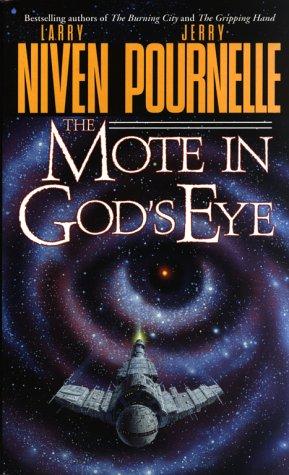
The first book I ever reviewed on YouTube was this book, and I'm sure if I went back to it, I would probably not like it nearly as much. I'm really not a Niven or a Purnell fan at all. but important book to me.
Review 1 of 5
 Others: Leaning positive
Science fiction classic about the rise, fall and subsequent rise of a civilization where the peak catastrophe is known as the "crazy eddy point". Introduces the concept of frictionless toilets that don't have any water in them but I suspect the authors didn't think it all the way through - I don't recall a negative air pressure that would keep odours in their rightfull place. Nevertheless a fascinating read. I haven't read this for donkeys years which is why I'm searching for an e-copy.
Genres: science fiction
Lists: …
Isaac Asimov
1953 · 226 pages · 3 reviews
 Others: Leaning negative
After years of struggle, the Foundation lay in ruins -- destroyed by the mutant mind power of the Mule. But it was rumored that there was a Second Foundation hidden somewhere at the end of the Galaxy, established to preserve the knowledge of mankind through the long centuries of barbarism. The Mule had failed to find it the first time -- but now he was certain he knew where it lay. The fate of the Foundation rests on young Arkady Darell, only fourteen years old and burdened with a terrible secret. As its scientists girded for a final showdown with the Mule, the survivors of the First Foundation began their desperate search. They too wanted the Second Foundation destroyed... before it destroyed them.
What made the match, strongest first
Peter F. Hamilton
2004 · 1144 pages · 6 reviews
Others: Mostly positiveCritics have compared the engrossing space operas of Peter F. Hamilton to the classic sagas of such sf giants as Isaac Asimov and Frank Herbert. But Hamilton's bestselling fiction--powered by a fearless imagination and world-class storytelling skills--has also earned him comparison to Tolstoy and Dickens. Hugely ambitious, wildly entertaining, philosophically stimulating: the novels of Peter F. Hamilton will change the way you think about science fiction. Now, with Pandora's Star, he begins a new multivolume adventure, one that promises to be his most mind-blowing yet. The year is 2380. The Intersolar Commonwealth, a sphere of stars some four hundred light-years in diameter, contains more than six hundred worlds, interconnected by a web of transport "tunnels" known as wormholes. At the farthest edge of the Commonwealth, astronomer Dudley Bose observes the impossible: Over one thousand light-years away, a star . . . vanishes. It does not go supernova. It does not collapse into a black hole. It simply disappears. Since the location is too distant to reach by wormhole, a faster-than-light starship, the Second Chance, is dispatched to learn what has occurred and whether it represents a threat. In command is Wilson Kime, a five-time rejuvenated ex-NASA pilot whose glory days are centuries behind him.Opposed to the mission are the Guardians of Selfhood, a cult that believes the human race is being manipulated by an alien entity they call the Starflyer. Bradley Johansson, leader of the Guardians, warns of sabotage, fearing the Starflyer means to use the starship's mission for its own ends,.Pursued by a Commonwealth special agent convinced the Guardians are crazy but dangerous, Johansson flees. But the danger is not averted. Aboard the Second Chance, Kime wonders if his crew has been infiltrated. Soon enough, he will have other worries. A thousand light-years away, something truly incredible is waiting: a deadly discovery whose unleashing will threaten to destroy the Commonwealth . . . and humanity itself. Could it be that Johansson was right?From the Hardcover edition.
What made the match, strongest first
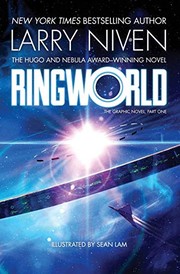
Larry Niven
1970 · 342 pages · 4 reviews
Others: Mostly negativeThe ' (1970–2004), by science fiction author Larry Niven, is a part of his Known Space set of stories. Its backdrop is the Ringworld, a giant artifact 600 million miles in circumference around a sun. The series is composed of four standalone science fiction novels, the original award-winning book and its three subsequent sequels: 1970: Ringworld 1980: The Ringworld Engineers 1996: The Ringworld Throne 2004: Ringworld's Children The core series was developed with three side series of prequels set in the same Ringworld universe, and written in collaboration: 1988–2009: Man-Kzin Wars (by various edited by Niven) 2007–2010: Fleet of Worlds (by Niven and Edward M. Lerner) 2010-2011: Juggler of Worlds (by Niven and Edward M. Lerner)
What made the match, strongest first
Iain Banks
1987 · 471 pages · 4 reviews
Others: Mostly negativeConsider Phlebas is perhaps one of the lesser-known, but nevertheless the first, of the revelationary late Iain M. Banks' science fiction books. Consider Phlebas introduces us to the complex world of the mind-controlling, ubiquitous utopia of the Culture, which contrasts to their mortal sentient enemies. Iain Banks creates an imaginative and encapsulating premise to keep the reader hooked for more, with hints of science fiction and alien humour to liven a deadly race against an omnipotent foe.
What made the match, strongest first
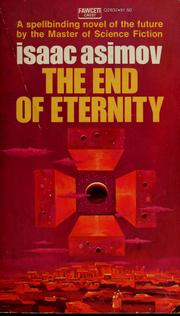
Isaac Asimov
1955 · 192 pages · 2 reviews
Others: MixedThe story of temporal engineers who meta-regulate the history of humanity through the centuries, eliminating risk, adventure, and space travel in the process. One man rebels in order to save the existence of someone he loves, and in the end the time bureaucracy is destroyed for the sake of individuality and human achievement. The theme is the opposite of the Foundation stories, where the central planners and manipulators of humanity always dominate.
What made the match, strongest first
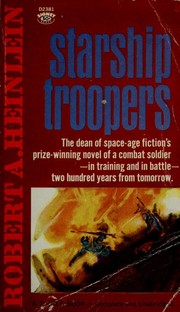
Robert A. Heinlein
1959 · 222 pages · 4 reviews
Others: Leaning positiveStarship Troopers takes place in the midst of an interstellar war between the Terran Federation of Earth and the Arachnids (referred to as "The Bugs") of Klendathu. It is narrated as a series of flashbacks by Juan Rico, and is one of only a few Heinlein novels set out in this fashion. The novel opens with Rico aboard the corvette Rodger Young, about to embark on a raid against the planet of the "Skinnies," who are allies of the Arachnids. We learn that he is a cap(sule) trooper in the Terran Federation's Mobile Infantry. The raid itself, one of the few instances of actual combat in the novel, is relatively brief: the Mobile Infantry land on the planet, destroy their targets, and retreat, suffering a single casualty in the process. The story then flashes back to Rico's graduation from high school, and his decision to sign up for Federal Service over the objections of his father. This is the only chapter that describes Rico's civilian life, and most of it is spent on the monologues of two people: retired Lt. Col. Jean V. Dubois, Rico's school instructor in "History and Moral Philosophy," and Fleet Sergeant Ho, a recruiter for the armed forces of the Terran Federation. Dubois serves as a stand-in for Heinlein throughout the novel, and delivers what is probably the book's most famous soliloquy on violence, and how it "has settled more issues in history than has any other factor." Fleet Sergeant Ho's monologues examine the nature of military service, and his anti-military tirades appear in the book primarily as a contrast with Dubois. (It is later revealed that his rants are calculated to scare off the weaker applicants). Interspersed throughout the book are other flashbacks to Rico's high school History and Moral Philosophy course, which describe how in the Terran Federation of Rico's day, the rights of a full Citizen (to vote, and hold public office) must be earned through some form of volunteer Federal service. Those residents who have not exercised their right to perform this Federal Service retain the other rights generally associated with a modern democracy (free speech, assembly, etc.), but they cannot vote or hold public office. This structure arose ad hoc after the collapse of the 20th century Western democracies, brought on by both social failures at home and military defeat by the Chinese Hegemony overseas (assumed looking forward into the late 20th century from the time the novel was written in the late 1950s). In the next section of the novel Rico goes to boot camp at Camp Arthur Currie, on the northern prairies. Five chapters are spent exploring Rico's experience entering the service under the training of his instructor, Career Ship's Sergeant Charles Zim. Camp Currie is so rigorous that less than ten percent of the recruits finish basic training; the rest either resign, are expelled, or die in training. One of the chapters deals with Ted Hendrick, a fellow recruit and constant complainer who is flogged and expelled for striking a superior officer. Another recruit, a deserter who committed a heinous crime while AWOL, is hanged by his battalion. Rico himself is flogged for poor handling of (simulated) nuclear weapons during a drill; despite these experiences he eventually graduates and is assigned to a unit. At some point during Rico's training, the 'Bug War' has begun to brew, and Rico finds himself taking part in combat operations. The war "officially" starts with an Arachnid attack that annihilates the city of Buenos Aires, although Rico makes it clear that prior to the attack there were plenty of "'incidents,' 'patrols,' or 'police actions.'" Rico briefly describes the Terran Federation's loss at the Battle of Klendathu where his unit is decimated and his ship destroyed. Following Klendathu, the Terran Federation is reduced to making hit-and-run raids similar to the one described at the beginning of the novel (which, chronologically would be placed between Chapters 10 and 11). Rico meanwhile finds himself posted to Rasczak's Roughnecks, named after Lieutenant Rasczak (his first name is never given). This part of the book focuses on the daily routine of military life, as well as the relationship between officers and non-commissioned officers, personified in this case by Rasczak and Sergeant Jelal. Eventually, Rico decides to become a career soldier and attends Officer Candidate School, which turns out to be just like boot camp, only "squared and cubed with books added."[15] Rico is commissioned a temporary Third Lieutenant as a field-test final exam and commands his own unit during Operation Royalty; eventually he graduates as a Second Lieutenant and full-fledged officer. The final chapter serves as more of a coda, depicting Rico aboard the Rodger Young as the lieutenant in command of Rico's Roughnecks, preparing to drop to Klendathu as part of a major strike, with his father (having joined the Service earlier in the novel) as his senior sergeant and a Third Lieutenant-in-training of his own under his wing.
What made the match, strongest first
MixedThe first book I ever reviewed on YouTube was this book, and I'm sure if I went back to it, I would probably not like it nearly as much. I'm really not a Niven or a Purnell fan at all. but important book to me.
Loved itThis, I think, is still justifiably a landmark of space opera.