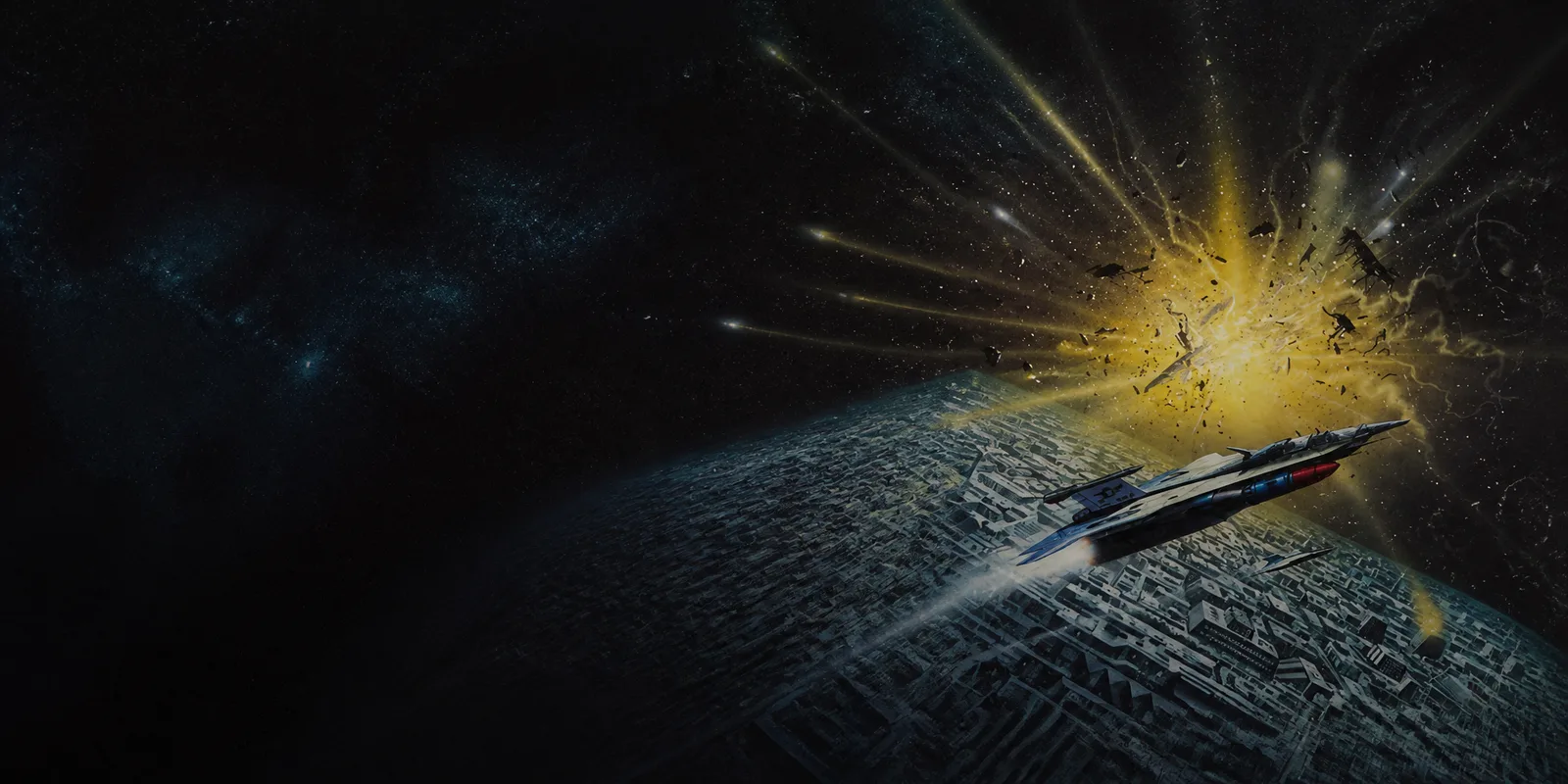
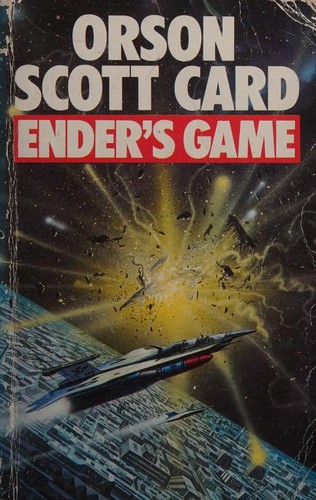
Ender's Game
Ender's GameOrson Scott Card
Buy on Amazon

Ender's Game (1985)

Orson Scott Card

Others: Overwhelmingly positive

Ender's Game is a 1985 military science fiction novel by American author Orson Scott Card. Set at an unspecified date in Earth's future, the novel presents an imperiled humankind after two conflicts with the Formics, an insectoid alien species they dub the "buggers". In preparation for an anticipated third invasion, children, including the novel's protagonist, Andrew "Ender" Wiggin, are trained from a very young age by putting them through increasingly difficult games, including some in zero gravity, where Ender's tactical genius is revealed. The book originated as a short story of the same name, published in the August 1977 issue of Analog Science Fiction and Fact. The novel was published on January 15, 1985. Later, by elaborating on characters and plotlines depicted in the novel, Card was able to write additional books in the Ender's Game series. Card also released an updated version of Ender's Game in 1991, changing some political facts to reflect the times more accurately (e.g., to include the recent collapse of the Soviet Union and the end of the Cold War). The novel has been translated into 34 languages. Reception of the book has been mostly positive. It has become suggested reading for many military organizations, including the United States Marine Corps. Ender's Game was recognized as "best novel" by the 1985 Nebula Award[3] and the 1986 Hugo Award[4] in the genres of science fiction and fantasy. Its four sequels—Speaker for the Dead (1986), Xenocide (1991), Children of the Mind (1996), and Ender in Exile (2008)—follow Ender's subsequent travels to many different worlds in the galaxy. In addition, the later novella A War of Gifts (2007) and novel Ender's Shadow (1999), plus other novels in the Shadow saga, take place during the same time period as the original.

ISBN:
9781250773012
Length:
324 pages

Genres: science fiction

Lists: …

Similar books

1 of 6
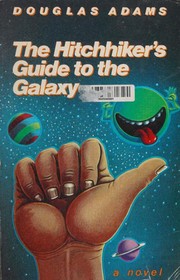
  • The Hitchhiker's Guide to the Galaxy

    Douglas Adams

    1979 · 215 pages · 18 reviews

    Others: Mostly positive

    The Hitchhiker's Guide to the Galaxy is the first of six books in the Hitchhiker's Guide to the Galaxy comedy science fiction "hexalogy" by Douglas Adams. The novel is an adaptation of the first four parts of Adams's radio series of the same name. The novel was first published in London on 12 October 1979. It sold 250,000 copies in the first three months. The namesake of the novel is The Hitchhiker's Guide to the Galaxy, a fictional guide book for hitchhikers (inspired by the Hitch-hiker's Guide to Europe) written in the form of an encyclopaedia.

    Why?

    What made the match, strongest first

    On 5+ of the same lists
    52%
    Also science fiction
    41%
    Talking Story loved both
    7%
    Personalize your recommendations
  • The three stigmata of Palmer Eldritch

    Philip K. Dick

    1965 · 233 pages · 6 reviews

    Others: Overwhelmingly positive

    The Three Stigmata of Palmer Eldritch is a 1965 science fiction novel by Philip K. Dick. It was nominated for the Nebula Award for Best Novel in 1965.[1] The novel takes place in 2016. Under United Nations authority, humankind has colonized every habitable planet and moon in the Solar System. Like many of Dick's novels, it utilizes an array of science fiction concepts, features several layers of reality and unreality and philosophical ideas. It is one of Dick's first works to explore religious themes.

    Why?

    What made the match, strongest first

    Also science fiction
    44%
    On 5+ of the same lists
    41%
    3 creators loved both
    15%
    Personalize your recommendations
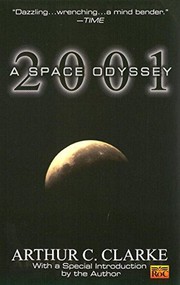
  • 2001: A Space Odyssey

    Arthur C. Clarke

    1968 · 228 pages · 5 reviews

    Others: Overwhelmingly positive

    A novel that proposes an idea about how the human race might have begun and where it might be headed...given a little help from out there. A colaboration of ideas with director Stanley Kubrick in the late 1960's it begins at "the dawn of man" and then leaps to the year 2001 where a mission to Saturn (Jupiter in the film) is mounted to try and answer questions raised by the discovery of an ancient artifact dug up on the moon. Though not particularly fast paced, the science is good, and there are a few hair raising events. There are also interesting speculations about the future, such as the space shuttle, and a device eerily similar to an iPad. Leaving plenty of room for contemplation and the appreciation for the inevitable trials of space travel, this is one of the truly landmark pieces of hard science fiction.

    Why?

    What made the match, strongest first

    On 5+ of the same lists
    47%
    Also science fiction
    42%
    2 creators loved both
    11%
    Personalize your recommendations
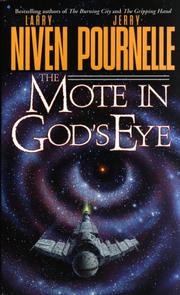
  • The Mote in God's Eye

    Larry Niven

    1974 · 560 pages · 6 reviews

    Others: Leaning positive

    Science fiction classic about the rise, fall and subsequent rise of a civilization where the peak catastrophe is known as the "crazy eddy point". Introduces the concept of frictionless toilets that don't have any water in them but I suspect the authors didn't think it all the way through - I don't recall a negative air pressure that would keep odours in their rightfull place. Nevertheless a fascinating read. I haven't read this for donkeys years which is why I'm searching for an e-copy.

    Why?

    What made the match, strongest first

    On 5+ of the same lists
    50%
    Also science fiction
    43%
    SciFiScavenger loved both
    7%
    Personalize your recommendations
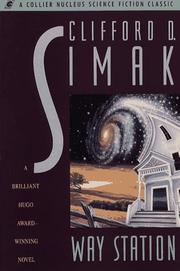
  • Way station

    Clifford D. Simak

    1963 · 210 pages · 7 reviews

    Others: Mostly positive

    Enoch Wallace is an ageless hermit, striding across his untended farm as he has done for over a century, still carrying the gun with which he had served in the Civil War. But what his neighbors must never know is that, inside his unchanging house, he meets with a host of unimaginable friends from the farthest stars. More than a hundred years before, an alien named Ulysses had recruited Enoch as the keeper of Earth's only galactic transfer station. Now, as Enoch studies the progress of Earth and tends the tanks where the aliens appear, the charts he made indicate his world is doomed to destruction. His alien friends can only offer help that seems worse than the dreaded disaster. Then he discovers the horror that lies across the galaxy...
    Why?

    What made the match, strongest first

    On 5+ of the same lists
    44%
    Also science fiction
    42%
    3 creators loved both
    14%
    Personalize your recommendations
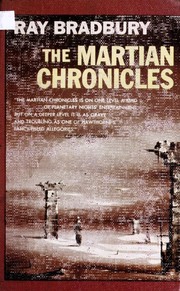
  • The Martian Chronicles

    Ray Bradbury

    1950 · 222 pages · 5 reviews

    Others: Overwhelmingly positive
    This is a collection of science fiction short stories, cleverly cobbled together to form a coherent and very readable novel about a future colonization of Mars. As the stories progress chronologically the author tells how the first humans colonized Mars, initially sharing the planet with a handful of Martians. When Earth is devastated by nuclear war the colony is left to fend for itself and the colonists determine to build a new Earth on Mars.

    Why?

    What made the match, strongest first

    On 5+ of the same lists
    50%
    Also science fiction
    43%
    Words in Time loved both
    7%
    Personalize your recommendations

Reviews11