

 Loved it
Bradbury's Pros is just so beautiful he's such an enjoyable writer to read... I did like some of the stories I felt like there were some interesting things to say
 Others: Overwhelmingly positive
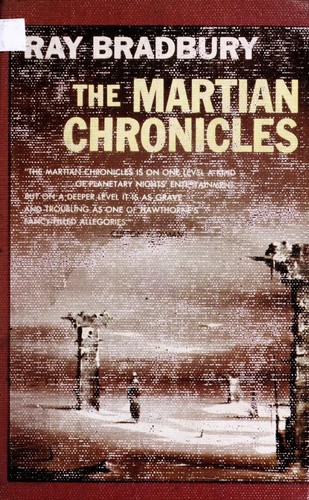
This is a collection of science fiction short stories, cleverly cobbled together to form a coherent and very readable novel about a future colonization of Mars. As the stories progress chronologically the author tells how the first humans colonized Mars, initially sharing the planet with a handful of Martians. When Earth is devastated by nuclear war the colony is left to fend for itself and the colonists determine to build a new Earth on Mars.
Genres: science fiction
Lists: …
Arthur C. Clarke
1952 · 220 pages · 9 reviews
Others: Leaning positiveChildhood's End is a 1953 science fiction novel by British author Arthur C. Clarke. The story follows the peaceful alien invasion of Earth by the mysterious Overlords, whose arrival ends all war, helps form a world government, and turns the planet into a near-utopia. Many questions are asked about the origins and mission of the aliens, but they avoid answering, preferring to remain in their ships, governing through indirect rule. Decades later, the Overlords eventually show themselves, and their impact on human culture leads to a Golden Age. However, the last generation of children on Earth begin to display powerful psychic abilities, heralding their evolution into a group mind, a transcendent form of life.
What made the match, strongest first
Kim Stanley Robinson
1992 · 632 pages · 7 reviews
Others: Mostly positiveRed Mars is the first novel of the Mars trilogy, published in 1992. It follows the beginnings of the colonization of Mars, from the arrival of the First Hundred to the First Martian Revolution.
What made the match, strongest first
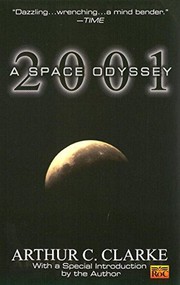
Arthur C. Clarke
1968 · 228 pages · 5 reviews
Others: Overwhelmingly positiveA novel that proposes an idea about how the human race might have begun and where it might be headed...given a little help from out there. A colaboration of ideas with director Stanley Kubrick in the late 1960's it begins at "the dawn of man" and then leaps to the year 2001 where a mission to Saturn (Jupiter in the film) is mounted to try and answer questions raised by the discovery of an ancient artifact dug up on the moon. Though not particularly fast paced, the science is good, and there are a few hair raising events. There are also interesting speculations about the future, such as the space shuttle, and a device eerily similar to an iPad. Leaving plenty of room for contemplation and the appreciation for the inevitable trials of space travel, this is one of the truly landmark pieces of hard science fiction.
What made the match, strongest first
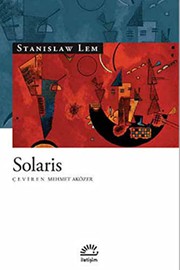
Stanisław Lem
1961 · 220 pages · 13 reviews
Others: Overwhelmingly positiveThe cult-classic by Stanislaw Lem that spawned the movie is now available for your Kindle! Until now the only English edition was a 1970 version, which was translated from French and which Lem himself described as a "poor translation." This wonderful new English translation (by Bill Johnston) of Lem's classic Solaris is a must-have for fans of Lem's classic novel. Telling of humanity's encounter with an alien intelligence on the planet Solaris, the 1961 novel is a cult classic, exploring the ultimate futility of attempting to communicate with extra-terrestrial life. When Kris Kelvin arrives at the planet Solaris to study the ocean that covers its surface, he finds a painful, hitherto unconscious memory embodied in the living physical likeness of a long-dead lover. Others examining the planet, Kelvin learns, are plagued with their own repressed and newly corporeal memories. The Solaris ocean may be a massive brain that creates these incarnate memories, though its purpose in doing so is unknown, forcing the scientists to shift the focus of their quest and wonder if they can truly understand the universe without first understanding what lies within their hearts.
What made the match, strongest first
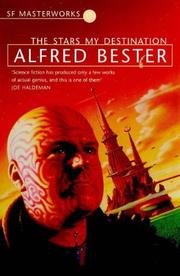
Alfred Bester
1956 · 236 pages · 8 reviews
Others: Overwhelmingly positiveIn this pulse-quickening novel, Alfred Bester imagines a future in which people "jaunte" a thousand miles with a single thought, where the rich barricade themselves in labyrinths and protect themselves with radioactive hitmen—and where an inarticulate outcast is the most valuable and dangerous man alive. The Stars My Destination is a classic of technological prophecy and timeless narrative enchantment by an acknowledged master of science fiction.
What made the match, strongest first
Philip K. Dick
1965 · 233 pages · 6 reviews
Others: Overwhelmingly positiveThe Three Stigmata of Palmer Eldritch is a 1965 science fiction novel by Philip K. Dick. It was nominated for the Nebula Award for Best Novel in 1965.[1] The novel takes place in 2016. Under United Nations authority, humankind has colonized every habitable planet and moon in the Solar System. Like many of Dick's novels, it utilizes an array of science fiction concepts, features several layers of reality and unreality and philosophical ideas. It is one of Dick's first works to explore religious themes.
What made the match, strongest first
Loved itBradbury's Pros is just so beautiful he's such an enjoyable writer to read... I did like some of the stories I felt like there were some interesting things to say
Loved itMartian Chronicles is excellent it is a lot more cynical than I thought it would be I approve
Loved itI wouldn't change or take anything out of this book. And yeah, I think it's just brilliant. Definitely one that just gets better with each reread.