
 Loved it
Another one that I just absolutely tore through. I think I read it in two sittings. you don't need me to tell you about how good that book is.
Review 1 of 4
 Others: Overwhelmingly positive
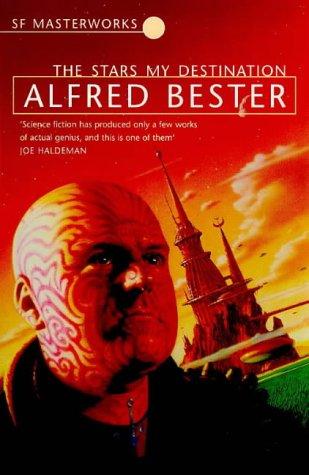
In this pulse-quickening novel, Alfred Bester imagines a future in which people "jaunte" a thousand miles with a single thought, where the rich barricade themselves in labyrinths and protect themselves with radioactive hitmen—and where an inarticulate outcast is the most valuable and dangerous man alive. The Stars My Destination is a classic of technological prophecy and timeless narrative enchantment by an acknowledged master of science fiction.
Genres: science fiction
Lists: …
Clifford D. Simak
1952 · 254 pages · 5 reviews
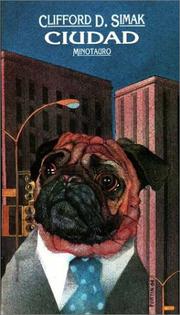
Others: PositiveComment by John Clute: We know better now, of course. But they still entrance us, the old page-turners from the glory days of American SF, half a century or so ago, when the world was full of futures we were never going to have. In the mid-1940s, when he began to publish the episodes that would be assembled as City in 1952, Clifford Simak, a Minneapolis-based journalist and author, could still carry us away with the dream that cars and pollution and even the great cities of the world – "Huddling Place", the title of one of these tales, is his own derisory term for them – would soon be brushed off the map by Progress, leaving nothing behind but tasteful exurbs filled with middle-class nuclear families living the good life, with fishing streams and greenswards sheltering each home from the stormy blast. Fortunately, Simak soon gets past this demented vision of a near-future world saved by technological fixes, a dementia common then to SF writers and gurus and politicians alike, and launches into an astonishingly eventful narrative of the next 10,000 years as seen through the eyes of one family and the immortal robot Jenkins, and all told with a weird pastoral serenity that for a kid like me seemed near to godlike. In its course City touches on almost everything dear to 1940s SF, and to me remembering. Robots. Genetic Engineering. Space. Jupiter. Domed cities. Keeps. Hiveminds. Matter transmission. Telepathy. Parallel worlds. Paranormal empathy. Mutants. Supermen. It's all there, and, thanks to Simak's skilled hand at the wheel, it's all in place: suave, sibylline, swift. The whole is framed as a series of legends told by the uplifted Dogs who have replaced the human race, now gone for ever. They have been bred not to kill. At the end, only Jenkins remains to keep them from learning how to repeat history and die. It all seemed immensely sad and wise then, but fun. It still does.
What made the match, strongest first
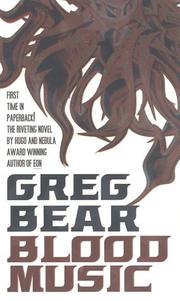
Greg Bear
1985 · 262 pages · 7 reviews
Others: Overwhelmingly positiveIn the tradition of the greatest cyberpunk novels, Blood Music explores the imminent destruction of mankind and the fear of mass destruction by technological advancements. The novel follows present-day events in which the fears concerning the nuclear annihilation of the world subsided after the Cold War and the fear of chemical warfare spilled over into the empty void it left behind. An amazing breakthrough in genetic engineering made by Vergil Ulam is considered too dangerous for further research, but rather than destroy his work, he injects himself with his creation and walks out of his lab, unaware of just how his actions will change the world. Author Greg Bear’s treatment of the traditional tale of scientific hubris is both suspenseful and a compelling portrait of a new intelligence emerging amongst us, irrevocably changing our world.
What made the match, strongest first
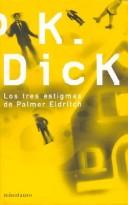
Philip K. Dick
1965 · 233 pages · 6 reviews
Others: Overwhelmingly positiveThe Three Stigmata of Palmer Eldritch is a 1965 science fiction novel by Philip K. Dick. It was nominated for the Nebula Award for Best Novel in 1965.[1] The novel takes place in 2016. Under United Nations authority, humankind has colonized every habitable planet and moon in the Solar System. Like many of Dick's novels, it utilizes an array of science fiction concepts, features several layers of reality and unreality and philosophical ideas. It is one of Dick's first works to explore religious themes.
What made the match, strongest first
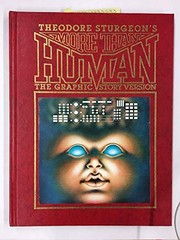
Theodore Sturgeon
1952 · 214 pages · 5 reviews
Others: Overwhelmingly positiveFrom the back cover of Del Rey paperback November 1978: The coming of the superman without a superego! Take six people -- extraordinary people. And stir in the melting pot of creation. Take away their human frailties. Burnish their strengths. And create a superman -- Homo gestalt, the last step in man's evolution. Now step back... and learn the meaning of fear!
What made the match, strongest first
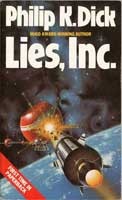
Philip K. Dick
1984 · 217 pages · 1 review
Others: PositiveThe Unteleported Man (later republished in a greatly expanded version as Lies, Inc.) is a 1966 science fiction novel by American writer Philip K. Dick, first published as a novella in 1964. It is about a future in which a one-way teleportation technology enables 40 million people to immigrate to a colony named Whale's Mouth on an Earth-like planet, which advertisements show as a lush green utopia. When the owner of a failing spaceship travel firm tries to take the 18-year flight to the colony to bring back any unhappy colonists, powerful forces try to stop him from finding out the truth.
What made the match, strongest first
William Gibson
1984 · 288 pages · 13 reviews
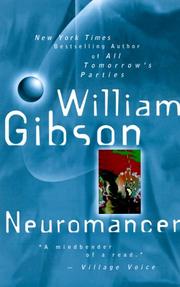
Others: Mostly positiveThe first of William Gibson's Sprawl trilogy, Neuromancer is the classic cyberpunk novel. The winner of the Hugo, Nebula, and Philip K. Dick Awards, Neuromancer was the first fully-realized glimpse of humankind’s digital future — a shocking vision that has challenged our assumptions about our technology and ourselves, reinvented the way we speak and think, and forever altered the landscape of our imaginations. Henry Dorsett Case was the sharpest data-thief in the business, until vengeful former employees crippled his nervous system. But now a new and very mysterious employer recruits him for a last-chance run. The target: an unthinkably powerful artificial intelligence orbiting Earth in service of the sinister Tessier-Ashpool business clan. With a dead man riding shotgun and Molly, mirror-eyed street-samurai, to watch his back, Case embarks on an adventure that ups the ante on an entire genre of fiction. Hotwired to the leading edges of art and technology, Neuromancer is a cyberpunk, science fiction masterpiece — a classic that ranks with 1984 and Brave New World as one of the twentieth century’s most potent visions of the future.
What made the match, strongest first
Loved itAnother one that I just absolutely tore through. I think I read it in two sittings. you don't need me to tell you about how good that book is.
Loved itI've got the Roundy Edge Stars My Destination, which is really, really nice. Great book as well.
Loved itI liked this less than the demolished man but you know a classic all the same
Loved ithis third novel is you know arguably one of the greatest genre SF novels ever but I haven't picked that