
 Not a fan
I didn't have the best of times with Brave New World. Again, I actually enjoyed the show. Not as much as Foundation on Foundation is like on a level of its own.
Review 1 of 2
 Others: Leaning positive
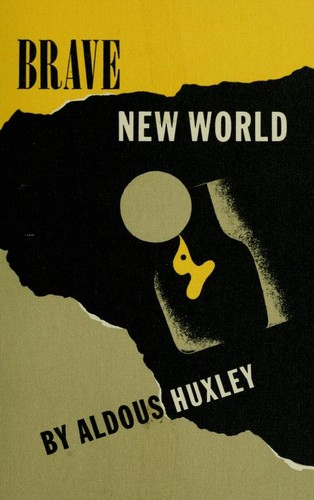
Originally published in 1932, this outstanding work of literature is more crucial and relevant today than ever before. Cloning, feel-good drugs, antiaging programs, and total social control through politics, programming, and media -- has Aldous Huxley accurately predicted our future? With a storyteller's genius, he weaves these ethical controversies in a compelling narrative that dawns in the year 632 AF (After Ford, the deity). When Lenina and Bernard visit a savage reservation, we experience how Utopia can destroy humanity. A powerful work of speculative fiction that has enthralled and terrified readers for generations, Brave New World is both a warning to be heeded and thought-provoking yet satisfying entertainment. - Container.
Genres: science fiction, classics
Lists: …
George Orwell
1945 · 118 pages · 4 reviews
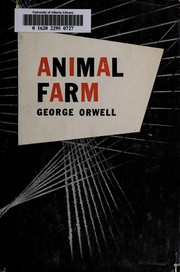
Others: Mostly positiveAnimal Farm is a brilliant political satire and a powerful and affecting story of revolutions and idealism, power and corruption. 'All animals are equal. But some animals are more equal than others.' Mr Jones of Manor Farm is so lazy and drunken that one day he forgets to feed his livestock. The ensuing rebellion under the leadership of the pigs Napoleon and Snowball leads to the animals taking over the farm. Vowing to eliminate the terrible inequities of the farmyard, the renamed Animal Farm is organised to benefit all who walk on four legs. But as time passes, the ideals of the rebellion are corrupted, then forgotten. And something new and unexpected emerges..
What made the match, strongest first
George Orwell
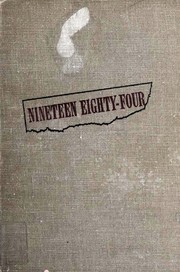
1949 · 314 pages · 12 reviews
Others: Mostly positiveNineteen Eighty-Four: A Novel, often referred to as 1984, is a dystopian social science fiction novel by the English novelist George Orwell (the pen name of Eric Arthur Blair). It was published on 8 June 1949 by Secker & Warburg as Orwell's ninth and final book completed in his lifetime. Thematically, Nineteen Eighty-Four centres on the consequences of totalitarianism, mass surveillance, and repressive regimentation of persons and behaviours within society. Orwell, himself a democratic socialist, modelled the authoritarian government in the novel after Stalinist Russia. More broadly, the novel examines the role of truth and facts within politics and the ways in which they are manipulated.
What made the match, strongest first
Robert A. Heinlein
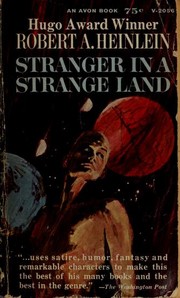
1961 · 418 pages · 4 reviews
 Others: Mixed
Stranger in a Strange Land is a 1961 science fiction novel by American author Robert A. Heinlein. It tells the story of Valentine Michael Smith, a human who comes to Earth in early adulthood after being born on the planet Mars and raised by Martians. The novel explores his interaction with—and eventual transformation of—terrestrial culture. The title is an allusion to the phrase in Exodus 2:22. According to Heinlein, the novel's working title was The Heretic. Several later editions of the book have promoted it as "The most famous Science Fiction Novel ever written".
What made the match, strongest first
Kurt Vonnegut
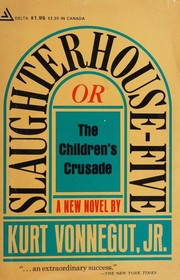
1956 · 192 pages · 15 reviews
 Others: Overwhelmingly positive
Slaughterhouse-Five is one of the world's great anti-war books. Centering on the infamous fire-bombing of Dresden, Billy Pilgrim's odyssey through time reflects the mythic journey of our own fractured lives as we search for meaning in what we are afraid to know.
What made the match, strongest first
Anthony Burgess
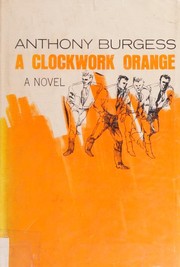
1962 · 188 pages · 8 reviews
Others: Overwhelmingly positiveA Clockwork Orange is a dystopian satirical black comedy novel by English writer Anthony Burgess, published in 1962. It is set in a near-future society that has a youth subculture of extreme violence. The teenage protagonist, Alex, narrates his violent exploits and his experiences with state authorities intent on reforming him. The book is partially written in a Russian-influenced argot called "Nadsat", which takes its name from the Russian suffix that is equivalent to '-teen' in English. According to Burgess, it was a jeu d'esprit written in just three weeks. In 2005, A Clockwork Orange was included on Time magazine's list of the 100 best English-language novels written since 1923, and it was named by Modern Library and its readers as one of the 100 best English-language novels of the 20th century. The original manuscript of the book has been kept at McMaster University's William Ready Division of Archives and Research Collections in Hamilton, Ontario, Canada since the institution purchased the documents in 1971. It is considered one of the most influential dystopian books.
What made the match, strongest first
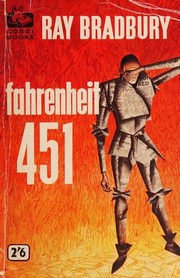
Ray Bradbury
1953 · 179 pages · 11 reviews
Others: Mostly positiveFahrenheit 451 is a 1953 dystopian novel by American writer Ray Bradbury. Often regarded as one of his best works, the novel presents a future American society where books are outlawed and "firemen" burn any that are found. The book's tagline explains the title as "'the temperature at which book paper catches fire, and burns": the autoignition temperature of paper. The lead character, Guy Montag, is a fireman who becomes disillusioned with his role of censoring literature and destroying knowledge, eventually quitting his job and committing himself to the preservation of literary and cultural writings. The novel has been the subject of interpretations focusing on the historical role of book burning in suppressing dissenting ideas for change. In a 1956 radio interview, Bradbury said that he wrote Fahrenheit 451 because of his concerns at the time (during the McCarthy era) about the threat of book burning in the United States. In later years, he described the book as a commentary on how mass media reduces interest in reading literature. In 1954, Fahrenheit 451 won the American Academy of Arts and Letters Award in Literature and the Commonwealth Club of California Gold Medal. It later won the Prometheus "Hall of Fame" Award in 1984 and a "Retro" Hugo Award, one of a limited number of Best Novel Retro Hugos ever given, in 2004. Bradbury was honored with a Spoken Word Grammy nomination for his 1976 audiobook version.
What made the match, strongest first
Not a fanI didn't have the best of times with Brave New World. Again, I actually enjoyed the show. Not as much as Foundation on Foundation is like on a level of its own.
Loved it1984 and Brave New World and A Clockwork Orange are all books that I really, really liked.
MixedThis is undeniably one of the most influential dystopian books of all time. But just in terms of my own personal reading enjoyment, I have it at number seven just because I found some chapters more engaging than others.
Not a fanthe one that I hate with a fiery passion is Brave New World God I hate that book I really do it's boring it's dry
Loved itAnd 'Brave New World', also excellent.
Loved itI did read it and I loved it and I wished my main problem with it was that I wish that it was longer because it goes by so quickly
Loved itthis is actually a classic and it is a very interesting read. it takes the concept of genetic breeding of certain kinds of people for certain kinds of jobs and gives them classes like alpha beta zetas deltas and these embryos are put in certain kinds of environments to create these certain class of people. it's a very good book