Stranger in a Strange Land
Stranger in a Strange LandRobert A. Heinlein
Buy on Amazon

Stranger in a Strange Land (1961)

Robert A. Heinlein

Others: Mixed

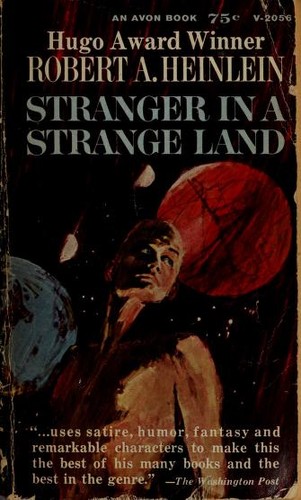
Stranger in a Strange Land is a 1961 science fiction novel by American author Robert A. Heinlein. It tells the story of Valentine Michael Smith, a human who comes to Earth in early adulthood after being born on the planet Mars and raised by Martians. The novel explores his interaction with—and eventual transformation of—terrestrial culture. The title is an allusion to the phrase in Exodus 2:22. According to Heinlein, the novel's working title was The Heretic. Several later editions of the book have promoted it as "The most famous Science Fiction Novel ever written".

ISBN:
9781984802781
Length:
418 pages

Genres: science fiction, classics

Lists: …

Similar books

1 of 6
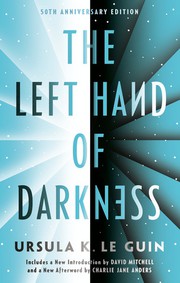
  • The Left Hand of Darkness

    Ursula K. Le Guin

    1969 · 304 pages · 13 reviews

    Others: Mostly positive

    Comment by Kim Stanley Robinson, on The Guardian's website: The Left Hand of Darkness by Ursula K Le Guin (1969) One of my favorite novels is The Left Hand of Darkness, by Ursula K Le Guin. For more than 40 years I've been recommending this book to people who want to try science fiction for the first time, and it still serves very well for that. One of the things I like about it is how clearly it demonstrates that science fiction can have not only the usual virtues and pleasures of the novel, but also the startling and transformative power of the thought experiment. In this case, the thought experiment is quickly revealed: "The king was pregnant," the book tells us early on, and after that we learn more and more about this planet named Winter, stuck in an ice age, where the humans are most of the time neither male nor female, but with the potential to become either. The man from Earth investigating this situation has a lot to learn, and so do we; and we learn it in the course of a thrilling adventure story, including a great "crossing of the ice". Le Guin's language is clear and clean, and has within it both the anthropological mindset of her father Alfred Kroeber, and the poetry of stories as magical things that her mother Theodora Kroeber found in native American tales. This worldly wisdom applied to the romance of other planets, and to human nature at its deepest, is Le Guin's particular gift to us, and something science fiction will always be proud of. Try it and see – you will never think about people in quite the same way again.
    Why?

    What made the match, strongest first

    On 5+ of the same lists
    58%
    Also classics and science fiction
    30%
    Media Death Cult loved both
    12%
    Personalize your recommendations
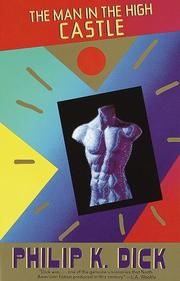
  • The Man in the High Castle

    Philip K. Dick

    1962 · 249 pages · 12 reviews

    Others: Leaning positive

    The Man in the High Castle is an alternate history novel by American writer Philip K. Dick. Published and set in 1962, the novel takes place fifteen years after an alternative ending to World War II, and concerns intrigues between the victorious Axis Powers—primarily, Imperial Japan and Nazi Germany—as they rule over the former United States, as well as daily life under the resulting totalitarian rule. The Man in the High Castle won the Hugo Award for Best Novel in 1963. Beginning in 2015, the book was adapted as a multi-season TV series, with Dick's daughter, Isa Dick Hackett, serving as one of the show's producers. Reported inspirations include Ward Moore's alternate Civil War history, Bring the Jubilee (1953), various classic World War II histories, and the I Ching (referred to in the novel). The novel features a "novel within the novel" comprising an alternate history within this alternate history wherein the Allies defeat the Axis (though in a manner distinct from the actual historical outcome).

    Why?

    What made the match, strongest first

    On 5+ of the same lists
    68%
    Also science fiction
    21%
    Media Death Cult loved both
    11%
    Personalize your recommendations
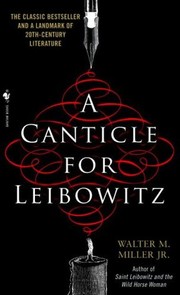
  • A Canticle for Leibowitz

    Walter M. Miller Jr.

    1959 · 320 pages · 4 reviews

    Others: Mixed

    Highly unusual After the Holocaust novel. In the far future, 20th century texts are preserved in a monastery, as "sacred books". The monks preserve for centuries what little science there is, and have saved the science texts and blueprints from destruction many times, also making beautifully illuminated copies. As the story opens to a world run on a basically fuedal lines, science is again becoming fashionable, as a hobby of rich men, at perhaps 18th or early 19th century level of comprehesion. A local lord, interested in science, comes to the monastery. What happens after that is an exquisitely told tale, stunning and extremely moving, totally different from any other After the Holocaust story

    Why?

    What made the match, strongest first

    On 5+ of the same lists
    65%
    Also science fiction
    23%
    Media Death Cult loved both
    12%
    Personalize your recommendations
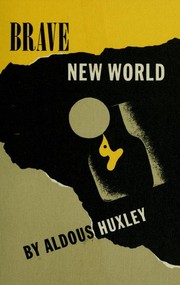
  • Brave New World

    Aldous Huxley

    1932 · 232 pages · 11 reviews

    Others: Leaning positive

    Originally published in 1932, this outstanding work of literature is more crucial and relevant today than ever before. Cloning, feel-good drugs, antiaging programs, and total social control through politics, programming, and media -- has Aldous Huxley accurately predicted our future? With a storyteller's genius, he weaves these ethical controversies in a compelling narrative that dawns in the year 632 AF (After Ford, the deity). When Lenina and Bernard visit a savage reservation, we experience how Utopia can destroy humanity. A powerful work of speculative fiction that has enthralled and terrified readers for generations, Brave New World is both a warning to be heeded and thought-provoking yet satisfying entertainment. - Container.

    Why?

    What made the match, strongest first

    On 5+ of the same lists
    54%
    Also classics and science fiction
    45%
    Similar descriptions
    1%
    Personalize your recommendations
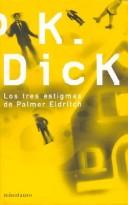
  • The three stigmata of Palmer Eldritch

    Philip K. Dick

    1965 · 233 pages · 6 reviews

    Others: Overwhelmingly positive
    The Three Stigmata of Palmer Eldritch is a 1965 science fiction novel by Philip K. Dick. It was nominated for the Nebula Award for Best Novel in 1965.[1] The novel takes place in 2016. Under United Nations authority, humankind has colonized every habitable planet and moon in the Solar System. Like many of Dick's novels, it utilizes an array of science fiction concepts, features several layers of reality and unreality and philosophical ideas. It is one of Dick's first works to explore religious themes.

    Why?

    What made the match, strongest first

    On 5+ of the same lists
    64%
    Also science fiction
    25%
    Similar descriptions
    11%
    Personalize your recommendations
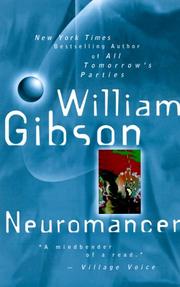
  • Neuromancer

    William Gibson

    1984 · 288 pages · 13 reviews

    Others: Mostly positive

    The first of William Gibson's Sprawl trilogy, Neuromancer is the classic cyberpunk novel. The winner of the Hugo, Nebula, and Philip K. Dick Awards, Neuromancer was the first fully-realized glimpse of humankind’s digital future — a shocking vision that has challenged our assumptions about our technology and ourselves, reinvented the way we speak and think, and forever altered the landscape of our imaginations. Henry Dorsett Case was the sharpest data-thief in the business, until vengeful former employees crippled his nervous system. But now a new and very mysterious employer recruits him for a last-chance run. The target: an unthinkably powerful artificial intelligence orbiting Earth in service of the sinister Tessier-Ashpool business clan. With a dead man riding shotgun and Molly, mirror-eyed street-samurai, to watch his back, Case embarks on an adventure that ups the ante on an entire genre of fiction. Hotwired to the leading edges of art and technology, Neuromancer is a cyberpunk, science fiction masterpiece — a classic that ranks with 1984 and Brave New World as one of the twentieth century’s most potent visions of the future.

    Why?

    What made the match, strongest first

    On 5+ of the same lists
    67%
    Also science fiction
    25%
    A creator reacted alike
    8%
    Personalize your recommendations

Reviews2