
 Loved it
some of his stuff like in Man in the High Castle or Androids Do Androids Dream, some of the most impressive stuff, especially of like canonical science fiction works that are commonly still read. Some of the better stuff.
Review 1 of 5
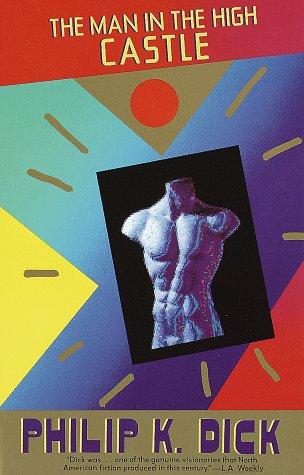
Others: Leaning positive The Man in the High Castle is an alternate history novel by American writer Philip K. Dick. Published and set in 1962, the novel takes place fifteen years after an alternative ending to World War II, and concerns intrigues between the victorious Axis Powers—primarily, Imperial Japan and Nazi Germany—as they rule over the former United States, as well as daily life under the resulting totalitarian rule. The Man in the High Castle won the Hugo Award for Best Novel in 1963. Beginning in 2015, the book was adapted as a multi-season TV series, with Dick's daughter, Isa Dick Hackett, serving as one of the show's producers. Reported inspirations include Ward Moore's alternate Civil War history, Bring the Jubilee (1953), various classic World War II histories, and the I Ching (referred to in the novel). The novel features a "novel within the novel" comprising an alternate history within this alternate history wherein the Allies defeat the Axis (though in a manner distinct from the actual historical outcome).
Genres: science fiction
Lists: …
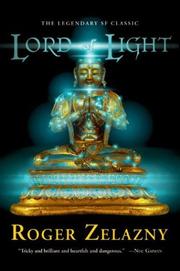
Roger Zelazny
1967 · 259 pages · 6 reviews
 Others: Leaning negative
A colony of humankind is subjugated by the First Colonists, the crew of the starship that brought them to their new home 1000 years before. They have taken control of ancient technologies and enhanced themselves with godlike psychic powers and virtual immortality. Adopting the panoply of the venerable Hindu religion, they live lives as its Gods, surrounded by advanced technology within the trappings of a primitive civilization. Our hero Sam, unready to battle the tyrannical forces of the Celestial City allied with his former wife, now the rapturous Kali, Goddess of Destruction. A story of the classic drama of power, love, honor, pride, and fantasy erupting in an epic war of the Gods and ultimate transcendence.
What made the match, strongest first
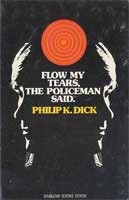
Philip K. Dick
1974 · 231 pages · 5 reviews
Others: Mostly positiveFlow My Tears, the Policeman Said is a 1974 science fiction novel by American writer Philip K. Dick. The story follows a genetically enhanced pop singer and television star who wakes up in a world where he has never existed. The novel is set in a futuristic dystopia, where the United States has become a police state in the aftermath of a Second Civil War. It was nominated for a Nebula Award in 1974 and a Hugo Award in 1975, and was awarded the John W. Campbell Memorial Award for Best Science Fiction Novel in 1975. TV star Jason Taverner is no more. Overnight, he looses his ID cards, the records about him in the official databases have strangely vanished and no one seems to know him any more. Even the songs he recorded don’t exist any more. In an oppressing police state, Jason struggels not to get arrested.
What made the match, strongest first
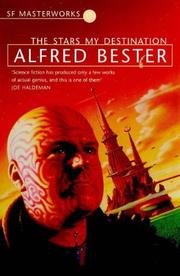
Alfred Bester
1956 · 236 pages · 8 reviews
 Others: Overwhelmingly positive
In this pulse-quickening novel, Alfred Bester imagines a future in which people "jaunte" a thousand miles with a single thought, where the rich barricade themselves in labyrinths and protect themselves with radioactive hitmen—and where an inarticulate outcast is the most valuable and dangerous man alive. The Stars My Destination is a classic of technological prophecy and timeless narrative enchantment by an acknowledged master of science fiction.
What made the match, strongest first
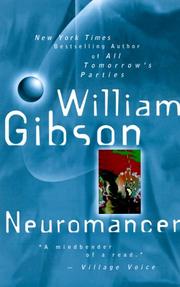
William Gibson
1984 · 288 pages · 13 reviews
Others: Mostly positiveThe first of William Gibson's Sprawl trilogy, Neuromancer is the classic cyberpunk novel. The winner of the Hugo, Nebula, and Philip K. Dick Awards, Neuromancer was the first fully-realized glimpse of humankind’s digital future — a shocking vision that has challenged our assumptions about our technology and ourselves, reinvented the way we speak and think, and forever altered the landscape of our imaginations. Henry Dorsett Case was the sharpest data-thief in the business, until vengeful former employees crippled his nervous system. But now a new and very mysterious employer recruits him for a last-chance run. The target: an unthinkably powerful artificial intelligence orbiting Earth in service of the sinister Tessier-Ashpool business clan. With a dead man riding shotgun and Molly, mirror-eyed street-samurai, to watch his back, Case embarks on an adventure that ups the ante on an entire genre of fiction. Hotwired to the leading edges of art and technology, Neuromancer is a cyberpunk, science fiction masterpiece — a classic that ranks with 1984 and Brave New World as one of the twentieth century’s most potent visions of the future.
What made the match, strongest first
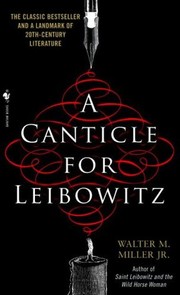
Walter M. Miller Jr.
1959 · 320 pages · 4 reviews
 Others: Mixed
Highly unusual After the Holocaust novel. In the far future, 20th century texts are preserved in a monastery, as "sacred books". The monks preserve for centuries what little science there is, and have saved the science texts and blueprints from destruction many times, also making beautifully illuminated copies. As the story opens to a world run on a basically fuedal lines, science is again becoming fashionable, as a hobby of rich men, at perhaps 18th or early 19th century level of comprehesion. A local lord, interested in science, comes to the monastery. What happens after that is an exquisitely told tale, stunning and extremely moving, totally different from any other After the Holocaust story
What made the match, strongest first
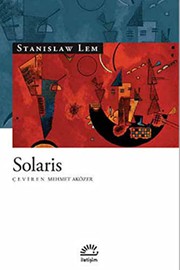
Stanisław Lem
1961 · 220 pages · 13 reviews
Others: Overwhelmingly positiveThe cult-classic by Stanislaw Lem that spawned the movie is now available for your Kindle! Until now the only English edition was a 1970 version, which was translated from French and which Lem himself described as a "poor translation." This wonderful new English translation (by Bill Johnston) of Lem's classic Solaris is a must-have for fans of Lem's classic novel. Telling of humanity's encounter with an alien intelligence on the planet Solaris, the 1961 novel is a cult classic, exploring the ultimate futility of attempting to communicate with extra-terrestrial life. When Kris Kelvin arrives at the planet Solaris to study the ocean that covers its surface, he finds a painful, hitherto unconscious memory embodied in the living physical likeness of a long-dead lover. Others examining the planet, Kelvin learns, are plagued with their own repressed and newly corporeal memories. The Solaris ocean may be a massive brain that creates these incarnate memories, though its purpose in doing so is unknown, forcing the scientists to shift the focus of their quest and wonder if they can truly understand the universe without first understanding what lies within their hearts.
What made the match, strongest first
Loved itsome of his stuff like in Man in the High Castle or Androids Do Androids Dream, some of the most impressive stuff, especially of like canonical science fiction works that are commonly still read. Some of the better stuff.
Not a fanAnd for Philip K. Dick to utterly drop the ball on the execution of this, not answer any of the important or pertinent stories or answers, not even go into any curiosity of this, and to just talk about antiquities is just one of the greatest science fiction sins of all time, and I just can't get over it.
Loved itAnd it's actually quite delicately done. This is a very smooth read.
Mixedwhen I was able to kind of then get on board with where the book was going I liked it ended up being less about kind of the state of the world and it being a bit more of a religious spiritual internal Journey that the book went on and I like that I just don't know if the puzzle pieces ever fully fell into place for me
Loved itit turns out i loved it