
 Loved it
By PKD, I was pleasantly surprised to really love. it also reads like the Matrix. I think it's very good.
Review 1 of 2
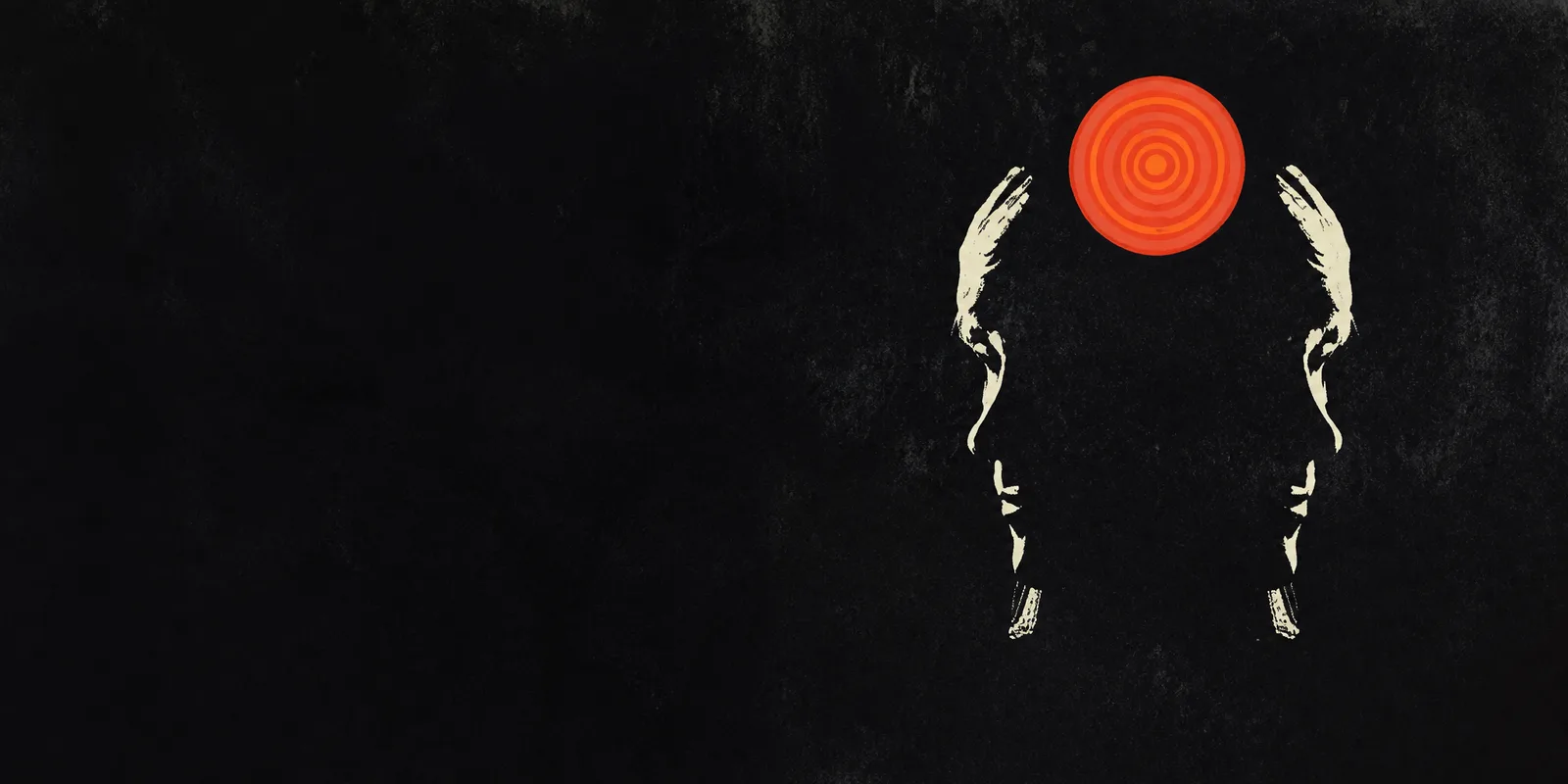
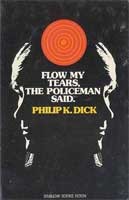
Others: Mostly positive Flow My Tears, the Policeman Said is a 1974 science fiction novel by American writer Philip K. Dick. The story follows a genetically enhanced pop singer and television star who wakes up in a world where he has never existed. The novel is set in a futuristic dystopia, where the United States has become a police state in the aftermath of a Second Civil War. It was nominated for a Nebula Award in 1974 and a Hugo Award in 1975, and was awarded the John W. Campbell Memorial Award for Best Science Fiction Novel in 1975. TV star Jason Taverner is no more. Overnight, he looses his ID cards, the records about him in the official databases have strangely vanished and no one seems to know him any more. Even the songs he recorded don’t exist any more. In an oppressing police state, Jason struggels not to get arrested.
Genres: science fiction, literary fiction
Lists: …
Philip K. Dick
1969 · 212 pages · 10 reviews
 Others: Overwhelmingly positive
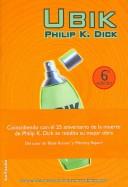
Named one of Time's 100 Best Books, Ubik is a mind-bending, classic novel about the perception of reality from Philip K. Dick, the Hugo Award-winning author of The Man in the High Castle. “From the stuff of space opera, Dick spins a deeply unsettling existential horror story, a nightmare you’ll never be sure you’ve woken up from.”—Lev Grossman, Time Glen Runciter runs a lucrative business — deploying his teams of anti-psychics to corporate clients who want privacy and security from psychic spies. But when he and his top team are ambushed by a rival, he is gravely injured and placed in “half-life,” a dreamlike state of suspended animation. Soon, though, the surviving members of the team begin experiencing some strange phenomena, such as Runciter’s face appearing on coins and the world seeming to move backward in time. As consumables deteriorate and technology gets ever more primitive, the group needs to find out what is causing the shifts and what a mysterious product called Ubik has to do with it all. “More brilliant than similar experiments conducted by Pynchon or DeLillo.”—Roberto Bolaño
What made the match, strongest first
Philip K. Dick
1962 · 249 pages · 12 reviews
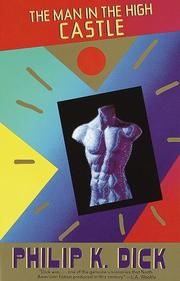
Others: Leaning positiveThe Man in the High Castle is an alternate history novel by American writer Philip K. Dick. Published and set in 1962, the novel takes place fifteen years after an alternative ending to World War II, and concerns intrigues between the victorious Axis Powers—primarily, Imperial Japan and Nazi Germany—as they rule over the former United States, as well as daily life under the resulting totalitarian rule. The Man in the High Castle won the Hugo Award for Best Novel in 1963. Beginning in 2015, the book was adapted as a multi-season TV series, with Dick's daughter, Isa Dick Hackett, serving as one of the show's producers. Reported inspirations include Ward Moore's alternate Civil War history, Bring the Jubilee (1953), various classic World War II histories, and the I Ching (referred to in the novel). The novel features a "novel within the novel" comprising an alternate history within this alternate history wherein the Allies defeat the Axis (though in a manner distinct from the actual historical outcome).
What made the match, strongest first
Alfred Bester
1956 · 236 pages · 8 reviews
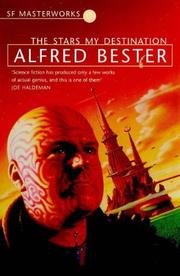
Others: Overwhelmingly positiveIn this pulse-quickening novel, Alfred Bester imagines a future in which people "jaunte" a thousand miles with a single thought, where the rich barricade themselves in labyrinths and protect themselves with radioactive hitmen—and where an inarticulate outcast is the most valuable and dangerous man alive. The Stars My Destination is a classic of technological prophecy and timeless narrative enchantment by an acknowledged master of science fiction.
What made the match, strongest first
Greg Bear
1985 · 262 pages · 7 reviews
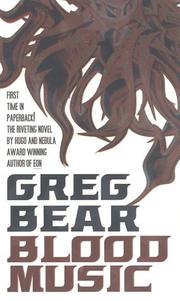
Others: Overwhelmingly positiveIn the tradition of the greatest cyberpunk novels, Blood Music explores the imminent destruction of mankind and the fear of mass destruction by technological advancements. The novel follows present-day events in which the fears concerning the nuclear annihilation of the world subsided after the Cold War and the fear of chemical warfare spilled over into the empty void it left behind. An amazing breakthrough in genetic engineering made by Vergil Ulam is considered too dangerous for further research, but rather than destroy his work, he injects himself with his creation and walks out of his lab, unaware of just how his actions will change the world. Author Greg Bear’s treatment of the traditional tale of scientific hubris is both suspenseful and a compelling portrait of a new intelligence emerging amongst us, irrevocably changing our world.
What made the match, strongest first
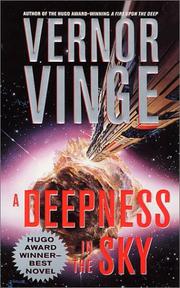
Vernor Vinge
1999 · 606 pages · 12 reviews
Others: Mostly positiveFrom inside cover Tor First Edition March 1999: Thirty thousand years before the events of A Fire upon the Deep, Pham Nuwen is living in anonymity among the Qeng Ho interstellar trading fleet. In high orbit above the planet Arachna, they wait for the awakening of its dormant population, the Spiders, who have burrowed deep into the planet, awaiting the relighting of the On/Off star their planet orbits. For when light returns, Arachna will at long last explode into a Golden Age of technology and commerce. But the slumbering Spiders' vulnerability has attracted another lurking presence -- the Emergents, a band of traders whose plans for Arachna are more sinister than anything the Qeng Ho could envision. Reluctant to share their spoils with the Qeng Ho, the Emergents unleash an attack unlike any seen in the Qeng Ho's millennia-long history of exploration, reducing their fleet to serfdom... and then to something worse. Reaching into memories so old and painful he can barely recall them, Pham gathers the other "survivors" about him and makes a final attempt to be worthy of a reputation as ancient and storied as the history of the Qeng Ho itself. But time is running out, for soon the Emergents' assault will strip Arachna bare. As Pham's underground resistance cell struggles against its torturers in space, a wondrously gifted clan of Spiders on the planet below fights another battle - to advance their technology quickly enough to defeat their terrestrial foes, and to somehow overcome the invisible enemy lurking above.
What made the match, strongest first
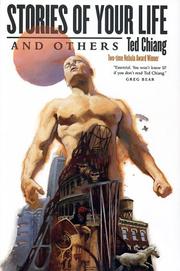
Ted Chiang
2002 · 285 pages · 8 reviews
Others: Overwhelmingly positiveTed Chiang's first published story, "Tower of Babylon," won the Nebula Award in 1990. Subsequent stories have won the Asimov's SF Magazine reader poll, a second Nebula Award, the Theodore Sturgeon Memorial Award, and the Sidewise Award for alternate history. He won the John W. Campbell Award for Best New Writer in 1992. Story for story, he is the most honored young writer in modern SF. Now, collected here for the first time are all seven of this extraordinary writer's stories so far--plus an eighth story written especially for this volume. What if men built a tower from Earth to Heaven--and broke through to Heaven's other side? What if we discovered that the fundamentals of mathematics were arbitrary and inconsistent? What if there were a science of naming things that calls life into being from inanimate matter? What if exposure to an alien language forever changed our perception of time? What if all the beliefs of fundamentalist Christianity were literally true, and the sight of sinners being swallowed into fiery pits were a routine event on city streets? These are the kinds of outrageous questions posed by the stories of Ted Chiang. Stories of your life . . . and others.
What made the match, strongest first
Loved itBy PKD, I was pleasantly surprised to really love. it also reads like the Matrix. I think it's very good.
Loved itIt has an amazing dystopian background and a bombshell ending and it's one of the best examples of Philip K. Dick harnessing the weirdness. It's properly edited and controlled.
 Mixed
it has some high points but something that I like in some of his other books is how he's able to balance some of these darker themes the grimness of the world with a little bit of empathy a little bit of Hope or positivity and pretty much everyone in this book is rather unlikable it's a heavy read the tone is pretty consistent throughout there's not a whole lot to root for or be hopeful for in this book and I think I just wanted a little something to latch on to in order for this to emotionally resonate a little bit more with me I still like this one overall