 Mixed
there were some hits and some misses I think the story which the film arrival was based on was one of the strong points... I liked it I liked it not as much as maybe some people but I did think that was a good book
 Others: Overwhelmingly positive
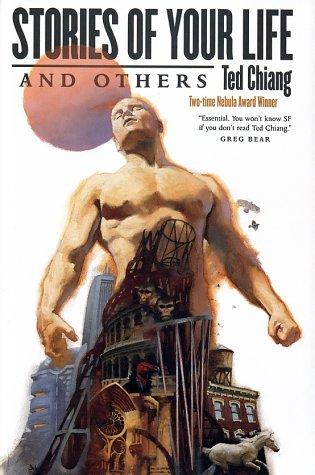
Ted Chiang's first published story, "Tower of Babylon," won the Nebula Award in 1990. Subsequent stories have won the Asimov's SF Magazine reader poll, a second Nebula Award, the Theodore Sturgeon Memorial Award, and the Sidewise Award for alternate history. He won the John W. Campbell Award for Best New Writer in 1992. Story for story, he is the most honored young writer in modern SF. Now, collected here for the first time are all seven of this extraordinary writer's stories so far--plus an eighth story written especially for this volume. What if men built a tower from Earth to Heaven--and broke through to Heaven's other side? What if we discovered that the fundamentals of mathematics were arbitrary and inconsistent? What if there were a science of naming things that calls life into being from inanimate matter? What if exposure to an alien language forever changed our perception of time? What if all the beliefs of fundamentalist Christianity were literally true, and the sight of sinners being swallowed into fiery pits were a routine event on city streets? These are the kinds of outrageous questions posed by the stories of Ted Chiang. Stories of your life . . . and others.
Genres: science fiction
Lists: …
Ada Palmer
2016 · 432 pages · 13 reviews
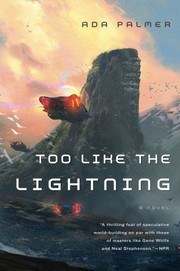
Others: Overwhelmingly positive"The world into which Mycroft and Carlyle have been born is as strange to our 21st-century eyes as ours would be to a native of the 1500s. It is a hard-won utopia built on technologically-generated abundance, and also on complex and mandatory systems of labeling all public writing and speech... And in this world, Mycroft and Carlyle have stumbled on the wild card that may destabilize the system: the boy Bridger, who can effortlessly make his wishes come true. Who can, it would seem, bring inanimate objects to life..."--Book jacket.
What made the match, strongest first
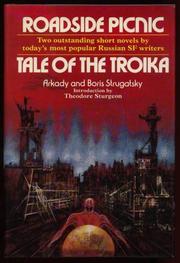
Arkady Natanovich Strugatsky
1978 · 160 pages · 11 reviews
Others: Overwhelmingly positiveComment by Hari Kunru in The Guardian: Soviet-era Russian science fiction deserves a wider audience in English. The Strugatsky brothers collaborated on numerous novels and stories, the best known of which is this, partly because it was filmed by Andrei Tarkovsky as Stalker, in 1977. The novel takes place 10 years after a mysterious alien visitation, which seems to have no rational explanation. No one saw the visitors. Their presence caused disease and blindness in the areas where they landed. Now, in the six "Zones", the laws of physics (and, seemingly, of reality) are disturbed by anomalies, and littered with inexplicable, deadly wreckage. Only a few brave "stalkers" risk their lives to enter the zones to gather alien artefacts for sale. Some of these artefacts offer the promise of extraordinary powers. Unlike Tarkovsky's film, which concentrates on the hallucinatory, vacated landscape of the zones, the novels portray a society adapting to an inexplicable, terrifying event, an eruption of the unknown. Though written in 1971 and published in English in 1977, the novel was heavily bowdlerised by Soviet censors, and an authoritative text wasn't available in Russian until 2000. It's a book with an extraordinary atmosphere – and a demonstration of how science fiction, by using a single bold central metaphor, can open up the possibilities of the novel. Original Title: Пикник на обочине
What made the match, strongest first
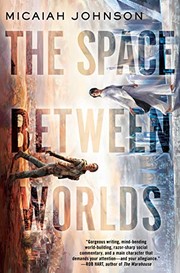
Micaiah Johnson
2020 · 256 pages · 8 reviews
 Others: Mostly positive
An outsider who can travel between worlds discovers a secret that threatens her new home and her fragile place in it, in a stunning sci-fi debut that’s both a cross-dimensional adventure and a powerful examination of identity, privilege, and belonging. Multiverse travel is finally possible, but there’s just one catch: No one can visit a world where their counterpart is still alive. Enter Cara, whose parallel selves happen to be exceptionally good at dying—from disease, turf wars, or vendettas they couldn’t outrun. Cara’s life has been cut short on 372 worlds in total. On this Earth, however, Cara has survived. Identified as an outlier and therefore a perfect candidate for multiverse travel, Cara is plucked from the dirt of the wastelands. Now she has a nice apartment on the lower levels of the wealthy and walled-off Wiley City. She works—and shamelessly flirts—with her enticing yet aloof handler, Dell, as the two women collect off-world data for the Eldridge Institute. She even occasionally leaves the city to visit her family in the wastes, though she struggles to feel at home in either place. So long as she can keep her head down and avoid trouble, Cara is on a sure path to citizenship and security. But trouble finds Cara when one of her eight remaining doppelgängers dies under mysterious circumstances, plunging her into a new world with an old secret. What she discovers will connect her past and her future in ways she could have never imagined—and reveal her own role in a plot that endangers not just her world, but the entire multiverse.
What made the match, strongest first
Frank Herbert
1969 · 256 pages · 12 reviews
Others: MixedBook Two in the Magnificent Dune Chronicles—the Bestselling Science Fiction Adventure of All Time Dune Messiah continues the story of Paul Atreides, better known—and feared—as the man christened Muad’Dib. As Emperor of the known universe, he possesses more power than a single man was ever meant to wield. Worshipped as a religious icon by the fanatical Fremen, Paul faces the enmity of the political houses he displaced when he assumed the throne—and a conspiracy conducted within his own sphere of influence. And even as House Atreides begins to crumble around him from the machinations of his enemies, the true threat to Paul comes to his lover, Chani, and the unborn heir to his family’s dynasty...
What made the match, strongest first
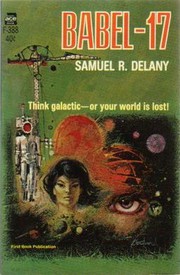
Samuel R. Delany
1966 · 192 pages · 6 reviews
Others: Mostly positiveDuring an interstellar war one side develops a language, Babel-17, that can be used as a weapon. Learning it turns one into an unwilling traitor as it alters perception and thought. This is discovered by the starship captain Rydra Wong. She is recruited to discover how the enemy are infiltrating and sabotaging strategic sites.
What made the match, strongest first
Peter F. Hamilton
2004 · 1144 pages · 6 reviews
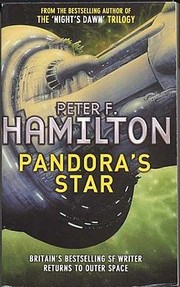
Others: Mostly positiveCritics have compared the engrossing space operas of Peter F. Hamilton to the classic sagas of such sf giants as Isaac Asimov and Frank Herbert. But Hamilton's bestselling fiction--powered by a fearless imagination and world-class storytelling skills--has also earned him comparison to Tolstoy and Dickens. Hugely ambitious, wildly entertaining, philosophically stimulating: the novels of Peter F. Hamilton will change the way you think about science fiction. Now, with Pandora's Star, he begins a new multivolume adventure, one that promises to be his most mind-blowing yet. The year is 2380. The Intersolar Commonwealth, a sphere of stars some four hundred light-years in diameter, contains more than six hundred worlds, interconnected by a web of transport "tunnels" known as wormholes. At the farthest edge of the Commonwealth, astronomer Dudley Bose observes the impossible: Over one thousand light-years away, a star . . . vanishes. It does not go supernova. It does not collapse into a black hole. It simply disappears. Since the location is too distant to reach by wormhole, a faster-than-light starship, the Second Chance, is dispatched to learn what has occurred and whether it represents a threat. In command is Wilson Kime, a five-time rejuvenated ex-NASA pilot whose glory days are centuries behind him.Opposed to the mission are the Guardians of Selfhood, a cult that believes the human race is being manipulated by an alien entity they call the Starflyer. Bradley Johansson, leader of the Guardians, warns of sabotage, fearing the Starflyer means to use the starship's mission for its own ends,.Pursued by a Commonwealth special agent convinced the Guardians are crazy but dangerous, Johansson flees. But the danger is not averted. Aboard the Second Chance, Kime wonders if his crew has been infiltrated. Soon enough, he will have other worries. A thousand light-years away, something truly incredible is waiting: a deadly discovery whose unleashing will threaten to destroy the Commonwealth . . . and humanity itself. Could it be that Johansson was right?From the Hardcover edition.
What made the match, strongest first
Mixedthere were some hits and some misses I think the story which the film arrival was based on was one of the strong points... I liked it I liked it not as much as maybe some people but I did think that was a good book
Loved itthese are sci-fi stories which is not something I usually read but my gosh when it's good it's good especially in short stories these stories stuck in my brain
Loved itI really do like this collection there's a physics portion to the Arrival story that I didn't know was there because I watched the movie first and it's so cool.
Loved itI also read stories of your life and others by him this year but I think I liked exhalation a little bit more ... those two collections are really good
Loved itthis is just incredible the short stories that Ted Chang comes up with are moving beautiful emotional raw energized full of passion Full of Life full of really incredible unique ideas and they're all Science Fiction and Fantasy focused
Loved itthis book was so good that it like punched through all of my anxiety and my worries and I couldn't help but be engrossed in every story and I wanted to talk about every single story.