Lord of Light
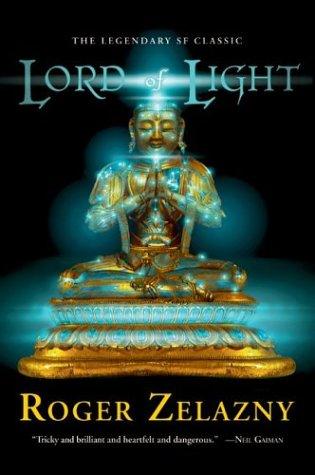
Lord of LightRoger Zelazny
Buy on Amazon

Lord of Light (1967)

Roger Zelazny

Others: Leaning negative

A colony of humankind is subjugated by the First Colonists, the crew of the starship that brought them to their new home 1000 years before. They have taken control of ancient technologies and enhanced themselves with godlike psychic powers and virtual immortality. Adopting the panoply of the venerable Hindu religion, they live lives as its Gods, surrounded by advanced technology within the trappings of a primitive civilization. Our hero Sam, unready to battle the tyrannical forces of the Celestial City allied with his former wife, now the rapturous Kali, Goddess of Destruction. A story of the classic drama of power, love, honor, pride, and fantasy erupting in an epic war of the Gods and ultimate transcendence.

ISBN:
9780575094215
Length:
259 pages

Genres: science fiction

Lists: …

Similar books

1 of 6
  • The Man in the High Castle

    Philip K. Dick

    1962 · 249 pages · 12 reviews

    Others: Leaning positive

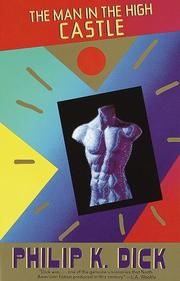
    The Man in the High Castle is an alternate history novel by American writer Philip K. Dick. Published and set in 1962, the novel takes place fifteen years after an alternative ending to World War II, and concerns intrigues between the victorious Axis Powers—primarily, Imperial Japan and Nazi Germany—as they rule over the former United States, as well as daily life under the resulting totalitarian rule. The Man in the High Castle won the Hugo Award for Best Novel in 1963. Beginning in 2015, the book was adapted as a multi-season TV series, with Dick's daughter, Isa Dick Hackett, serving as one of the show's producers. Reported inspirations include Ward Moore's alternate Civil War history, Bring the Jubilee (1953), various classic World War II histories, and the I Ching (referred to in the novel). The novel features a "novel within the novel" comprising an alternate history within this alternate history wherein the Allies defeat the Axis (though in a manner distinct from the actual historical outcome).

    Why?

    What made the match, strongest first

    On 5+ of the same lists
    55%
    Also science fiction
    35%
    Media Death Cult loved both
    10%
    Personalize your recommendations
  • Blood Music

    Greg Bear

    1985 · 262 pages · 7 reviews

    Others: Overwhelmingly positive

    In the tradition of the greatest cyberpunk novels, Blood Music explores the imminent destruction of mankind and the fear of mass destruction by technological advancements. The novel follows present-day events in which the fears concerning the nuclear annihilation of the world subsided after the Cold War and the fear of chemical warfare spilled over into the empty void it left behind. An amazing breakthrough in genetic engineering made by Vergil Ulam is considered too dangerous for further research, but rather than destroy his work, he injects himself with his creation and walks out of his lab, unaware of just how his actions will change the world. Author Greg Bear’s treatment of the traditional tale of scientific hubris is both suspenseful and a compelling portrait of a new intelligence emerging amongst us, irrevocably changing our world.

    Why?

    What made the match, strongest first

    On 5+ of the same lists
    59%
    Also science fiction
    35%
    Media Death Cult loved both
    6%
    Personalize your recommendations
  • The Demolished Man

    Alfred Bester

    1951 · 208 pages · 6 reviews

    Others: Mostly positive

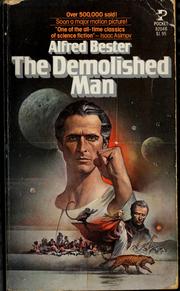
    In a world in which the police have telepathic powers, how do you get away with murder? Ben Reichs heads a huge 24th century business empire, spanning the solar system. He is also an obsessed, driven man determined to murder a rival. To avoid capture, in a society where murderers can be detected even before they commit their crime, is the greatest challenge of his life.

    Why?

    What made the match, strongest first

    On 5+ of the same lists
    66%
    Also science fiction
    33%
    Similar descriptions
    1%
    Personalize your recommendations
  • City

    Clifford D. Simak

    1952 · 254 pages · 5 reviews

    Others: Positive

    Comment by John Clute: We know better now, of course. But they still entrance us, the old page-turners from the glory days of American SF, half a century or so ago, when the world was full of futures we were never going to have. In the mid-1940s, when he began to publish the episodes that would be assembled as City in 1952, Clifford Simak, a Minneapolis-based journalist and author, could still carry us away with the dream that cars and pollution and even the great cities of the world – "Huddling Place", the title of one of these tales, is his own derisory term for them – would soon be brushed off the map by Progress, leaving nothing behind but tasteful exurbs filled with middle-class nuclear families living the good life, with fishing streams and greenswards sheltering each home from the stormy blast. Fortunately, Simak soon gets past this demented vision of a near-future world saved by technological fixes, a dementia common then to SF writers and gurus and politicians alike, and launches into an astonishingly eventful narrative of the next 10,000 years as seen through the eyes of one family and the immortal robot Jenkins, and all told with a weird pastoral serenity that for a kid like me seemed near to godlike. In its course City touches on almost everything dear to 1940s SF, and to me remembering. Robots. Genetic Engineering. Space. Jupiter. Domed cities. Keeps. Hiveminds. Matter transmission. Telepathy. Parallel worlds. Paranormal empathy. Mutants. Supermen. It's all there, and, thanks to Simak's skilled hand at the wheel, it's all in place: suave, sibylline, swift. The whole is framed as a series of legends told by the uplifted Dogs who have replaced the human race, now gone for ever. They have been bred not to kill. At the end, only Jenkins remains to keep them from learning how to repeat history and die. It all seemed immensely sad and wise then, but fun. It still does.

    Why?

    What made the match, strongest first

    On 5+ of the same lists
    62%
    Also science fiction
    36%
    Similar descriptions
    2%
    Personalize your recommendations
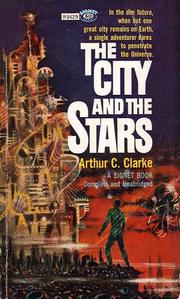
  • The City and the Stars

    Arthur C. Clarke

    1956 · 254 pages · 6 reviews

    Others: Mostly negative

    Omnibus

    Why?

    What made the match, strongest first

    On 5+ of the same lists
    58%
    Also science fiction
    36%
    A creator reacted alike
    6%
    Personalize your recommendations
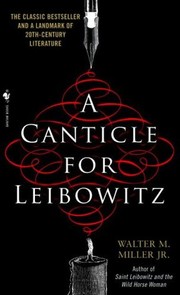
  • A Canticle for Leibowitz

    Walter M. Miller Jr.

    1959 · 320 pages · 4 reviews

    Others: Mixed

    Highly unusual After the Holocaust novel. In the far future, 20th century texts are preserved in a monastery, as "sacred books". The monks preserve for centuries what little science there is, and have saved the science texts and blueprints from destruction many times, also making beautifully illuminated copies. As the story opens to a world run on a basically fuedal lines, science is again becoming fashionable, as a hobby of rich men, at perhaps 18th or early 19th century level of comprehesion. A local lord, interested in science, comes to the monastery. What happens after that is an exquisitely told tale, stunning and extremely moving, totally different from any other After the Holocaust story

    Why?

    What made the match, strongest first

    On 5+ of the same lists
    54%
    Also science fiction
    36%
    Media Death Cult loved both
    10%
    Personalize your recommendations

Reviews3