

 Mixed
It's violent dystopian comedy with a philosophical core. It's not realism, right? It's a novel of violence and silliness. Of silliness and violence. An unusual combination that works spectacularly.
 Others: Overwhelmingly positive
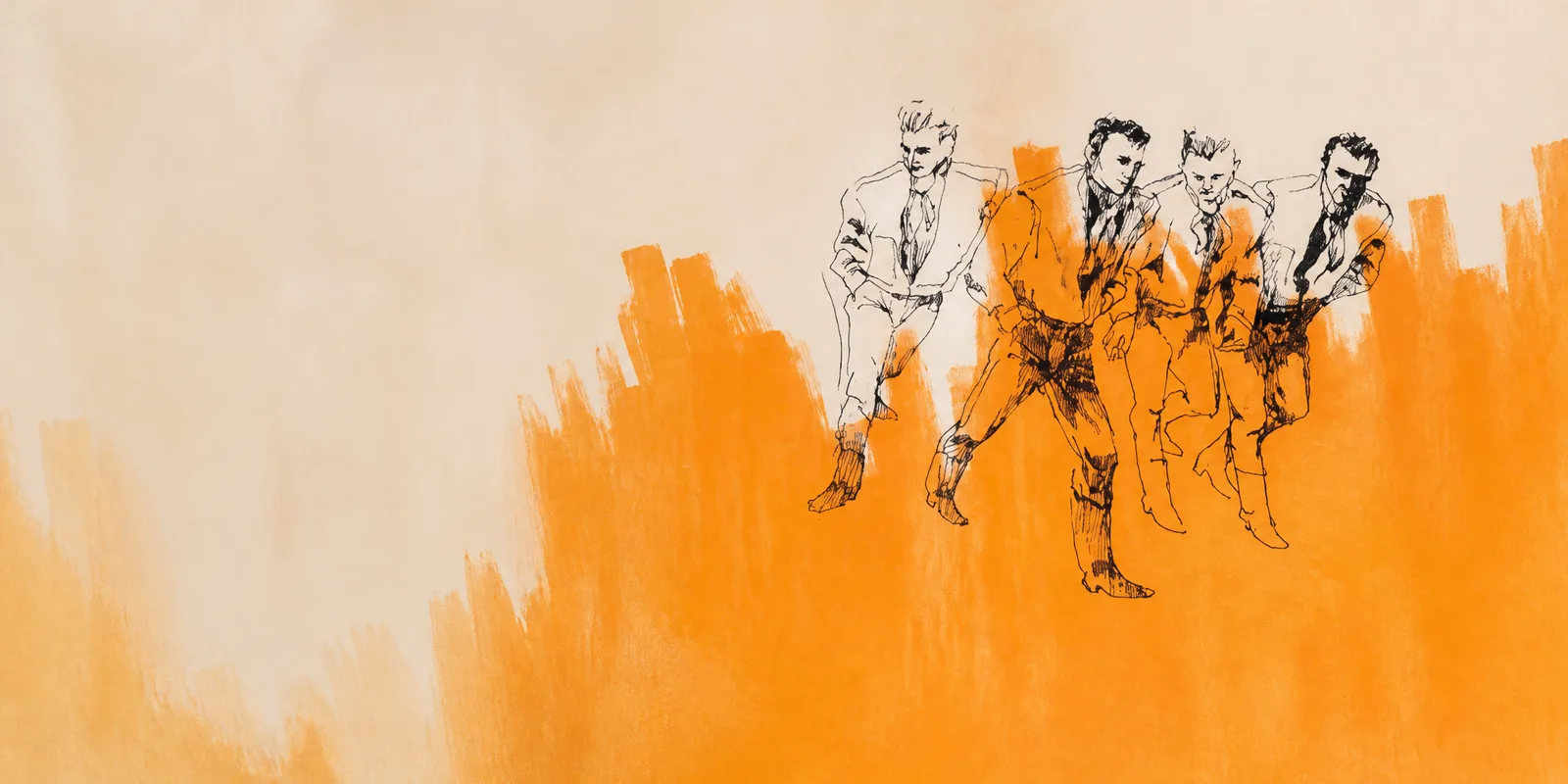
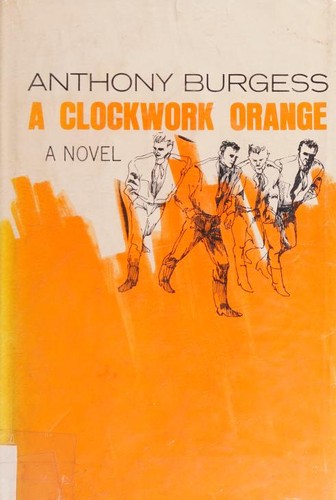
A Clockwork Orange is a dystopian satirical black comedy novel by English writer Anthony Burgess, published in 1962. It is set in a near-future society that has a youth subculture of extreme violence. The teenage protagonist, Alex, narrates his violent exploits and his experiences with state authorities intent on reforming him. The book is partially written in a Russian-influenced argot called "Nadsat", which takes its name from the Russian suffix that is equivalent to '-teen' in English. According to Burgess, it was a jeu d'esprit written in just three weeks. In 2005, A Clockwork Orange was included on Time magazine's list of the 100 best English-language novels written since 1923, and it was named by Modern Library and its readers as one of the 100 best English-language novels of the 20th century. The original manuscript of the book has been kept at McMaster University's William Ready Division of Archives and Research Collections in Hamilton, Ontario, Canada since the institution purchased the documents in 1971. It is considered one of the most influential dystopian books.
Genres: science fiction
Lists: …
Stanisław Lem
1961 · 220 pages · 13 reviews
Others: Overwhelmingly positiveThe cult-classic by Stanislaw Lem that spawned the movie is now available for your Kindle! Until now the only English edition was a 1970 version, which was translated from French and which Lem himself described as a "poor translation." This wonderful new English translation (by Bill Johnston) of Lem's classic Solaris is a must-have for fans of Lem's classic novel. Telling of humanity's encounter with an alien intelligence on the planet Solaris, the 1961 novel is a cult classic, exploring the ultimate futility of attempting to communicate with extra-terrestrial life. When Kris Kelvin arrives at the planet Solaris to study the ocean that covers its surface, he finds a painful, hitherto unconscious memory embodied in the living physical likeness of a long-dead lover. Others examining the planet, Kelvin learns, are plagued with their own repressed and newly corporeal memories. The Solaris ocean may be a massive brain that creates these incarnate memories, though its purpose in doing so is unknown, forcing the scientists to shift the focus of their quest and wonder if they can truly understand the universe without first understanding what lies within their hearts.
What made the match, strongest first
Philip K. Dick
1968 · 210 pages · 12 reviews
Others: Overwhelmingly positiveIt was January 2021, and Rick Deckard had a license to kill. Somewhere among the hordes of humans out there, lurked several rogue androids. Deckard's assignment--find them and then..."retire" them. Trouble was, the androids all looked exactly like humans, and they didn't want to be found!
What made the match, strongest first
Kazuo Ishiguro
2005 · 288 pages · 14 reviews
 Others: Mostly positive
Ishiguro explores what it means to have a soul and how art distinguishes man from other life forms. But above all, Never Let Me Go is a study of friendship and the bonds we form which make or break while we come of age.
What made the match, strongest first
Ray Bradbury
1950 · 222 pages · 5 reviews
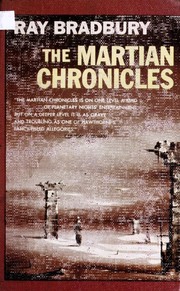
Others: Overwhelmingly positiveThis is a collection of science fiction short stories, cleverly cobbled together to form a coherent and very readable novel about a future colonization of Mars. As the stories progress chronologically the author tells how the first humans colonized Mars, initially sharing the planet with a handful of Martians. When Earth is devastated by nuclear war the colony is left to fend for itself and the colonists determine to build a new Earth on Mars.
What made the match, strongest first
Arthur C. Clarke
1968 · 228 pages · 5 reviews
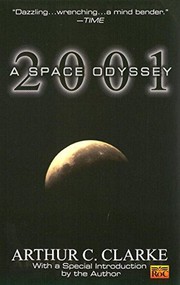
Others: Overwhelmingly positiveA novel that proposes an idea about how the human race might have begun and where it might be headed...given a little help from out there. A colaboration of ideas with director Stanley Kubrick in the late 1960's it begins at "the dawn of man" and then leaps to the year 2001 where a mission to Saturn (Jupiter in the film) is mounted to try and answer questions raised by the discovery of an ancient artifact dug up on the moon. Though not particularly fast paced, the science is good, and there are a few hair raising events. There are also interesting speculations about the future, such as the space shuttle, and a device eerily similar to an iPad. Leaving plenty of room for contemplation and the appreciation for the inevitable trials of space travel, this is one of the truly landmark pieces of hard science fiction.
What made the match, strongest first
Orson Scott Card
1985 · 324 pages · 17 reviews
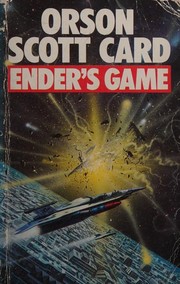
Others: Overwhelmingly positiveEnder's Game is a 1985 military science fiction novel by American author Orson Scott Card. Set at an unspecified date in Earth's future, the novel presents an imperiled humankind after two conflicts with the Formics, an insectoid alien species they dub the "buggers". In preparation for an anticipated third invasion, children, including the novel's protagonist, Andrew "Ender" Wiggin, are trained from a very young age by putting them through increasingly difficult games, including some in zero gravity, where Ender's tactical genius is revealed. The book originated as a short story of the same name, published in the August 1977 issue of Analog Science Fiction and Fact. The novel was published on January 15, 1985. Later, by elaborating on characters and plotlines depicted in the novel, Card was able to write additional books in the Ender's Game series. Card also released an updated version of Ender's Game in 1991, changing some political facts to reflect the times more accurately (e.g., to include the recent collapse of the Soviet Union and the end of the Cold War). The novel has been translated into 34 languages. Reception of the book has been mostly positive. It has become suggested reading for many military organizations, including the United States Marine Corps. Ender's Game was recognized as "best novel" by the 1985 Nebula Award[3] and the 1986 Hugo Award[4] in the genres of science fiction and fantasy. Its four sequels—Speaker for the Dead (1986), Xenocide (1991), Children of the Mind (1996), and Ender in Exile (2008)—follow Ender's subsequent travels to many different worlds in the galaxy. In addition, the later novella A War of Gifts (2007) and novel Ender's Shadow (1999), plus other novels in the Shadow saga, take place during the same time period as the original.
What made the match, strongest first
MixedIt's violent dystopian comedy with a philosophical core. It's not realism, right? It's a novel of violence and silliness. Of silliness and violence. An unusual combination that works spectacularly.
Loved it1984 and Brave New World and A Clockwork Orange are all books that I really, really liked.
Loved itAnd I love the book. I read it recently, but that's all good.
Loved itThe reason why this book has stayed with me for so long is the exploration of free will versus control. Is a person that's forced to be good actually good? And is this better than retaining the freedom to make bad choices?
Loved itone of the finest dystopia novels I've ever read it's really important
Loved itit was just a really fun book that I felt like really exercised my brain and actually had me having to think about what I was reading and what it meant
Loved itI really enjoyed this ... I highly recommend it