Do Androids Dream of Electric Sheep?
Do Androids Dream of Electric Sheep?Philip K. Dick
Buy on Amazon

Do Androids Dream of Electric Sheep? (1968)

Philip K. Dick

Others: Overwhelmingly positive

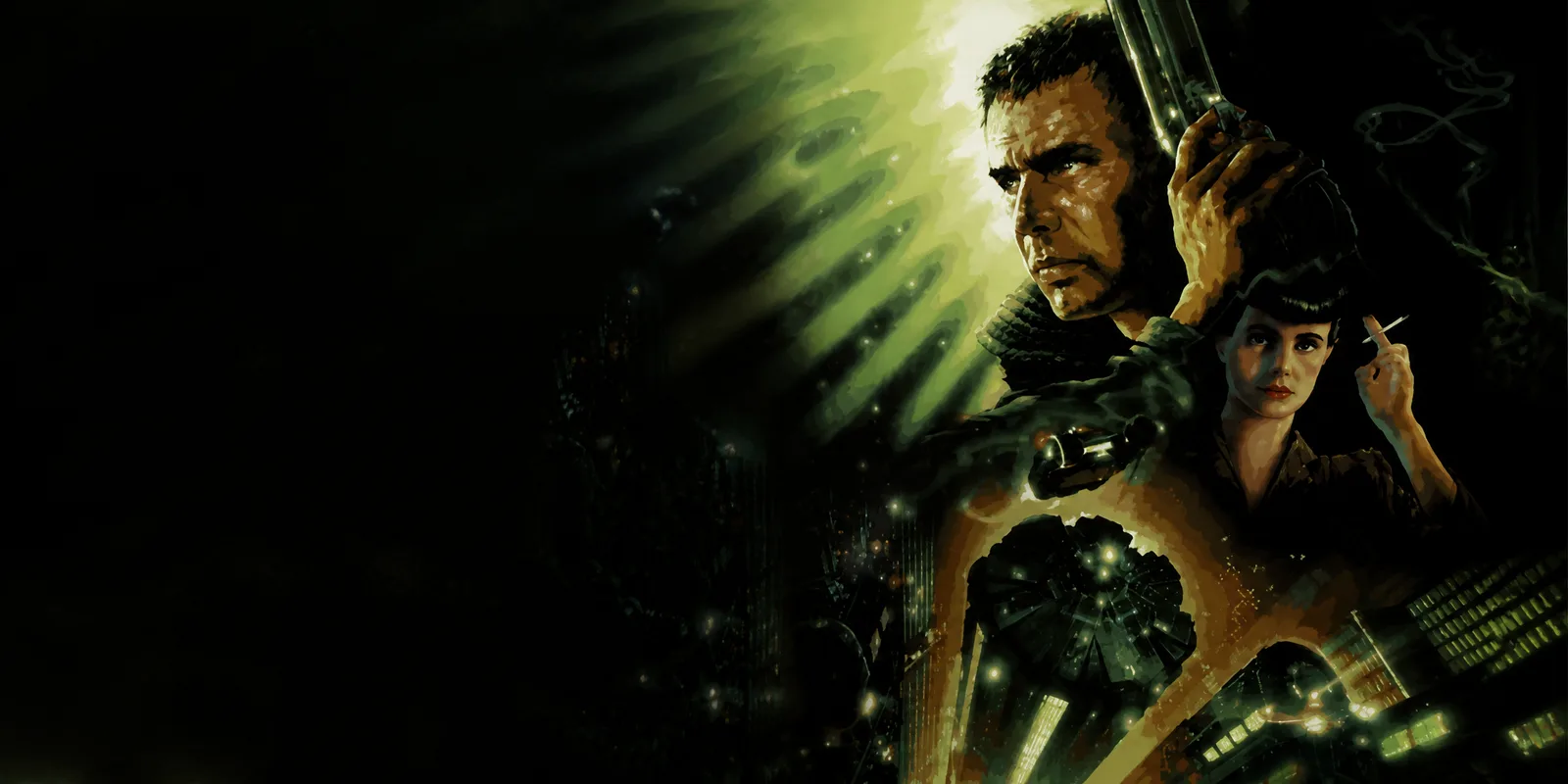
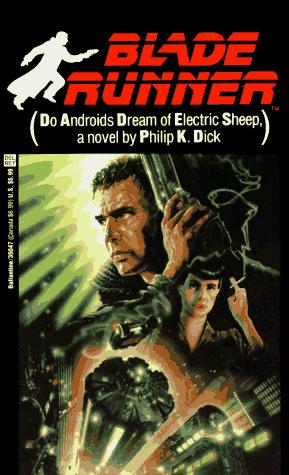
It was January 2021, and Rick Deckard had a license to kill. Somewhere among the hordes of humans out there, lurked several rogue androids. Deckard's assignment--find them and then..."retire" them. Trouble was, the androids all looked exactly like humans, and they didn't want to be found!

ISBN:
9780547572345
Length:
210 pages

Genres: science fiction

Lists: …

Similar books

1 of 6
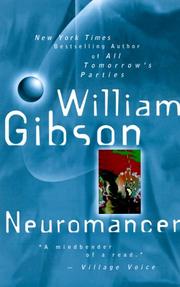
  • Neuromancer

    William Gibson

    1984 · 288 pages · 13 reviews

    Others: Mostly positive

    The first of William Gibson's Sprawl trilogy, Neuromancer is the classic cyberpunk novel. The winner of the Hugo, Nebula, and Philip K. Dick Awards, Neuromancer was the first fully-realized glimpse of humankind’s digital future — a shocking vision that has challenged our assumptions about our technology and ourselves, reinvented the way we speak and think, and forever altered the landscape of our imaginations. Henry Dorsett Case was the sharpest data-thief in the business, until vengeful former employees crippled his nervous system. But now a new and very mysterious employer recruits him for a last-chance run. The target: an unthinkably powerful artificial intelligence orbiting Earth in service of the sinister Tessier-Ashpool business clan. With a dead man riding shotgun and Molly, mirror-eyed street-samurai, to watch his back, Case embarks on an adventure that ups the ante on an entire genre of fiction. Hotwired to the leading edges of art and technology, Neuromancer is a cyberpunk, science fiction masterpiece — a classic that ranks with 1984 and Brave New World as one of the twentieth century’s most potent visions of the future.
    Why?

    What made the match, strongest first

    On 5+ of the same lists
    52%
    Also science fiction
    36%
    3 creators loved both
    12%
    Personalize your recommendations
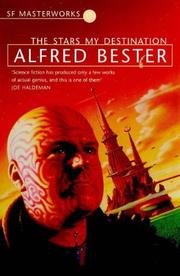
  • The Stars My Destination

    Alfred Bester

    1956 · 236 pages · 8 reviews

    Others: Overwhelmingly positive
    In this pulse-quickening novel, Alfred Bester imagines a future in which people "jaunte" a thousand miles with a single thought, where the rich barricade themselves in labyrinths and protect themselves with radioactive hitmen—and where an inarticulate outcast is the most valuable and dangerous man alive. The Stars My Destination is a classic of technological prophecy and timeless narrative enchantment by an acknowledged master of science fiction.

    Why?

    What made the match, strongest first

    On 5+ of the same lists
    51%
    Also science fiction
    37%
    3 creators loved both
    12%
    Personalize your recommendations
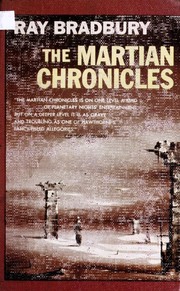
  • The Martian Chronicles

    Ray Bradbury

    1950 · 222 pages · 5 reviews

    Others: Overwhelmingly positive
    This is a collection of science fiction short stories, cleverly cobbled together to form a coherent and very readable novel about a future colonization of Mars. As the stories progress chronologically the author tells how the first humans colonized Mars, initially sharing the planet with a handful of Martians. When Earth is devastated by nuclear war the colony is left to fend for itself and the colonists determine to build a new Earth on Mars.

    Why?

    What made the match, strongest first

    On 5+ of the same lists
    51%
    Also science fiction
    39%
    2 creators loved both
    10%
    Personalize your recommendations
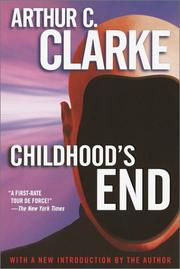
  • Childhood’s End

    Arthur C. Clarke

    1952 · 220 pages · 9 reviews

    Others: Leaning positive

    Childhood's End is a 1953 science fiction novel by British author Arthur C. Clarke. The story follows the peaceful alien invasion of Earth by the mysterious Overlords, whose arrival ends all war, helps form a world government, and turns the planet into a near-utopia. Many questions are asked about the origins and mission of the aliens, but they avoid answering, preferring to remain in their ships, governing through indirect rule. Decades later, the Overlords eventually show themselves, and their impact on human culture leads to a Golden Age. However, the last generation of children on Earth begin to display powerful psychic abilities, heralding their evolution into a group mind, a transcendent form of life.

    Why?

    What made the match, strongest first

    On 5+ of the same lists
    57%
    Also science fiction
    38%
    2 creators loved both
    5%
    Personalize your recommendations
  • Solaris

    Stanisław Lem

    1961 · 220 pages · 13 reviews

    Others: Overwhelmingly positive

    The cult-classic by Stanislaw Lem that spawned the movie is now available for your Kindle! Until now the only English edition was a 1970 version, which was translated from French and which Lem himself described as a "poor translation." This wonderful new English translation (by Bill Johnston) of Lem's classic Solaris is a must-have for fans of Lem's classic novel. Telling of humanity's encounter with an alien intelligence on the planet Solaris, the 1961 novel is a cult classic, exploring the ultimate futility of attempting to communicate with extra-terrestrial life. When Kris Kelvin arrives at the planet Solaris to study the ocean that covers its surface, he finds a painful, hitherto unconscious memory embodied in the living physical likeness of a long-dead lover. Others examining the planet, Kelvin learns, are plagued with their own repressed and newly corporeal memories. The Solaris ocean may be a massive brain that creates these incarnate memories, though its purpose in doing so is unknown, forcing the scientists to shift the focus of their quest and wonder if they can truly understand the universe without first understanding what lies within their hearts.

    Why?

    What made the match, strongest first

    On 5+ of the same lists
    47%
    Also science fiction
    38%
    3 creators loved both
    15%
    Personalize your recommendations
  • 2001: A Space Odyssey

    Arthur C. Clarke

    1968 · 228 pages · 5 reviews

    Others: Overwhelmingly positive

    A novel that proposes an idea about how the human race might have begun and where it might be headed...given a little help from out there. A colaboration of ideas with director Stanley Kubrick in the late 1960's it begins at "the dawn of man" and then leaps to the year 2001 where a mission to Saturn (Jupiter in the film) is mounted to try and answer questions raised by the discovery of an ancient artifact dug up on the moon. Though not particularly fast paced, the science is good, and there are a few hair raising events. There are also interesting speculations about the future, such as the space shuttle, and a device eerily similar to an iPad. Leaving plenty of room for contemplation and the appreciation for the inevitable trials of space travel, this is one of the truly landmark pieces of hard science fiction.

    Why?

    What made the match, strongest first

    On 5+ of the same lists
    48%
    Also science fiction
    39%
    3 creators loved both
    13%
    Personalize your recommendations

Reviews4

Loved it

Do Androids Dream of Electric Sheep? is technically, on the surface, about a bounty hunter that has to track down and eliminate a bunch of androids, replicants. It pleases me immensely that my two favorite Philip K. Dick books, those two on top of the hill, have been adapted into my three favorite Philip K. Dick source material films.

Review 1 of 6
Loved it

I think this book does a lot of things well just not sure it quite Masters all of them for me it's slightly below a couple of my favorite PKD books but I still loved it I'm going to put it in a tier

Review 1 of 2