

 Loved it
I got to say this book holds up even reading it in this decade I really enjoyed the story although I do think some people find it a little bit slower paced I loved the methodical approach that I found to be hyperrealistic
Others: Mostly positive Written in 1973, a massive 50 kilometre long alien cylinder begins to pass through the solar system provoking a hurried effort to intercept it. The closest available ship rushes to rendezvous so as to have a quick study before it gets too close to the sun. Able to enter via an airlock on one end of the ship, the crew explores the huge world found inside, a world full of wonder and mystery. As usual, the science is spot on. This is the best novel of Clarke's since 2001 and Childhood's End and is a truly grand adventure full of puzzles and ideas that lead you asking more questions than are answered. Enough questions in fact to lead to numerous inferior sequels, but enough answers to leave you satisfied. Don't pass up this gem of hard science fiction.
Genres: science fiction
Lists: …
Philip K. Dick
1965 · 233 pages · 6 reviews
 Others: Overwhelmingly positive
The Three Stigmata of Palmer Eldritch is a 1965 science fiction novel by Philip K. Dick. It was nominated for the Nebula Award for Best Novel in 1965.[1] The novel takes place in 2016. Under United Nations authority, humankind has colonized every habitable planet and moon in the Solar System. Like many of Dick's novels, it utilizes an array of science fiction concepts, features several layers of reality and unreality and philosophical ideas. It is one of Dick's first works to explore religious themes.
What made the match, strongest first
Orson Scott Card
1985 · 324 pages · 17 reviews
Others: Overwhelmingly positiveEnder's Game is a 1985 military science fiction novel by American author Orson Scott Card. Set at an unspecified date in Earth's future, the novel presents an imperiled humankind after two conflicts with the Formics, an insectoid alien species they dub the "buggers". In preparation for an anticipated third invasion, children, including the novel's protagonist, Andrew "Ender" Wiggin, are trained from a very young age by putting them through increasingly difficult games, including some in zero gravity, where Ender's tactical genius is revealed. The book originated as a short story of the same name, published in the August 1977 issue of Analog Science Fiction and Fact. The novel was published on January 15, 1985. Later, by elaborating on characters and plotlines depicted in the novel, Card was able to write additional books in the Ender's Game series. Card also released an updated version of Ender's Game in 1991, changing some political facts to reflect the times more accurately (e.g., to include the recent collapse of the Soviet Union and the end of the Cold War). The novel has been translated into 34 languages. Reception of the book has been mostly positive. It has become suggested reading for many military organizations, including the United States Marine Corps. Ender's Game was recognized as "best novel" by the 1985 Nebula Award[3] and the 1986 Hugo Award[4] in the genres of science fiction and fantasy. Its four sequels—Speaker for the Dead (1986), Xenocide (1991), Children of the Mind (1996), and Ender in Exile (2008)—follow Ender's subsequent travels to many different worlds in the galaxy. In addition, the later novella A War of Gifts (2007) and novel Ender's Shadow (1999), plus other novels in the Shadow saga, take place during the same time period as the original.
What made the match, strongest first
Alastair Reynolds
2005 · 521 pages · 4 reviews
Others: Overwhelmingly positiveIn 2057, Bella Lind and the crew of the Rockhopper mine comets for their ice, but when Janus, one of Saturn's ice moons, inexplicably leaves its orbit and heads out of the solar system at high speed, Bella is assigned to follow it.
What made the match, strongest first
Alfred Bester
1951 · 208 pages · 6 reviews
Others: Mostly positiveIn a world in which the police have telepathic powers, how do you get away with murder? Ben Reichs heads a huge 24th century business empire, spanning the solar system. He is also an obsessed, driven man determined to murder a rival. To avoid capture, in a society where murderers can be detected even before they commit their crime, is the greatest challenge of his life.
What made the match, strongest first
Hannu Rajaniemi
2010 · 353 pages · 5 reviews
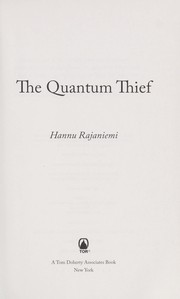
Others: Overwhelmingly positiveA breathtaking joyride through the solar system several centuries hence, a world of marching cities, ubiquitous public-key encryption, people who communicate via shared memory, and a race of hyper-advanced humans who originated as an MMORPG guild.
What made the match, strongest first
Robert J. Sawyer
2000 · 336 pages · 2 reviews
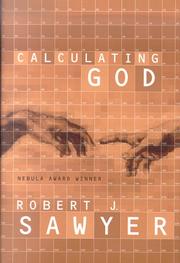
Others: Overwhelmingly positiveCalculating God is the new near-future SF thriller from the popular and award-winning Robert J. Sawyer. An alien shuttle craft lands outside the Royal Ontario Museum in Toronto. A six-legged, two-armed alien emerges, who says, in perfect English, "Take me to a paleontologist." It seems that Earth, and the alien's home planet, and the home planet of another alien species traveling on the alien mother ship, all experienced the same five cataclysmic events at about the same time (one example of these "cataclysmic events" would be the meteor that wiped out the dinosaurs). Both alien races believe this proves the existence of God: i.e. he's obviously been playing with the evolution of life on each of these planets. From this provocative launch point, Sawyer tells a fast-paced, and morally and intellectually challenging, SF story that just grows larger and larger in scope. The evidence of God's universal existence is not universally well received on Earth, nor even immediately believed. And it reveals nothing of God's nature. In fact. it poses more questions than it answers. When a supernova explodes out in the galaxy but close enough to wipe out life on all three home-worlds, the big question is, Will God intervene or is this the sixth cataclysm:? Calculating God is SF on the grand scale. Calculating God is a 2001 Hugo Award Nominee for Best Novel.
What made the match, strongest first
Loved itI got to say this book holds up even reading it in this decade I really enjoyed the story although I do think some people find it a little bit slower paced I loved the methodical approach that I found to be hyperrealistic
Loved itI liked both of them I preferred 2001 slightly but Rama is great too
 Not a fan
it is dull it is boring
Loved itI think that rendezvous with Rama is a stronger book overall but the beginning of 2001 has the most amazing first sentence that I will never forget and I highly recommend checking out these books whether you're new to science fiction or have been reading it for years.
Loved itI enjoyed my reread Clark's writingin Spa so at least to the point there's no messing about who moves the story along promptly
Loved itThis is my favorite book by Clark, who is one of the big three. It's one of the best like artifact exploration stories I've ever read.