
 Loved it
so if you're looking for more influential texts on the Arthurian Cannon this one is absolutely worth checking out you can just read parts of it or you can try and read the whole thing if you really desperately want to
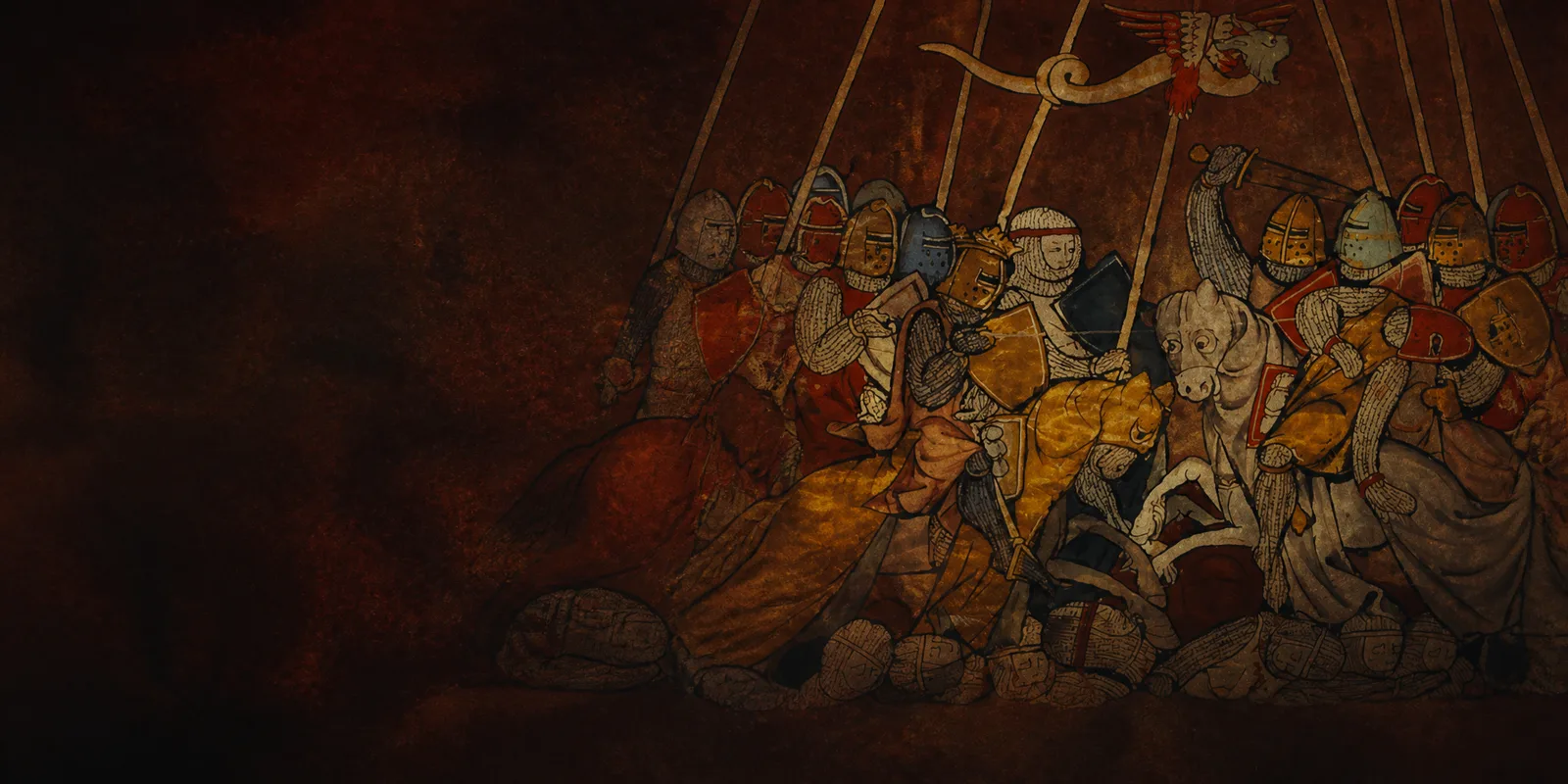
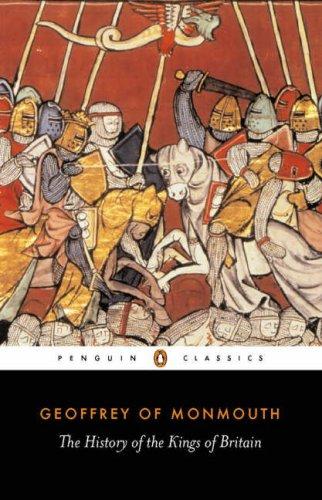
Others: Positive Completed in 1136, The History of the Kings of Britain traces the story of the realm from its supposed foundation by Brutus to the coming of the Saxons some two thousand years later. Vividly portraying legendary and semi-legendary figures such as Lear, Cymbeline, Merlin the magician and the most famous of all British heroes, King Arthur, it is as much myth as it is history and its veracity was questioned by other medieval writers. But Geoffrey of Monmouth's powerful evocation of illustrious men and deeds captured the imagination of subsequent generations, and his influence can be traced through the works of Malory, Shakespeare, Dryden and Tennyson.
Genres: classics, nonfiction
Lists: …
Henrietta Leyser
1995 · 1 review
Others: PositiveMedieval Women looks at a thousand years of English history, as it affected - and was made by - women. Henrietta Leyser considers the problems and attitudes fundamental to every woman of the time: medieval views on sex, marriage and motherhood; the world of work and the experience of widowhood for peasant, townswoman and aristocrat. The intellectual and spiritual worlds of women are also explored. Based on an abundance of research from the last twenty-five years, Medieval Women describes the diversity and vitality of English women's lives in the Middle Ages.
What made the match, strongest first
Richard Barber
1999 · 588 pages · 1 review
Others: PositiveTales from the dawn of Christianity to the age of the Plantagenets reveal a mythology in its time as potent as that of the classical world. The British Isles have a long tradition of tales of gods, heroes and marvels, hinting at a mythology once as relevant to the races which settled the islands as the Greek and Roman gods were to the classical world. The tales drawntogether in this book, from a wide range of medieval sources, span the centuries from the dawn of Christianity to the age of the Plantagenets. The Norse gods which peopled the Anglo-Saxon past survive in Beowulf; Cuchulainn, Taliesin and the magician Merlin take shape from Celtic mythology; and saints include Helena who brought a piece of the True Cross to Britain, and Joseph of Arimathea whose staff grew into the Glastonbury thorn. Tales of the British Arthur are followed by legends of later heroes, including Harold, Hereward and Godiva. These figures and many others were part of a familiar national mythology on which Shakespeare drew for Lear, Macbeth and Hamlet, creating the famous versions that are known today. Here the original stories are presented. RICHARD BARBER's other books include and The Knight and Chivalry.
What made the match, strongest first
Charlotte Guest
1997 · 166 pages · 1 review
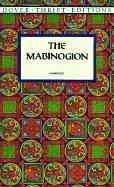
Others: PositiveThe Mabinogion (Welsh pronunciation: mabɪˈnɔɡjɔn) is a collection of 11 prose stories collated from medieval Welsh manuscripts. The tales draw on pre-Christian Celtic mythology, international folktale motifs and early medieval historical traditions. While some details may hark back to older Iron Age traditions, each of the tales is the product of a developed medieval Welsh narrative tradition, both oral and written. Lady Charlotte Guest in the mid 19th century was the first to publish English translations of the collection, popularising the name "Mabinogion". The stories appear in either or both of two medieval Welsh manuscripts, the White Book of Rhydderch or Llyfr Gwyn Rhydderch, written c.1350, and the Red Book of Hergest or Llyfr Coch Hergest, written c.1382 – 1410, though texts or fragments of some of the tales have been preserved in earlier 13th century and later mss. Scholars agree that the tales are older than the existing mss, but disagree over just how much older. The different texts originated at different times. Debate has focused on the dating of the Four Branches of the Mabinogi. Sir Ifor Williams offered a date prior to 1100, based on linguistic and historical arguments, while later Saunders Lewis set forth a number of arguments for a date between 1170 and 1190; Thomas M. Charles-Edwards, in a paper published in 1970, discussed both viewpoints, and while critical of the arguments of both scholars, noted that the language of the stories fits the 11th century. More recently, Patrick Sims-Williams argued for a plausible range of about 1060 to 1200, the current scholarly consensus.
What made the match, strongest first
Chrétien de Troyes
1984 · 122 pages · 1 review
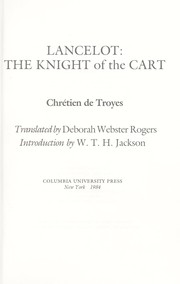
Others: PositiveIn this outstanding new translation of Lancelot, Burton Raffel brings to English language readers the fourth of Chrétien’s five surviving romantic Arthurian poems. This poem was the first to introduce Lancelot as an important figure in the King Arthur legend.
What made the match, strongest first
Miranda Aldhouse-Green
2023 · 2 reviews
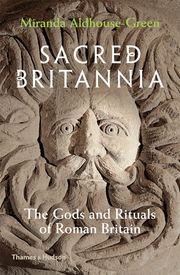
Others: PositiveA compelling new account of religion in Roman Britain, weaving together the latest archaeological research and a new analysis of ancient literature to illuminate parallels between past and present Two thousand years ago, the Romans sought to absorb into their empire what they regarded as a remote, almost mythical island on the very edge of the known world―Britain. The expeditions of Julius Caesar and the Claudian invasion of 43 CE, up to the traditional end of Roman Britain in the fifth century CE, brought fundamental and lasting changes to the island. Not least among these was a pantheon of new classical deities and religious systems, along with a clutch of exotic eastern cults, including Christianity. But what homegrown deities, cults, and cosmologies did the Romans encounter in Britain, and how did the British react to the changes? Under Roman rule, the old gods and their adherents were challenged, adopted, adapted, absorbed, and reconfigured. Miranda Aldhouse- Green balances literary, archaeological, and iconographic evidence (and scrutinizes the shortcomings of each) to illuminate the complexity of religion and belief in Roman Britain. She examines the two-way traffic of cultural exchange and the interplay between imported and indigenous factions to reveal how this period on the cusp between prehistory and history knew many of the same tensions, ideologies, and issues of identity still relevant today. 110 illustrations
What made the match, strongest first
Albert Camus
1941 · 169 pages · 1 review
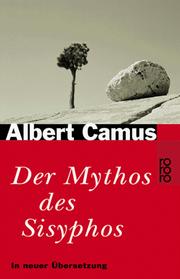
Others: Positive«Il n'y a qu'un problème philosophique vraiment sérieux : c'est le suicide.» Avec cette formule foudroyante, qui semble rayer d'un trait toute la philosophie, un jeune homme de moins de trente ans commence son analyse de la sensibilité absurde. Il décrit le «mal de l'esprit» dont souffre l'époque actuelle : «L'absurde naît de la confrontation de l'appel humain avec le silence déraisonnable du monde.»
What made the match, strongest first
Loved itso if you're looking for more influential texts on the Arthurian Cannon this one is absolutely worth checking out you can just read parts of it or you can try and read the whole thing if you really desperately want to