
 Loved it
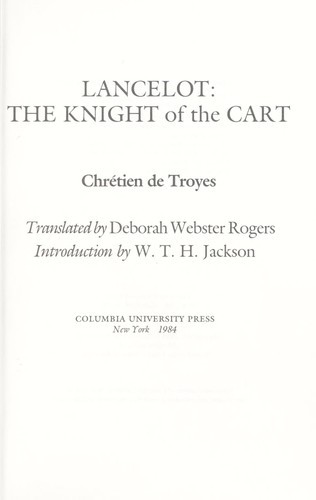
it's a really fun narrative obviously doesn't Encompass everything about Arthurian Legend and it focuses in on Lance a lot rather than Arthur... which can be very entertaining and Illuminating and I think it's a really great place to start
Others: Positive In this outstanding new translation of Lancelot, Burton Raffel brings to English language readers the fourth of Chrétien’s five surviving romantic Arthurian poems. This poem was the first to introduce Lancelot as an important figure in the King Arthur legend.
Genres: fantasy, romance, classics, poetry
Lists: …
Charlotte Guest
1997 · 166 pages · 1 review
Others: PositiveThe Mabinogion (Welsh pronunciation: mabɪˈnɔɡjɔn) is a collection of 11 prose stories collated from medieval Welsh manuscripts. The tales draw on pre-Christian Celtic mythology, international folktale motifs and early medieval historical traditions. While some details may hark back to older Iron Age traditions, each of the tales is the product of a developed medieval Welsh narrative tradition, both oral and written. Lady Charlotte Guest in the mid 19th century was the first to publish English translations of the collection, popularising the name "Mabinogion". The stories appear in either or both of two medieval Welsh manuscripts, the White Book of Rhydderch or Llyfr Gwyn Rhydderch, written c.1350, and the Red Book of Hergest or Llyfr Coch Hergest, written c.1382 – 1410, though texts or fragments of some of the tales have been preserved in earlier 13th century and later mss. Scholars agree that the tales are older than the existing mss, but disagree over just how much older. The different texts originated at different times. Debate has focused on the dating of the Four Branches of the Mabinogi. Sir Ifor Williams offered a date prior to 1100, based on linguistic and historical arguments, while later Saunders Lewis set forth a number of arguments for a date between 1170 and 1190; Thomas M. Charles-Edwards, in a paper published in 1970, discussed both viewpoints, and while critical of the arguments of both scholars, noted that the language of the stories fits the 11th century. More recently, Patrick Sims-Williams argued for a plausible range of about 1060 to 1200, the current scholarly consensus.
What made the match, strongest first
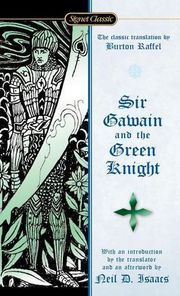
Gawain Poet
2017 · 68 pages · 1 review
Others: PositiveThe Green Knight, a mysteriously powerful creature, tests the honor and courage of King Arthur's youngest knight.
What made the match, strongest first
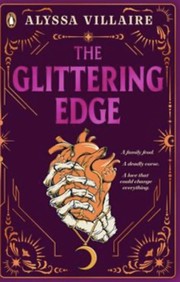
Alyssa Villaire
2025 · 3 reviews
 Others: Mixed
When her mother falls victim to a deadly curse, Penny must work with a misfit witch and the local golden boy to save her life. But the dark secrets they discover will change their lives—and their small Indiana town—forever.
What made the match, strongest first
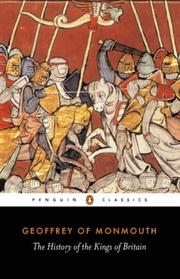
Geoffrey of Monmouth
1973 · 388 pages · 1 review
Others: PositiveCompleted in 1136, The History of the Kings of Britain traces the story of the realm from its supposed foundation by Brutus to the coming of the Saxons some two thousand years later. Vividly portraying legendary and semi-legendary figures such as Lear, Cymbeline, Merlin the magician and the most famous of all British heroes, King Arthur, it is as much myth as it is history and its veracity was questioned by other medieval writers. But Geoffrey of Monmouth's powerful evocation of illustrious men and deeds captured the imagination of subsequent generations, and his influence can be traced through the works of Malory, Shakespeare, Dryden and Tennyson.
What made the match, strongest first
Thomas Malory
1557 · 455 pages · 1 review
Others: PositiveLe Morte d'Arthur (originally spelled Le Morte Darthur, ungrammatical Middle French for "The Death of Arthur") is a 15th-century Middle English prose reworking by Sir Thomas Malory of tales about the legendary King Arthur, Guinevere, Lancelot, Merlin and the Knights of the Round Table—along with their respective folklore. In order to tell a "complete" story of Arthur from his conception to his death, Malory compiled, rearranged, interpreted and modified material from various French and English sources. Today, this is one of the best-known works of Arthurian literature. Many authors since the 19th-century revival of the legend have used Malory as their principal source. (Source: Wikipedia)
What made the match, strongest first
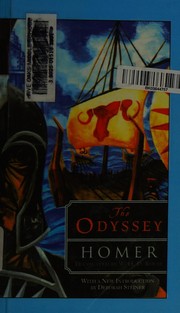
Homer
2007 · 374 pages · 8 reviews
 Others: Overwhelmingly positive
Sing to me of the man, Muse, the man of twists and turns driven time and again off course, once he had plundered the hallowed heights of Troy. So begins Robert Fagles's magnificent translation of the Odyssey. If The Iliad is the world's greatest war epic, The Odyssey is literature's grandest evocation of the everyman's journey through life. During his ten-year voyage home to Ithaca after the Trojan War, Odysseus relies on his wit and wiles for survival in his encounters with divine and natural forces. In the myths and legends retold here, Fagles has captured the energy and poetry of Homer's original in a bold, contemporary idiom. It's a version to read aloud, to savor, and to treasure for its sheer lyrical mastery. Renowned classicist Bernard Knox's superb Introduction and textual commentary provide new insights and background information for the general reader and scholar alike, intensifying the strength of Fagles's translation.
What made the match, strongest first
Loved itit's a really fun narrative obviously doesn't Encompass everything about Arthurian Legend and it focuses in on Lance a lot rather than Arthur... which can be very entertaining and Illuminating and I think it's a really great place to start