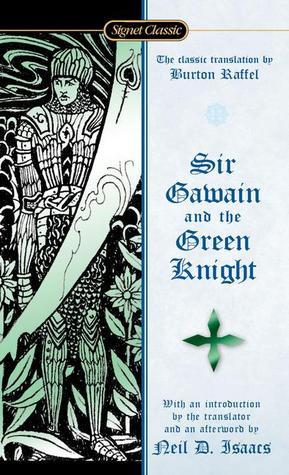
G and the Green Knight although he's not part of the round table at the beginning of that narrative is a entertaining Middle English medieval poem which recounts a year in the life of GN after he encounters the infamous Green Knight and again very widely accessible because there's been so many translations of it I for one really enjoy Simon armitage's translation
Similar books
The mabinogion
Charlotte Guest
1997 · 166 pages · 1 review

Others: PositiveThe Mabinogion (Welsh pronunciation: mabɪˈnɔɡjɔn) is a collection of 11 prose stories collated from medieval Welsh manuscripts. The tales draw on pre-Christian Celtic mythology, international folktale motifs and early medieval historical traditions. While some details may hark back to older Iron Age traditions, each of the tales is the product of a developed medieval Welsh narrative tradition, both oral and written. Lady Charlotte Guest in the mid 19th century was the first to publish English translations of the collection, popularising the name "Mabinogion". The stories appear in either or both of two medieval Welsh manuscripts, the White Book of Rhydderch or Llyfr Gwyn Rhydderch, written c.1350, and the Red Book of Hergest or Llyfr Coch Hergest, written c.1382 – 1410, though texts or fragments of some of the tales have been preserved in earlier 13th century and later mss. Scholars agree that the tales are older than the existing mss, but disagree over just how much older. The different texts originated at different times. Debate has focused on the dating of the Four Branches of the Mabinogi. Sir Ifor Williams offered a date prior to 1100, based on linguistic and historical arguments, while later Saunders Lewis set forth a number of arguments for a date between 1170 and 1190; Thomas M. Charles-Edwards, in a paper published in 1970, discussed both viewpoints, and while critical of the arguments of both scholars, noted that the language of the stories fits the 11th century. More recently, Patrick Sims-Williams argued for a plausible range of about 1060 to 1200, the current scholarly consensus.

Why?
What made the match, strongest first
Also classics and fantasy55%On 3 of the same lists36%Jean's Thoughts loved bothPersonalize your recommendations9%The Odyssey
Homer
2007 · 374 pages · 8 reviews
Others: Overwhelmingly positiveSing to me of the man, Muse, the man of twists and turns driven time and again off course, once he had plundered the hallowed heights of Troy. So begins Robert Fagles's magnificent translation of the Odyssey. If The Iliad is the world's greatest war epic, The Odyssey is literature's grandest evocation of the everyman's journey through life. During his ten-year voyage home to Ithaca after the Trojan War, Odysseus relies on his wit and wiles for survival in his encounters with divine and natural forces. In the myths and legends retold here, Fagles has captured the energy and poetry of Homer's original in a bold, contemporary idiom. It's a version to read aloud, to savor, and to treasure for its sheer lyrical mastery. Renowned classicist Bernard Knox's superb Introduction and textual commentary provide new insights and background information for the general reader and scholar alike, intensifying the strength of Fagles's translation.
Why?
What made the match, strongest first
Also classics and fantasy61%On 5+ of the same lists29%Jean's Thoughts loved bothPersonalize your recommendations10%Lancelot, the knight of the cart
Chrétien de Troyes
1984 · 122 pages · 1 review
Others: PositiveIn this outstanding new translation of Lancelot, Burton Raffel brings to English language readers the fourth of Chrétien’s five surviving romantic Arthurian poems. This poem was the first to introduce Lancelot as an important figure in the King Arthur legend.
Why?
What made the match, strongest first
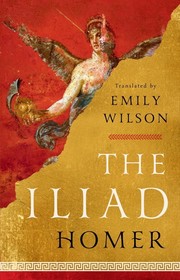
Also classics and fantasy53%On the same reading list35%Jean's Thoughts loved bothPersonalize your recommendations12%The Iliad
Homer
2023 · 848 pages · 3 reviews
Others: Overwhelmingly positiveThe greatest literary landmark of antiquity masterfully rendered by the most celebrated translator of our time. When Emily Wilson’s translation of The Odyssey appeared in 2017―revealing the ancient poem in a contemporary idiom that was “fresh, unpretentious and lean” (Madeline Miller, Washington Post)―critics lauded it as “a revelation” (Susan Chira, New York Times) and “a cultural landmark” (Charlotte Higgins, Guardian) that would forever change how Homer is read in English. Now Wilson has returned with an equally revelatory translation of Homer’s other great epic―the most revered war poem of all time. The Iliad roars with the clamor of arms, the bellowing boasts of victors, the fury and grief of loss, and the anguished cries of dying men. It sings, too, of the sublime magnitude of the world―the fierce beauty of nature and the gods’ grand schemes beyond the ken of mortals. In Wilson’s hands, this thrilling, magical, and often horrifying tale now gallops at a pace befitting its legendary battle scenes, in crisp but resonant language that evokes the poem’s deep pathos and reveals palpably real, even “complicated,” characters―both human and divine. The culmination of a decade of intense engagement with antiquity’s most surpassingly beautiful and emotionally complex poetry, Wilson’s Iliad now gives us a complete Homer for our generation.
Why?
What made the match, strongest first
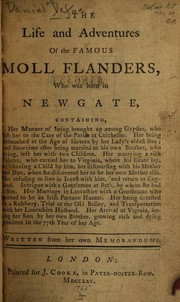
Also classics and fantasy52%On 5+ of the same lists36%Jean's Thoughts loved bothPersonalize your recommendations12%Moll Flanders
Daniel Defoe
1722 · 308 pages · 3 reviews
Others: NegativeThese are the true confessions of a remarkable and passionate young woman are thought to have been based on the adventures of a real prisoner in Newgate where Moll was born. ostensibly written as a warning to wrongdoers, the moral of Defoe's candid and cautionary tale is often lost in the sheer vitality of Moll - one of the supreme characters of English comic fiction. Her fortunes and misfortunes - 'twelve years a Whore, five times a Wife (once to her own brother), twelve years a Thief, eight years a transported Felon' - plunge the reader into the exciting world of the eighteenth-century low life.
Why?
What made the match, strongest first
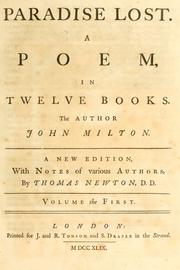
On 5+ of the same lists53%Also classics and poetryPersonalize your recommendations47%Paradise Lost
John Milton
1667 · 333 pages · 1 review
Others: PositiveJohn Milton's Paradise Lost is one of the greatest epic poems in the English language. It tells the story of the Fall of Man, a tale of immense drama and excitement, of rebellion and treachery, of innocence pitted against corruption, in which God and Satan fight a bitter battle for control of mankind's destiny. The struggle rages across three worlds - heaven, hell, and earth - as Satan and his band of rebel angels plot their revenge against God. At the center of the conflict are Adam and Eve, who are motivated by all too human temptations but whose ultimate downfall is unyielding love. Marked by Milton's characteristic erudition, Paradise Lost is a work epic both in scale and, notoriously, in ambition. For nearly 350 years, it has held generation upon generation of audiences in rapt attention, and its profound influence can be seen in almost every corner of Western culture.
Why?
What made the match, strongest first
On 5+ of the same lists80%Also poetryPersonalize your recommendations20%