
 Loved it
this one definitely gets a bit more nitty-gritty but is also excellent
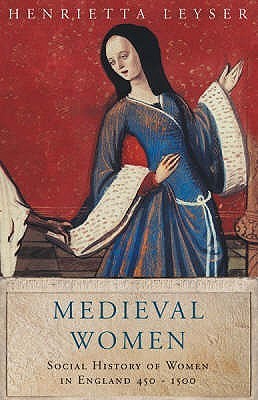
Others: Positive Medieval Women looks at a thousand years of English history, as it affected - and was made by - women. Henrietta Leyser considers the problems and attitudes fundamental to every woman of the time: medieval views on sex, marriage and motherhood; the world of work and the experience of widowhood for peasant, townswoman and aristocrat. The intellectual and spiritual worlds of women are also explored. Based on an abundance of research from the last twenty-five years, Medieval Women describes the diversity and vitality of English women's lives in the Middle Ages.
Genres: nonfiction
Lists: …
Geoffrey of Monmouth
1973 · 388 pages · 1 review
Others: PositiveCompleted in 1136, The History of the Kings of Britain traces the story of the realm from its supposed foundation by Brutus to the coming of the Saxons some two thousand years later. Vividly portraying legendary and semi-legendary figures such as Lear, Cymbeline, Merlin the magician and the most famous of all British heroes, King Arthur, it is as much myth as it is history and its veracity was questioned by other medieval writers. But Geoffrey of Monmouth's powerful evocation of illustrious men and deeds captured the imagination of subsequent generations, and his influence can be traced through the works of Malory, Shakespeare, Dryden and Tennyson.
What made the match, strongest first
Eleanor Janega
2023 · 3 reviews
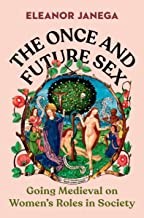
Others: PositiveWhat makes for the ideal woman? How should she look, love, and be? In this vibrant, high-spirited history, medievalist Eleanor Janega turns to the Middle Ages, the era that bridged the ancient world and modern society, to unfurl its suppositions about women and reveal what’s shifted over time — and what hasn’t. Enshrined medieval thinkers, almost always male, subscribed to a blend of classical Greek and Roman philosophy and Christian theology for their concepts of the sexes. For the height of female attractiveness, they chose the mythical Helen of Troy, whose imagined pear shape, small breasts, and golden hair served as beauty’s epitome. Casting Eve’s shadow over medieval women, they derided them as oversexed sinners, inherently lustful, insatiable, and weak. And, unless a nun, a woman was to be the embodiment of perfect motherhood. In contrast, drawing on accounts of remarkable and subversive medieval women like Eleanor of Aquitaine and Hildegard of Bingen, along with others hidden in documents and court cases, Janega shows us how real women of the era lived. While often mothers, they were industrious farmers, brewers, textile workers, artists, and artisans and paved the way for new ideas about women’s nature, intellect, and ability. In The Once and Future Sex, Janega unravels the restricting expectations on medieval women and the ones on women today. She boldly questions why, if our ideas of women have changed drastically over time, we cannot reimagine them now to create a more equitable future.
What made the match, strongest first
Sarah Clegg
2023 · 1 review
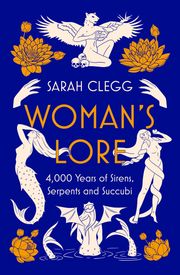
Others: PositiveThe history of a demonic tradition that was stolen from women – and then won back again. Demonic temptresses – from siren-mermaids to Lilith – are well known today, and their mythology focuses around the seductive danger they pose to men. But the root of these figures can be traced back 4,000 years and in their earliest incarnations they were in fact demons worshipped and feared by like Lamashtu, the horrific talon-footed, serpentine monster, who strangled infants and murdered pregnant women, or the Gello, the ghost of a girl who had died a virgin and so killed expectant mothers and their babies out of jealousy. This history of a demonic tradition from ancient Mesopotamia to the present day – from Lamashtu and Gello, to Lamia and Lilith, and mermaids and vampires – shows how these demons were co-opted by a male-centred society, before being recast as symbols of women's liberation. We also learn what this evolution can tell us about the experience of women and the danger of childbirth, changing attitudes towards sexuality and the movement for women's rights.
What made the match, strongest first
Charlotte Guest
1997 · 166 pages · 1 review
Others: PositiveThe Mabinogion (Welsh pronunciation: mabɪˈnɔɡjɔn) is a collection of 11 prose stories collated from medieval Welsh manuscripts. The tales draw on pre-Christian Celtic mythology, international folktale motifs and early medieval historical traditions. While some details may hark back to older Iron Age traditions, each of the tales is the product of a developed medieval Welsh narrative tradition, both oral and written. Lady Charlotte Guest in the mid 19th century was the first to publish English translations of the collection, popularising the name "Mabinogion". The stories appear in either or both of two medieval Welsh manuscripts, the White Book of Rhydderch or Llyfr Gwyn Rhydderch, written c.1350, and the Red Book of Hergest or Llyfr Coch Hergest, written c.1382 – 1410, though texts or fragments of some of the tales have been preserved in earlier 13th century and later mss. Scholars agree that the tales are older than the existing mss, but disagree over just how much older. The different texts originated at different times. Debate has focused on the dating of the Four Branches of the Mabinogi. Sir Ifor Williams offered a date prior to 1100, based on linguistic and historical arguments, while later Saunders Lewis set forth a number of arguments for a date between 1170 and 1190; Thomas M. Charles-Edwards, in a paper published in 1970, discussed both viewpoints, and while critical of the arguments of both scholars, noted that the language of the stories fits the 11th century. More recently, Patrick Sims-Williams argued for a plausible range of about 1060 to 1200, the current scholarly consensus.
What made the match, strongest first
Jean Menzies
2026 · 1 review
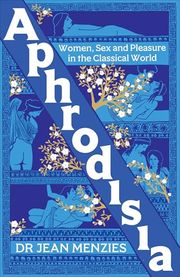
Others: PositiveWas Ovid a surprising champion of women's sexual pleasure? Or did he just want them to fake it? Where did the British Museum curators hide the most pornographic of frescoes? And what exactly was the phallic wooden object excavated in 90's Northumberland? In APHRODISIA, Dr Jean Menzies dives into the hidden history of women's sexuality in Ancient Greece and Rome. The classical world stretched across the Mediterranean for more than a millennium, its people and cultures wide and varied and its sexual proclivities equally so. Yet so often when we read about sex in antiquity it is about the men folk first and which brothels they were visiting, how they balanced wives and lovers, and what they got up to in the gymnasium. Delving into the literature, art and artefacts of the ancient world, from sex toys to seduction tips to kink, Dr Jean Menzies instead centres women and their desire. In doing so, she uncovers the many faces of women's sexuality over the course of thousands of years, and asks intriguing, and sometimes provocative questions about women, sex and desire today.
What made the match, strongest first
Kate Lister
2020 · 384 pages · 3 reviews
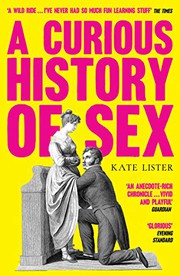
Others: Leaning positiveAn eye-opening exploration of the weird and wonderful things human beings have done in pursuit (and denial) of the mighty orgasm, based on the hit Twitter account @WhoresofYore. This is not a comprehensive study of every sexual quirk, kink and ritual across all cultures throughout time, as that would entail writing an encyclopaedia. Rather, this is a drop in the ocean, a paddle in the shallow end of sex history, but I hope you will get pleasantly wet nonetheless. The act of sex has not changed since people first worked out what went where, but the ways in which society dictates how sex is culturally understood and performed have varied significantly through the ages. Humans are the only creatures that stigmatise particular sexual practices, and sex remains a deeply divisive issue around the world. Attitudes will change and grow - hopefully for the better - but sex will never be free of stigma or shame unless we acknowledge where it has come from. Drawing upon extensive research from Dr Kate Lister's Whores of Yore website and written with her distinctive humour and wit, A Curious History of Sex covers topics ranging from twentieth- century testicle thefts to Victorian doctors massaging the pelvises of their female patients, from smutty bread innuendos dating back to AD 79, to the new and controversial sex doll brothels. It is peppered with surprising and informative historical slang and illustrated by eye-opening, toe- curling and hilarious images. In this fascinating book, Lister deftly debunks myths and stereotypes and gives unusual sexual practices an historical framework, as she provides valuable context for issues facing people today, including gender, sexual shame, beauty and language.
What made the match, strongest first
Loved itthis one definitely gets a bit more nitty-gritty but is also excellent