
 Loved it
People say it's a red flag if you like this book, and you know what, maybe I'm color blind. I liked it.
 Others: Overwhelmingly positive
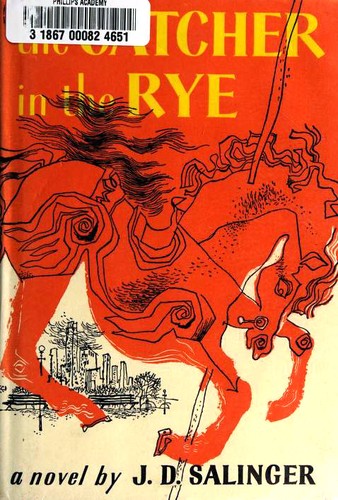
Story of Holden Caufield with his idiosyncrasies, penetrating insight, confusion, sensitivity and negativism. Holden, knowing he is to be expelled from school, decides to leave early. He spends three days in New York City and tells the story of what he did and suffered there.
Genres: young adult, classics
Lists: …
William Golding
1954 · 243 pages · 5 reviews
Others: Mostly positiveLord of the Flies is a 1954 novel by Nobel Prize–winning British author William Golding. The book focuses on a group of British boys stranded on an uninhabited island and their disastrous attempt to govern themselves. Themes include the tension between groupthink and individuality, between rational and emotional reactions, and between morality and immorality. The novel has been generally well received. It was named in the Modern Library 100 Best Novels, reaching number 41 on the editor's list, and 25 on the reader's list. In 2003 it was listed at number 70 on the BBC's The Big Read poll, and in 2005 Time magazine named it as one of the 100 best English-language novels from 1923 to 2005. Time also included the novel in its list of the 100 Best Young-Adult Books of All Time. Popular reading in schools, especially in the English-speaking world, a 2016 UK poll saw Lord of the Flies ranked third in the nation's favourite books from school. (From https://en.wikipedia.org/wiki/Lord_of_the_Flies)
What made the match, strongest first
F. Scott Fitzgerald
1920 · 182 pages · 13 reviews
Others: Mostly positiveHere is a novel, glamorous, ironical, compassionate – a marvelous fusion into unity of the curious incongruities of the life of the period – which reveals a hero like no other – one who could live at no other time and in no other place. But he will live as a character, we surmise, as long as the memory of any reader lasts. "There was something gorgeous about him, some heightened sensitivity to the promises of life.... It was an extraordinary gift for hope, a romantic readiness such as I have never found in any other person and which it is not likely I shall ever find again." It is the story of this Jay Gatsby who came so mysteriously to West Egg, of his sumptuous entertainments, and of his love for Daisy Buchanan – a story that ranges from pure lyrical beauty to sheer brutal realism, and is infused with a sense of the strangeness of human circumstance in a heedless universe. It is a magical, living book, blended of irony, romance, and mysticism. --first edition jacket
What made the match, strongest first
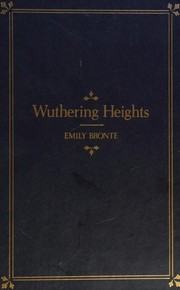
Emily Brontë
1846 · 312 pages · 32 reviews
Others: Mostly positiveWuthering Heights is an 1847 novel by Emily Brontë, initially published under the pseudonym Ellis Bell. It concerns two families of the landed gentry living on the West Yorkshire moors, the Earnshaws and the Lintons, and their turbulent relationships with Earnshaw's adopted son, Heathcliff. The novel was influenced by Romanticism and Gothic fiction.
What made the match, strongest first
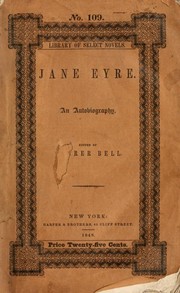
Charlotte Brontë
1847 · 489 pages · 37 reviews
Others: Overwhelmingly positiveThe novel is set somewhere in the north of England. Jane's childhood at Gateshead Hall, where she is emotionally and physically abused by her aunt and cousins; her education at Lowood School, where she acquires friends and role models but also suffers privations and oppression; her time as the governess of Thornfield Hall, where she falls in love with her Byronic employer, Edward Rochester; her time with the Rivers family, during which her earnest but cold clergyman cousin, St John Rivers, proposes to her. Will she or will she not marry him?
What made the match, strongest first
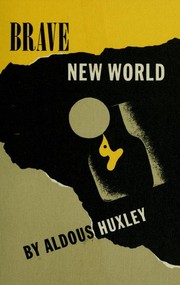
Aldous Huxley
1932 · 232 pages · 11 reviews
Others: Leaning positiveOriginally published in 1932, this outstanding work of literature is more crucial and relevant today than ever before. Cloning, feel-good drugs, antiaging programs, and total social control through politics, programming, and media -- has Aldous Huxley accurately predicted our future? With a storyteller's genius, he weaves these ethical controversies in a compelling narrative that dawns in the year 632 AF (After Ford, the deity). When Lenina and Bernard visit a savage reservation, we experience how Utopia can destroy humanity. A powerful work of speculative fiction that has enthralled and terrified readers for generations, Brave New World is both a warning to be heeded and thought-provoking yet satisfying entertainment. - Container.
What made the match, strongest first
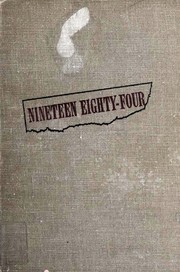
George Orwell
1949 · 314 pages · 12 reviews
Others: Mostly positiveNineteen Eighty-Four: A Novel, often referred to as 1984, is a dystopian social science fiction novel by the English novelist George Orwell (the pen name of Eric Arthur Blair). It was published on 8 June 1949 by Secker & Warburg as Orwell's ninth and final book completed in his lifetime. Thematically, Nineteen Eighty-Four centres on the consequences of totalitarianism, mass surveillance, and repressive regimentation of persons and behaviours within society. Orwell, himself a democratic socialist, modelled the authoritarian government in the novel after Stalinist Russia. More broadly, the novel examines the role of truth and facts within politics and the ways in which they are manipulated.
What made the match, strongest first
Loved itPeople say it's a red flag if you like this book, and you know what, maybe I'm color blind. I liked it.
Loved itI didn't really appreciate the story that it was trying to tell ... over time I really kind of reminisce about this and realize like yeah I actually did really enjoy that
Loved itI loved it for that reason amongst others I find Holden Caulfield to be a very typical teenager and I find that the way we are inside his head and the way we experience what he thinks and how he sees the world it's pretty accurate when it comes to a teenage boy