
 Loved it
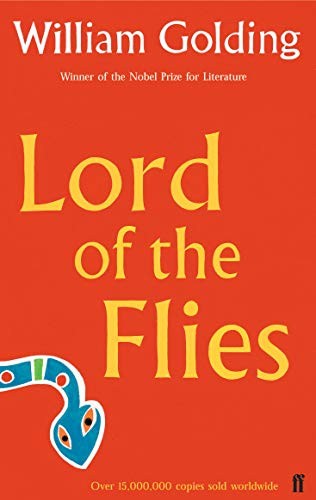
And I don't usually love books, horror books that revolve around children, but I do like Lord of the Flies.
Others: Mostly positive Lord of the Flies is a 1954 novel by Nobel Prize–winning British author William Golding. The book focuses on a group of British boys stranded on an uninhabited island and their disastrous attempt to govern themselves. Themes include the tension between groupthink and individuality, between rational and emotional reactions, and between morality and immorality. The novel has been generally well received. It was named in the Modern Library 100 Best Novels, reaching number 41 on the editor's list, and 25 on the reader's list. In 2003 it was listed at number 70 on the BBC's The Big Read poll, and in 2005 Time magazine named it as one of the 100 best English-language novels from 1923 to 2005. Time also included the novel in its list of the 100 Best Young-Adult Books of All Time. Popular reading in schools, especially in the English-speaking world, a 2016 UK poll saw Lord of the Flies ranked third in the nation's favourite books from school. (From https://en.wikipedia.org/wiki/Lord_of_the_Flies)
Lists: …
J. D. Salinger
1945 · 217 pages · 4 reviews
 Others: Overwhelmingly positive
Story of Holden Caufield with his idiosyncrasies, penetrating insight, confusion, sensitivity and negativism. Holden, knowing he is to be expelled from school, decides to leave early. He spends three days in New York City and tells the story of what he did and suffered there.
What made the match, strongest first
George Orwell
1945 · 118 pages · 4 reviews
Others: Mostly positiveAnimal Farm is a brilliant political satire and a powerful and affecting story of revolutions and idealism, power and corruption. 'All animals are equal. But some animals are more equal than others.' Mr Jones of Manor Farm is so lazy and drunken that one day he forgets to feed his livestock. The ensuing rebellion under the leadership of the pigs Napoleon and Snowball leads to the animals taking over the farm. Vowing to eliminate the terrible inequities of the farmyard, the renamed Animal Farm is organised to benefit all who walk on four legs. But as time passes, the ideals of the rebellion are corrupted, then forgotten. And something new and unexpected emerges..
What made the match, strongest first
George Orwell
1949 · 314 pages · 12 reviews
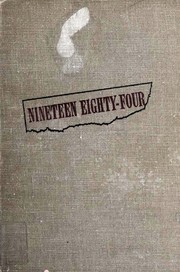
Others: Mostly positiveNineteen Eighty-Four: A Novel, often referred to as 1984, is a dystopian social science fiction novel by the English novelist George Orwell (the pen name of Eric Arthur Blair). It was published on 8 June 1949 by Secker & Warburg as Orwell's ninth and final book completed in his lifetime. Thematically, Nineteen Eighty-Four centres on the consequences of totalitarianism, mass surveillance, and repressive regimentation of persons and behaviours within society. Orwell, himself a democratic socialist, modelled the authoritarian government in the novel after Stalinist Russia. More broadly, the novel examines the role of truth and facts within politics and the ways in which they are manipulated.
What made the match, strongest first
Ray Bradbury
1953 · 179 pages · 11 reviews
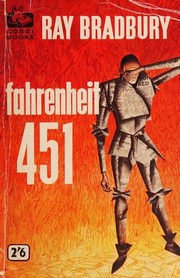
Others: Mostly positiveFahrenheit 451 is a 1953 dystopian novel by American writer Ray Bradbury. Often regarded as one of his best works, the novel presents a future American society where books are outlawed and "firemen" burn any that are found. The book's tagline explains the title as "'the temperature at which book paper catches fire, and burns": the autoignition temperature of paper. The lead character, Guy Montag, is a fireman who becomes disillusioned with his role of censoring literature and destroying knowledge, eventually quitting his job and committing himself to the preservation of literary and cultural writings. The novel has been the subject of interpretations focusing on the historical role of book burning in suppressing dissenting ideas for change. In a 1956 radio interview, Bradbury said that he wrote Fahrenheit 451 because of his concerns at the time (during the McCarthy era) about the threat of book burning in the United States. In later years, he described the book as a commentary on how mass media reduces interest in reading literature. In 1954, Fahrenheit 451 won the American Academy of Arts and Letters Award in Literature and the Commonwealth Club of California Gold Medal. It later won the Prometheus "Hall of Fame" Award in 1984 and a "Retro" Hugo Award, one of a limited number of Best Novel Retro Hugos ever given, in 2004. Bradbury was honored with a Spoken Word Grammy nomination for his 1976 audiobook version.
What made the match, strongest first
Irvine Welsh
1993 · 348 pages · 1 review
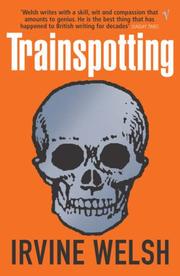
Others: PositiveScottish writer Irvine Welsh's first novel, Trainspotting, is a collection of short-stories revolving around a group of friends, their drug use, and struggles in the city of Edinburgh.
What made the match, strongest first
Franz Kafka
1915 · 91 pages · 5 reviews
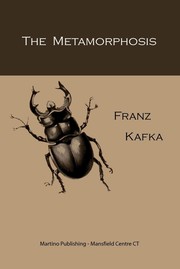
Others: Leaning positiveMetamorphosis (German: Die Verwandlung) is a novella written by Franz Kafka which was first published in 1915. One of Kafka's best-known works, Metamorphosis tells the story of salesman Gregor Samsa, who wakes one morning to find himself inexplicably transformed into a huge insect (German: ungeheueres Ungeziefer, lit. "monstrous vermin") and subsequently struggles to adjust to this new condition. The novella has been widely discussed among literary critics, with differing interpretations being offered. In popular culture and adaptations of the novella, the insect is commonly depicted as a cockroach. With a length of about 70 printed pages over three chapters, it is the longest of the stories Kafka considered complete and published during his lifetime. The text was first published in 1915 in the October issue of the journal Die weißen Blätter under the editorship of René Schickele. The first edition in book form appeared in December 1915 in the series Der jüngste Tag, edited by Kurt Wolff.
What made the match, strongest first
Loved itAnd I don't usually love books, horror books that revolve around children, but I do like Lord of the Flies.
Loved itthat one is also in my Best Book of 2024 loved it ... I was amazed at how much of an impact it left on me ... I really loved a lot of the themes
Loved itIf you haven't read this, you absolutely should.
 Not a fan
and there is the lord of the flies bij william golding ... a bunch of boys ... shipwreck ... and all breaks loose ... i think my reading this book ... this would never happen