Hyperion
HyperionDan Simmons
Buy on Amazon

Hyperion (1989)

Dan Simmons

Others: Overwhelmingly positive

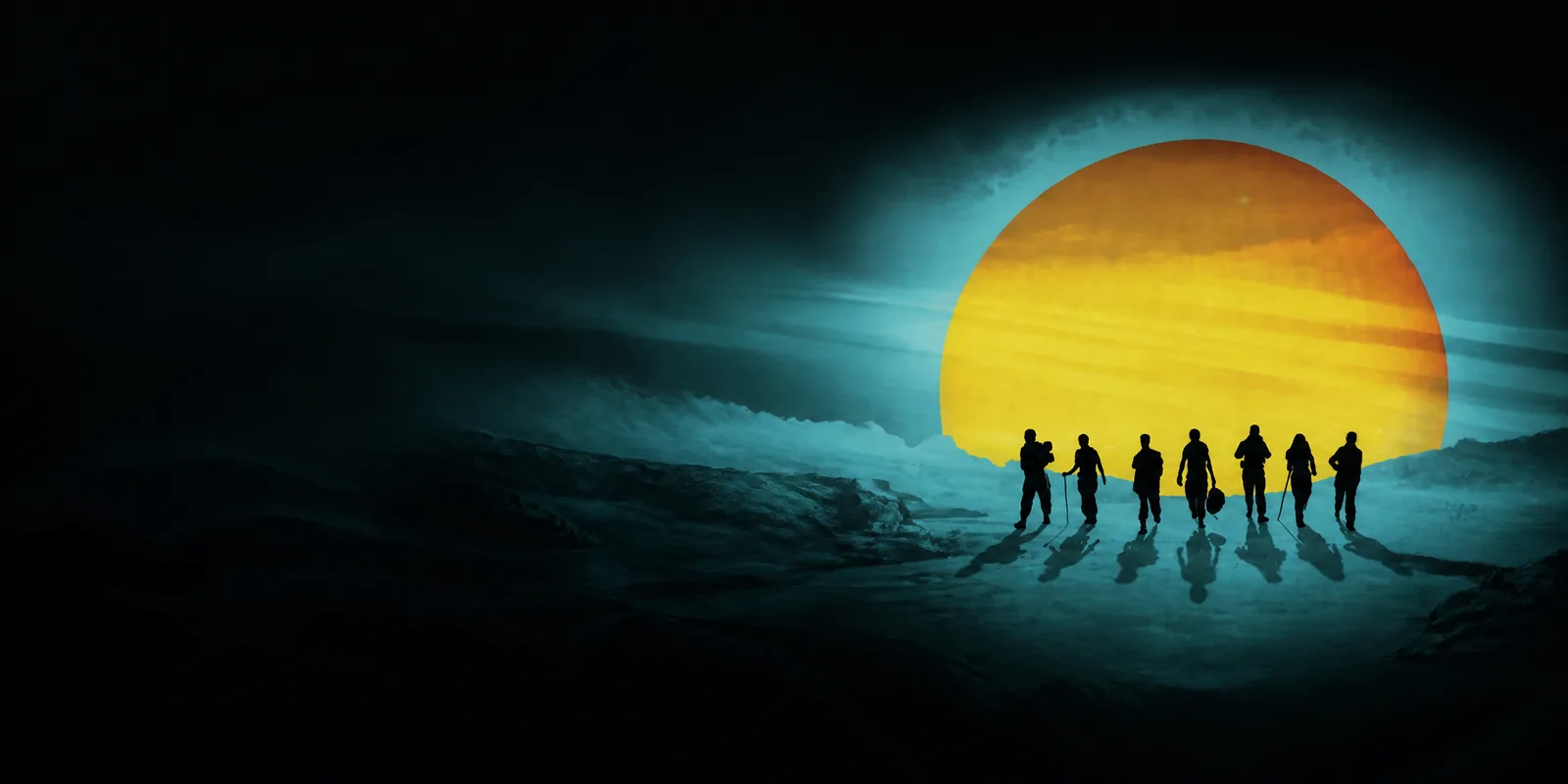
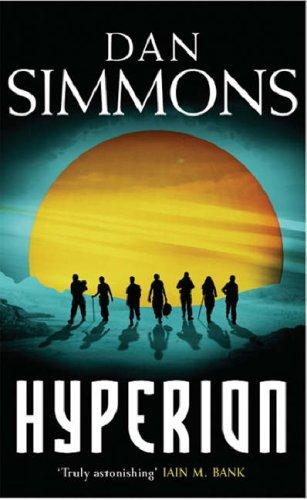
In the 29th century, the Hegemony of Man comprises hundreds of planets connected by farcaster portals. The Hegemony maintains an uneasy alliance with the TechnoCore, a civilisation of AIs. Modified humans known as Ousters live in space stations between stars and are engaged in conflict with the Hegemony. Numerous "Outback" planets have no farcasters and cannot be accessed without incurring significant time dilation. One of these planets is Hyperion, home to structures known as the Time Tombs, which are moving backwards in time and guarded by a legendary creature known as the Shrike. On the eve of an Ouster invasion of Hyperion, a final pilgrimage to the Time Tombs has been organized. The pilgrims decide that they will each tell their tale of how they were chosen for the pilgrimage.

ISBN:
9780399178610
Length:
481 pages

Genres: fantasy, science fiction

Lists: …

Similar books

1 of 6
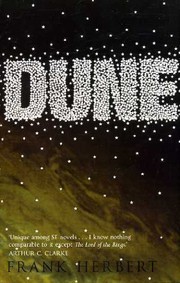
  • Dune

    Frank Herbert

    1965 · 535 pages · 35 reviews

    Others: Mostly positive

    Set on the desert planet Arrakis, Dune is the story of the boy Paul Atreides, heir to a noble family tasked with ruling an inhospitable world where the only thing of value is the "spice" melange, a drug capable of extending life and enhancing consciousness. Coveted across the known universe, melange is a prize worth killing for... When House Atreides is betrayed, the destruction of Paul's family will set the boy on a journey toward a destiny greater than he could ever have imagined. And as he evolves into the mysterious man known as Muad'Dib, he will bring to fruition humankind's most ancient and unattainable dream. A stunning blend of adventure and mysticism, environmentalism and politics, Dune won the first Nebula Award, shared the Hugo Award, and formed the basis of what is undoubtedly the grandest epic in science fiction.

    Why?

    What made the match, strongest first

    On 5+ of the same lists
    58%
    Also fantasy and science fiction
    40%
    Talking Story loved both
    2%
    Personalize your recommendations
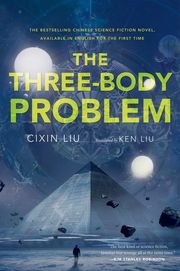
  • The Three-Body Problem

    Liu Cixin

    2006 · 0 reviews

    Set against the backdrop of China's Cultural Revolution, a secret military project sends signals into space to establish contact with aliens. An alien civilization on the brink of destruction captures the signal and plans to invade Earth. Meanwhile, on Earth, different camps start forming, planning to either welcome the superior beings and help them take over a world seen as corrupt, or to fight against the invasion.

    Why?

    What made the match, strongest first

    On 5+ of the same lists
    55%
    Also fantasy and science fiction
    42%
    Similar descriptions
    3%
    Personalize your recommendations
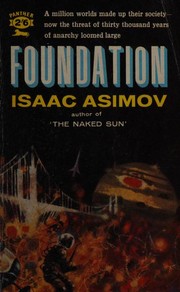
  • Foundation

    Isaac Asimov

    1951 · 231 pages · 6 reviews

    Others: Leaning positive

    One of the great masterworks of science fiction, the Foundation novels of Isaac Asimov are unsurpassed for their unique blend of nonstop action, daring ideas, and extensive world-building. The story of our future begins with the history of Foundation and its greatest psychohistorian: Hari Seldon. For twelve thousand years the Galactic Empire has ruled supreme. Now it is dying. Only Hari Seldon, creator of the revolutionary science of psychohistory, can see into the future--a dark age of ignorance, barbarism, and warfare that will last thirty thousand years. To preserve knowledge and save mankind, Seldon gathers the best minds in the Empire--both scientists and scholars--and brings them to a bleak planet at the edge of the Galaxy to serve as a beacon of hope for future generations. He calls his sanctuary the Foundation. But soon the fledgling Foundation finds itself at the mercy of corrupt warlords rising in the wake of the receding Empire. And mankind's last best hope is faced with an agonizing choice: submit to the barbarians and live as slaves--or take a stand for freedom and risk total destruction.

    Why?

    What made the match, strongest first

    On 5+ of the same lists
    58%
    Also fantasy and science fiction
    42%
    Similar descriptions
    0%
    Personalize your recommendations
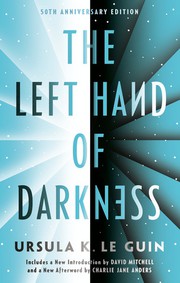
  • The Left Hand of Darkness

    Ursula K. Le Guin

    1969 · 304 pages · 13 reviews

    Others: Mostly positive

    Comment by Kim Stanley Robinson, on The Guardian's website: The Left Hand of Darkness by Ursula K Le Guin (1969) One of my favorite novels is The Left Hand of Darkness, by Ursula K Le Guin. For more than 40 years I've been recommending this book to people who want to try science fiction for the first time, and it still serves very well for that. One of the things I like about it is how clearly it demonstrates that science fiction can have not only the usual virtues and pleasures of the novel, but also the startling and transformative power of the thought experiment. In this case, the thought experiment is quickly revealed: "The king was pregnant," the book tells us early on, and after that we learn more and more about this planet named Winter, stuck in an ice age, where the humans are most of the time neither male nor female, but with the potential to become either. The man from Earth investigating this situation has a lot to learn, and so do we; and we learn it in the course of a thrilling adventure story, including a great "crossing of the ice". Le Guin's language is clear and clean, and has within it both the anthropological mindset of her father Alfred Kroeber, and the poetry of stories as magical things that her mother Theodora Kroeber found in native American tales. This worldly wisdom applied to the romance of other planets, and to human nature at its deepest, is Le Guin's particular gift to us, and something science fiction will always be proud of. Try it and see – you will never think about people in quite the same way again.
    Why?

    What made the match, strongest first

    On 5+ of the same lists
    59%
    Also fantasy and science fiction
    29%
    2 creators loved both
    12%
    Personalize your recommendations
  • Ringworld

    Larry Niven

    1970 · 342 pages · 4 reviews

    Others: Mostly negative

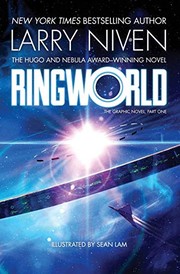
    The ' (1970–2004), by science fiction author Larry Niven, is a part of his Known Space set of stories. Its backdrop is the Ringworld, a giant artifact 600 million miles in circumference around a sun. The series is composed of four standalone science fiction novels, the original award-winning book and its three subsequent sequels: 1970: Ringworld 1980: The Ringworld Engineers 1996: The Ringworld Throne 2004: Ringworld's Children The core series was developed with three side series of prequels set in the same Ringworld universe, and written in collaboration: 1988–2009: Man-Kzin Wars (by various edited by Niven) 2007–2010: Fleet of Worlds (by Niven and Edward M. Lerner) 2010-2011: Juggler of Worlds (by Niven and Edward M. Lerner)

    Why?

    What made the match, strongest first

    On 5+ of the same lists
    82%
    Also science fiction
    14%
    2 creators reacted alike
    4%
    Personalize your recommendations
  • A Canticle for Leibowitz

    Walter M. Miller Jr.

    1959 · 320 pages · 4 reviews

    Others: Mixed

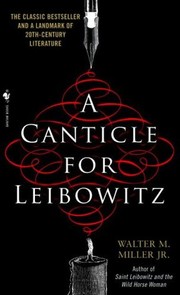
    Highly unusual After the Holocaust novel. In the far future, 20th century texts are preserved in a monastery, as "sacred books". The monks preserve for centuries what little science there is, and have saved the science texts and blueprints from destruction many times, also making beautifully illuminated copies. As the story opens to a world run on a basically fuedal lines, science is again becoming fashionable, as a hobby of rich men, at perhaps 18th or early 19th century level of comprehesion. A local lord, interested in science, comes to the monastery. What happens after that is an exquisitely told tale, stunning and extremely moving, totally different from any other After the Holocaust story

    Why?

    What made the match, strongest first

    On 5+ of the same lists
    70%
    Also science fiction
    23%
    A creator reacted alike
    7%
    Personalize your recommendations

Reviews10

Loved it

Each one of these stories hit me in a different way, and the structure of it all of how it's put together and how each story builds one off of the other to give you a deeper picture of this entire reality that he's building. The world building is off the chart on this because how each story it doesn't actually lead into each other, but just gives you just of a deeper bit of a peek behind the curtain of the entirety or the whole of the reality of what Dan Simmons is building.

Review 1 of 3