

 Loved it
it is good. It is not my favorite Silverberg, but it is good.
 Others: Overwhelmingly positive
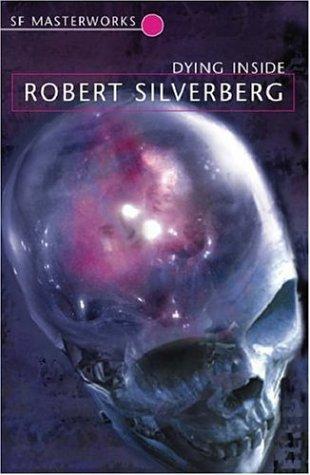
From the back cover: David Selig is outwardly unimpressive. His early promise as a student and scholar is unrealised. He has no proper job, he has no girlfriend. But, inside, Selig has the power of a god, for he can probe other people's minds and read their thoughts and feelings. This extraordinary faculty defines his sense of self -- his power is him. But with the onset of middle age, Selig's capacity to read minds is failing fast, and he must struggle to come to terms with that loss -- to accept that he is dying inside...
Genres: science fiction
Lists: …
Robert Silverberg
1970 · 189 pages · 6 reviews
Others: Overwhelmingly positiveFrom the shrouding fogs of its Mist Country to the lunatic tropical fertility of its jungles, the planet Belzagor was alien in the extreme. Before the decolonization movement, it had been part of Earth's Galaxy-wide empire. But the Nildoror and Sulido-ror, Belzagor's two intelligent species, had been given their independence, and once again they ruled themselves. Edmund Gundersen, a former colonial official from Earth, was returning to Belzagor after an eight year absence. Officially, he was a tourist, but in reality he was seeking redemption—redemption for the crimes he had committed against the Nildoror and Sulidoror. Even now, he still found it hard to accept their independence. The Nildoror were great elephant-like beings; and the Sulidoror, husky bipeds covered with dark red hair, had long arms tipped with terrifying claws. How could such creatures, without any technology to speak of, run an entire planet? Yet they did, and they had one thing that had always eluded human understanding—the ceremony of rebirth. Somehow this mysterious rite linked the two species, and the act that weighed most heavily on Gundersen's mind had occurred in connection with it. During an emergency, he had commandeered a group of Nildoror for a labor detail. Using a fusion torch, he had forced them to obey, and on his account they had missed their rebirth. To atone for this deed, Gundersen had decided to journey alone through Belzagor's jungles. When he reached the Mist Country, he would offer himself as a candidate for rebirth—even if it would mean the end of his life as a human!
What made the match, strongest first
Philip K. Dick
1970 · 208 pages · 4 reviews
Others: Overwhelmingly positiveA Maze of Death is a 1970 science fiction novel by American writer Philip K. Dick. Like many of Dick's novels, it portrays what appears to be a drab and harsh off-world human colony and explores the difference between reality and perception. It is, however, one of his few to examine the human death instinct and capacity for murder and is one of his darkest novels.
What made the match, strongest first
Greg Bear
1985 · 262 pages · 7 reviews
Others: Overwhelmingly positiveIn the tradition of the greatest cyberpunk novels, Blood Music explores the imminent destruction of mankind and the fear of mass destruction by technological advancements. The novel follows present-day events in which the fears concerning the nuclear annihilation of the world subsided after the Cold War and the fear of chemical warfare spilled over into the empty void it left behind. An amazing breakthrough in genetic engineering made by Vergil Ulam is considered too dangerous for further research, but rather than destroy his work, he injects himself with his creation and walks out of his lab, unaware of just how his actions will change the world. Author Greg Bear’s treatment of the traditional tale of scientific hubris is both suspenseful and a compelling portrait of a new intelligence emerging amongst us, irrevocably changing our world.
What made the match, strongest first
Frederik Pohl
1952 · 171 pages · 2 reviews
 Others: Mixed
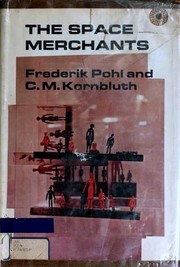
The Space Merchants is a 1952 science fiction novel by American writers Frederik Pohl and Cyril M. Kornbluth. Originally published in Galaxy Science Fiction magazine as a serial entitled Gravy Planet, the novel was first published as a single volume in 1953, and has sold heavily since. It deals satirically with a hyper-developed consumerism, seen through the eyes of an advertising executive. In 1984, Pohl published a sequel, The Merchants' War. In 2012, it was included in the Library of America omnibus American Science Fiction: Four Classic Novels 1953–1956. Pohl revised the original novel in 2011 with added material and more contemporary references. It was rated the 24th "all-time best novel" in a 1975 Locus poll, jointly with The Martian Chronicles and The War of the Worlds. The novel was also included in David Pringle's list of 100 best science fiction novels.
What made the match, strongest first
Philip K. Dick
1970 · 298 pages · 1 review
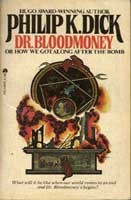
Others: PositiveDr. Bloodmoney, or How We Got Along After the Bomb is a 1965 science fiction novel by American writer Philip K. Dick. It was nominated for the Nebula Award for Best Novel in 1965.[1] Dick wrote the novel in 1963 with working titles In Earth's Diurnal Course and A Terran Odyssey. Ace editor Donald Wollheim however suggested the final title which references the film Dr. Strangelove or: How I Learned to Stop Worrying and Love the Bomb (1964).[2]
What made the match, strongest first
Theodore Sturgeon
1952 · 214 pages · 5 reviews
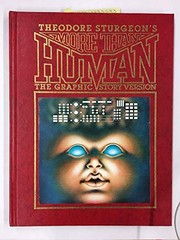
Others: Overwhelmingly positiveFrom the back cover of Del Rey paperback November 1978: The coming of the superman without a superego! Take six people -- extraordinary people. And stir in the melting pot of creation. Take away their human frailties. Burnish their strengths. And create a superman -- Homo gestalt, the last step in man's evolution. Now step back... and learn the meaning of fear!
What made the match, strongest first
Loved itit is good. It is not my favorite Silverberg, but it is good.
Loved itwhen I read my very first Robert Silverberg a couple of years ago, Dying Inside, and absolutely loved it
Loved itI found this to be a rather moving and relatable book I didn't necessarily relate to the main character I didn't find him all that likable but I did relate to some of the themes