


 Mixed
I have sort of mixed feelings about the book, but certainly it's historically important.
Review 1 of 2
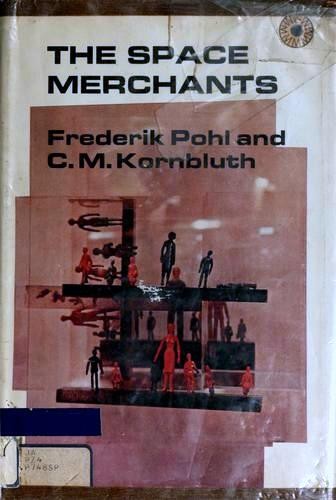
Others: Mixed The Space Merchants is a 1952 science fiction novel by American writers Frederik Pohl and Cyril M. Kornbluth. Originally published in Galaxy Science Fiction magazine as a serial entitled Gravy Planet, the novel was first published as a single volume in 1953, and has sold heavily since. It deals satirically with a hyper-developed consumerism, seen through the eyes of an advertising executive. In 1984, Pohl published a sequel, The Merchants' War. In 2012, it was included in the Library of America omnibus American Science Fiction: Four Classic Novels 1953–1956. Pohl revised the original novel in 2011 with added material and more contemporary references. It was rated the 24th "all-time best novel" in a 1975 Locus poll, jointly with The Martian Chronicles and The War of the Worlds. The novel was also included in David Pringle's list of 100 best science fiction novels.
Genres: science fiction
Lists: …
Philip K. Dick
1966 · 190 pages · 1 review
 Others: Negative
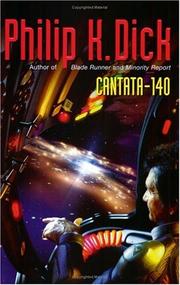
The first seven chapters of Philip K. Dick's The Crack in Space were first published as Cantata-140 in Fantasy and Science Fiction (07/1964). Cantata-140 was expanded from the short story Stand-By (Amazing 10/1963). The Gollancz 2003 edition of Cantata-140 is the text of The Crack in Space, not the novella published in 1964.
What made the match, strongest first
Philip K. Dick
1964 · 240 pages · 5 reviews
 Others: Mostly positive
Martian Time-Slip is a 1964 science fiction novel by American writer Philip K. Dick. The novel uses the common science fiction concept of a human colony on Mars. However, it also includes the themes of mental illness, the physics of time and the dangers of centralized authority. The novel was first published under the title All We Marsmen, serialized in the August, October and December 1963 issues of Worlds of Tomorrow magazine. The subsequent 1964 publication as Martian Time-Slip is virtually identical, with different chapter breaks.
What made the match, strongest first
Robert Silverberg
1970 · 189 pages · 6 reviews
 Others: Overwhelmingly positive
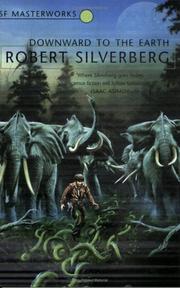
From the shrouding fogs of its Mist Country to the lunatic tropical fertility of its jungles, the planet Belzagor was alien in the extreme. Before the decolonization movement, it had been part of Earth's Galaxy-wide empire. But the Nildoror and Sulido-ror, Belzagor's two intelligent species, had been given their independence, and once again they ruled themselves. Edmund Gundersen, a former colonial official from Earth, was returning to Belzagor after an eight year absence. Officially, he was a tourist, but in reality he was seeking redemption—redemption for the crimes he had committed against the Nildoror and Sulidoror. Even now, he still found it hard to accept their independence. The Nildoror were great elephant-like beings; and the Sulidoror, husky bipeds covered with dark red hair, had long arms tipped with terrifying claws. How could such creatures, without any technology to speak of, run an entire planet? Yet they did, and they had one thing that had always eluded human understanding—the ceremony of rebirth. Somehow this mysterious rite linked the two species, and the act that weighed most heavily on Gundersen's mind had occurred in connection with it. During an emergency, he had commandeered a group of Nildoror for a labor detail. Using a fusion torch, he had forced them to obey, and on his account they had missed their rebirth. To atone for this deed, Gundersen had decided to journey alone through Belzagor's jungles. When he reached the Mist Country, he would offer himself as a candidate for rebirth—even if it would mean the end of his life as a human!
What made the match, strongest first
Arthur C. Clarke
1956 · 254 pages · 6 reviews
Others: Mostly negativeOmnibus
What made the match, strongest first
Robert Silverberg
1972 · 256 pages · 5 reviews
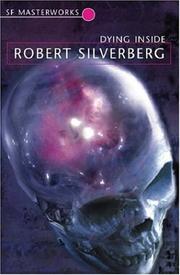
Others: Overwhelmingly positiveFrom the back cover: David Selig is outwardly unimpressive. His early promise as a student and scholar is unrealised. He has no proper job, he has no girlfriend. But, inside, Selig has the power of a god, for he can probe other people's minds and read their thoughts and feelings. This extraordinary faculty defines his sense of self -- his power is him. But with the onset of middle age, Selig's capacity to read minds is failing fast, and he must struggle to come to terms with that loss -- to accept that he is dying inside...
What made the match, strongest first
John Brunner
1968 · 576 pages · 6 reviews
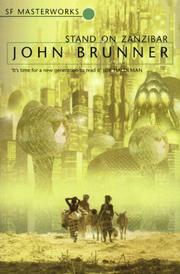
Others: Leaning positive"Originally published in 1968, Stand on Zanzibar was a breakthrough in science fiction storytelling technique, and a prophetic look at a dystopian 2010 that remains compelling today. Corporations have usurped democracy, ubiquitous information technology mediates human relationships, mass-marketed psychosomatic drugs keep billions docile, and genetic engineering is routine. Universal in reach, the world-system is out of control, and we are all its victims...and its creator"--Cover p. [4].
What made the match, strongest first
MixedI have sort of mixed feelings about the book, but certainly it's historically important.