 Not a fan
These are the ones that I found to be the messiest, the most incoherent reading experience, and the ones that fell out of my memory banks the easiest. The Similac, The Crack in Space, and Counterclock World.
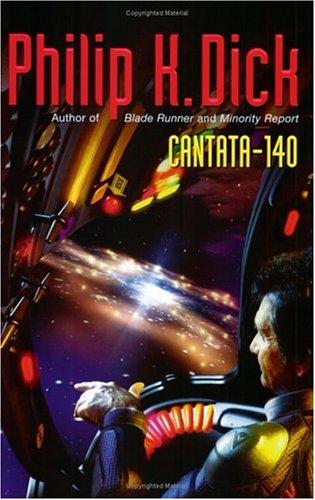
Others: Negative The first seven chapters of Philip K. Dick's The Crack in Space were first published as Cantata-140 in Fantasy and Science Fiction (07/1964). Cantata-140 was expanded from the short story Stand-By (Amazing 10/1963). The Gollancz 2003 edition of Cantata-140 is the text of The Crack in Space, not the novella published in 1964.
Genres: science fiction
Lists: …
Thomas M. Disch
1967 · 167 pages · 5 reviews
 Others: Overwhelmingly positive
This spectacular novel established Thomas M. Disch as a major new force in science fiction. First published in 1965, it was immediately labeled a masterpiece reminiscent of the works of J.G. Ballard and H.G. Wells In this harrowing novel, the world's cities have been reduced to cinder and ash and alien plants have overtaken the earth. The plants, able to grow the size of maples in only a month and eventually reach six hundred feet, have commandeered the world's soil and are sucking even the Great Lakes dry. In northern Minnesota, Anderson, an aging farmer armed with a Bible in one hand and a gun in the other, desperately leads the reduced citizenry of a small town in a daily struggle for meager existence. Throw into this fray Jeremiah Orville, a marauding outsider bent on a bizarre and private revenge, and the fight to live becomes a daunting task.
What made the match, strongest first
Kobo Abe
1959 · 2 reviews
 Others: Positive
English, Japanese (translation)
What made the match, strongest first
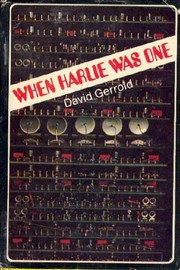
David Gerrold
1972 · 279 pages · 1 review
Others: NegativeA stunning first novel that grapples with the definition of consciousness and what it is to be human. The novel is primarily a series of conversations between a computer programmer / psychologist and his invention, H.A.R.L.I.E., a self-programming computer that has total access to information and knowledge through something similar to the Internet. As the computer matures, the question of what it means to be human becomes a serious one for the financial backers of the project concerned with the cost of the program. If HARLIE is conscious then he can't be disconnected: That would be murder. However, to keep him connected and working for the company amounts to slavery. HARLIE must figure out a way to be both financially viable and free at the same time. HARLIE reappears in Gerrold's later Starwolf novels.
What made the match, strongest first
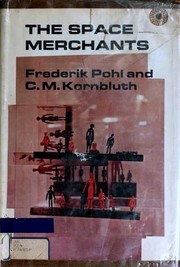
Frederik Pohl
1952 · 171 pages · 2 reviews
 Others: Mixed
The Space Merchants is a 1952 science fiction novel by American writers Frederik Pohl and Cyril M. Kornbluth. Originally published in Galaxy Science Fiction magazine as a serial entitled Gravy Planet, the novel was first published as a single volume in 1953, and has sold heavily since. It deals satirically with a hyper-developed consumerism, seen through the eyes of an advertising executive. In 1984, Pohl published a sequel, The Merchants' War. In 2012, it was included in the Library of America omnibus American Science Fiction: Four Classic Novels 1953–1956. Pohl revised the original novel in 2011 with added material and more contemporary references. It was rated the 24th "all-time best novel" in a 1975 Locus poll, jointly with The Martian Chronicles and The War of the Worlds. The novel was also included in David Pringle's list of 100 best science fiction novels.
What made the match, strongest first
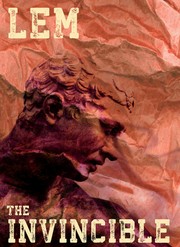
Stanisław Lem
1967 · 221 pages · 3 reviews
 Others: Neutral
Reads initially like the sort of traditional science fiction you might see on TV - rocket lands on foreign planet, sends out teams to discover what gives. what follows is a gripping scientific detective story as we learn the terrible secrets of a past race, and Lem takes us on a journey of wonder and awe. Reminiscent of the final passages of HG Wells' Time Machine as the author shows us beings and worlds we could never imagine. I've read this several times and will read it again and you should too.
What made the match, strongest first
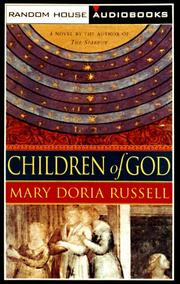
Mary Doria Russell
1998 · 438 pages · 3 reviews
Others: Mostly negativeThe only member of the original mission to the planet Rakhat to return to Earth, Father Emilio Sandoz has barely begun to recover from his ordeal when the Society of Jesus calls upon him for help in preparing for another mission to Alpha Centauri. Despite his objections and fear, he cannot escape his past or the future. Old friends, new discoveries and difficult questions await Emilio as he struggles for inner peace and understanding in a moral universe whose boundaries now extend beyond the solar system and whose future lies with children born in a faraway place.
What made the match, strongest first
Not a fanThese are the ones that I found to be the messiest, the most incoherent reading experience, and the ones that fell out of my memory banks the easiest. The Similac, The Crack in Space, and Counterclock World.