


 Loved it
Regardless of the plot and the core characters, this has one of my favorite ideas and images from all of PKD's work.
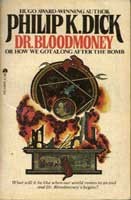
Others: Positive Dr. Bloodmoney, or How We Got Along After the Bomb is a 1965 science fiction novel by American writer Philip K. Dick. It was nominated for the Nebula Award for Best Novel in 1965.[1] Dick wrote the novel in 1963 with working titles In Earth's Diurnal Course and A Terran Odyssey. Ace editor Donald Wollheim however suggested the final title which references the film Dr. Strangelove or: How I Learned to Stop Worrying and Love the Bomb (1964).[2]
Genres: science fiction
Lists: …
Philip K. Dick
1964 · 240 pages · 5 reviews
Others: Mostly positiveMartian Time-Slip is a 1964 science fiction novel by American writer Philip K. Dick. The novel uses the common science fiction concept of a human colony on Mars. However, it also includes the themes of mental illness, the physics of time and the dangers of centralized authority. The novel was first published under the title All We Marsmen, serialized in the August, October and December 1963 issues of Worlds of Tomorrow magazine. The subsequent 1964 publication as Martian Time-Slip is virtually identical, with different chapter breaks.
What made the match, strongest first
Philip K. Dick
1970 · 208 pages · 4 reviews
 Others: Overwhelmingly positive
A Maze of Death is a 1970 science fiction novel by American writer Philip K. Dick. Like many of Dick's novels, it portrays what appears to be a drab and harsh off-world human colony and explores the difference between reality and perception. It is, however, one of his few to examine the human death instinct and capacity for murder and is one of his darkest novels.
What made the match, strongest first
Robert Silverberg
1972 · 256 pages · 5 reviews
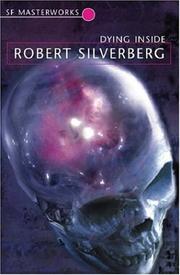
Others: Overwhelmingly positiveFrom the back cover: David Selig is outwardly unimpressive. His early promise as a student and scholar is unrealised. He has no proper job, he has no girlfriend. But, inside, Selig has the power of a god, for he can probe other people's minds and read their thoughts and feelings. This extraordinary faculty defines his sense of self -- his power is him. But with the onset of middle age, Selig's capacity to read minds is failing fast, and he must struggle to come to terms with that loss -- to accept that he is dying inside...
What made the match, strongest first
Frederik Pohl
1952 · 171 pages · 2 reviews
 Others: Mixed
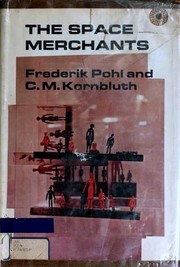
The Space Merchants is a 1952 science fiction novel by American writers Frederik Pohl and Cyril M. Kornbluth. Originally published in Galaxy Science Fiction magazine as a serial entitled Gravy Planet, the novel was first published as a single volume in 1953, and has sold heavily since. It deals satirically with a hyper-developed consumerism, seen through the eyes of an advertising executive. In 1984, Pohl published a sequel, The Merchants' War. In 2012, it was included in the Library of America omnibus American Science Fiction: Four Classic Novels 1953–1956. Pohl revised the original novel in 2011 with added material and more contemporary references. It was rated the 24th "all-time best novel" in a 1975 Locus poll, jointly with The Martian Chronicles and The War of the Worlds. The novel was also included in David Pringle's list of 100 best science fiction novels.
What made the match, strongest first
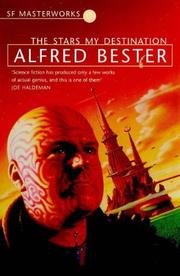
Alfred Bester
1956 · 236 pages · 8 reviews
Others: Overwhelmingly positiveIn this pulse-quickening novel, Alfred Bester imagines a future in which people "jaunte" a thousand miles with a single thought, where the rich barricade themselves in labyrinths and protect themselves with radioactive hitmen—and where an inarticulate outcast is the most valuable and dangerous man alive. The Stars My Destination is a classic of technological prophecy and timeless narrative enchantment by an acknowledged master of science fiction.
What made the match, strongest first
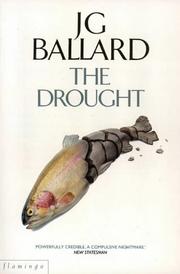
J. G. Ballard
1965 · 240 pages · 3 reviews
Others: PositiveA key backlist title from the author of Cocaine Nights, Empire of the Sun and Crash, now in PerfectBound e-book.
What made the match, strongest first
Loved itRegardless of the plot and the core characters, this has one of my favorite ideas and images from all of PKD's work.