Caste
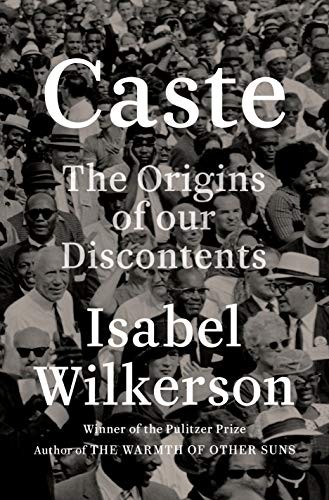
CasteIsabel Wilkerson
Buy on Amazon

Caste (2020)

Isabel Wilkerson

Others: Overwhelmingly positive

“As we go about our daily lives, caste is the wordless usher in a darkened theater, flashlight cast down in the aisles, guiding us to our assigned seats for a performance. The hierarchy of caste is not about feelings or morality. It is about power—which groups have it and which do not.” In this brilliant book, Isabel Wilkerson gives us a masterful portrait of an unseen phenomenon in America as she explores, through an immersive, deeply researched narrative and stories about real people, how America today and throughout its history has been shaped by a hidden caste system, a rigid hierarchy of human rankings. Beyond race, class, or other factors, there is a powerful caste system that influences people’s lives and behavior and the nation’s fate. Linking the caste systems of America, India, and Nazi Germany, Wilkerson explores eight pillars that underlie caste systems across civilizations, including divine will, bloodlines, stigma, and more. Using riveting stories about people—including Martin Luther King, Jr., baseball’s Satchel Paige, a single father and his toddler son, Wilkerson herself, and many others—she shows the ways that the insidious undertow of caste is experienced every day. She documents how the Nazis studied the racial systems in America to plan their out-cast of the Jews; she discusses why the cruel logic of caste requires that there be a bottom rung for those in the middle to measure themselves against; she writes about the surprising health costs of caste, in depression and life expectancy, and the effects of this hierarchy on our culture and politics. Finally, she points forward to ways America can move beyond the artificial and destructive separations of human divisions, toward hope in our common humanity. Beautifully written, original, and revealing, Caste: The Origins of Our Discontents is an eye-opening story of people and history, and a reexamination of what lies under the surface of ordinary lives and of American life today. --https://www.penguinrandomhouse.ca/books/653196/caste-oprahs-book-club-by-isabel-wilkerson/9780593230268

ISBN:
9780593427958
Length:
496 pages

Genres: nonfiction

Lists: …

Similar books

1 of 6
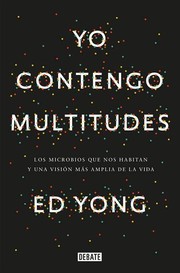
  • I Contain Multitudes

    Ed Yong

    2016 · 361 pages · 4 reviews

    Others: Overwhelmingly positive

    Joining the ranks of popular science classics like The Botany of Desire and The Selfish Gene, a groundbreaking, wondrously informative, and vastly entertaining examination of the most significant revolution in biology since Darwin—a “microbe’s-eye view” of the world that reveals a marvelous, radically reconceived picture of life on earth. Every animal, whether human, squid, or wasp, is home to millions of bacteria and other microbes. Ed Yong, whose humor is as evident as his erudition, prompts us to look at ourselves and our animal companions in a new light—less as individuals and more as the interconnected, interdependent multitudes we assuredly are. The microbes in our bodies are part of our immune systems and protect us from disease. In the deep oceans, mysterious creatures without mouths or guts depend on microbes for all their energy. Bacteria provide squid with invisibility cloaks, help beetles to bring down forests, and allow worms to cause diseases that afflict millions of people. Many people think of microbes as germs to be eradicated, but those that live with us—the microbiome—build our bodies, protect our health, shape our identities, and grant us incredible abilities. In this astonishing book, Ed Yong takes us on a grand tour through our microbial partners, and introduces us to the scientists on the front lines of discovery. It will change both our view of nature and our sense of where we belong in it.

    Why?

    What made the match, strongest first

    Also nonfiction
    83%
    abookolive loved both
    14%
    Similar descriptions
    3%
    Personalize your recommendations
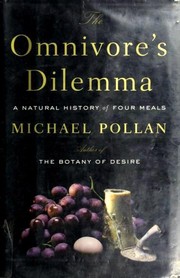
  • The Omnivore's Dilemma

    Michael Pollan

    2006 · 450 pages · 1 review

    Others: Positive

    What should we have for dinner? The question has confronted us since man discovered fire, but according to Michael Pollan, the bestselling author of The Botany of Desire, how we answer it today, at the dawn of the twenty-first century, may well determine our very survival as a species. Should we eat a fast-food hamburger? Something organic? Or perhaps something we hunt, gather, or grow ourselves? The omnivore’s dilemma has returned with a vengeance, as the cornucopia of the modern American supermarket and fast-food outlet confronts us with a bewildering and treacherous food landscape. What’s at stake in our eating choices is not only our own and our children’s health, but the health of the environment that sustains life on earth. In this groundbreaking book, one of America’s most fascinating, original, and elegant writers turns his own omnivorous mind to the seemingly straightforward question of what we should have for dinner. To find out, Pollan follows each of the food chains that sustain us—industrial food, organic or alternative food, and food we forage ourselves—from the source to a final meal, and in the process develops a definitive account of the American way of eating. His absorbing narrative takes us from Iowa cornfields to food-science laboratories, from feedlots and fast-food restaurants to organic farms and hunting grounds, always emphasizing our dynamic coevolutionary relationship with the handful of plant and animal species we depend on. Each time Pollan sits down to a meal, he deploys his unique blend of personal and investigative journalism to trace the origins of everything consumed, revealing what we unwittingly ingest and explaining how our taste for particular foods and flavors reflects our evolutionary inheritance. The surprising answers Pollan offers to the simple question posed by this book have profound political, economic, psychological, and even moral implications for all of us. Beautifully written and thrillingly argued, The Omnivore’s Dilemma promises to change the way we think about the politics and pleasure of eating. For anyone who reads it, dinner will never again look, or taste, quite the same.

    Why?

    What made the match, strongest first

    Also nonfiction
    83%
    abookolive loved both
    14%
    Similar descriptions
    3%
    Personalize your recommendations
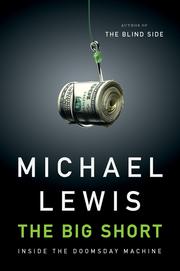
  • The big short

    Michael Lewis

    2009 · 291 pages · 2 reviews

    Others: Positive

    The #1 New York Times bestseller: a brilliant account—character-rich and darkly humorous—of how the U.S. economy was driven over the cliff. When the crash of the U. S. stock market became public knowledge in the fall of 2008, it was already old news. The real crash, the silent crash, had taken place over the previous year, in bizarre feeder markets where the sun doesn’t shine, and the SEC doesn’t dare, or bother, to tread: the bond and real estate derivative markets where geeks invent impenetrable securities to profit from the misery of lower- and middle-class Americans who can’t pay their debts. The smart people who understood what was or might be happening were paralyzed by hope and fear; in any case, they weren’t talking. The crucial question is this: Who understood the risk inherent in the assumption of ever-rising real estate prices, a risk compounded daily by the creation of those arcane, artificial securities loosely based on piles of doubtful mortgages? Michael Lewis turns the inquiry on its head to create a fresh, character-driven narrative brimming with indignation and dark humor, a fitting sequel to his #1 best-selling Liar’s Poker. Who got it right? he asks. Who saw the real estate market for the black hole it would become, and eventually made billions of dollars from that perception? And what qualities of character made those few persist when their peers and colleagues dismissed them as Chicken Littles? Out of this handful of unlikely—really unlikely—heroes, Lewis fashions a story as compelling and unusual as any of his earlier bestsellers, proving yet again that he is the finest and funniest chronicler of our times.

    Why?

    What made the match, strongest first

    Also nonfiction
    84%
    abookolive loved both
    14%
    Similar descriptions
    2%
    Personalize your recommendations
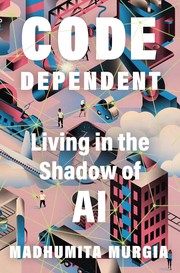
  • Code-Dependent

    Madhumita Murgia

    2024 · 320 pages · 2 reviews

    Others: Positive

    Shortlisted for the Women’s Prize for Non-Fiction Named one of the best books of the year by Publishers Weekly. A riveting story of what it means to be human in a world changed by artificial intelligence, revealing the perils and inequities of our growing reliance on automated decision-making On the surface, a British poet, an UberEats courier in Pittsburgh, an Indian doctor, and a Chinese activist in exile have nothing in common. But they are in fact linked by a profound common experience—unexpected encounters with artificial intelligence. In Code Dependent, Murgia shows how automated systems are reshaping our lives all over the world, from technology that marks children as future criminals, to an app that is helping to give diagnoses to a remote tribal community. AI has already infiltrated our day-to-day, through language-generating chatbots like ChatGPT and social media. But it’s also affecting us in more insidious ways. It touches everything from our interpersonal relationships, to our kids’ education, work, finances, public services, and even our human rights. By highlighting the voices of ordinary people in places far removed from the cozy enclave of Silicon Valley, Code Dependent explores the impact of a set of powerful, flawed, and often-exploitative technologies on individuals, communities, and our wider society. Murgia exposes how AI can strip away our collective and individual sense of agency, and shatter our illusion of free will. The ways in which algorithms and their effects are governed over the coming years will profoundly impact us all. Yet we can’t agree on a common path forward. We cannot decide what preferences and morals we want to encode in these entities—or what controls we may want to impose on them. And thus, we are collectively relinquishing our moral authority to machines. In Code Dependent, Murgia not only sheds light on this chilling phenomenon, but also charts a path of resistance. AI is already changing what it means to be human, in ways large and small, and Murgia reveals what could happen if we fail to reclaim our humanity.

    Why?

    What made the match, strongest first

    Also nonfiction
    85%
    Similar descriptions
    15%
    Personalize your recommendations
  • Machine Readable Me

    Zara Rahman

    2023 · 1 review

    Others: Positive

    Identification technologies - passports, ID cards, ancestry reports - put us in boxes, determine where we can go and where we can’t, and change how we relate to those around us. From nationally-run systems, to social media platforms, DNA testing and counter-terrorism registers, we are all part of databases that seek to identify us, and impose a framework upon us for assessing others. Machine Readable Me is a tour of the many ways in which identification technologies are impacting our lives in ways we see and ways we don’t.

    Why?

    What made the match, strongest first

    Also nonfiction
    89%
    Similar descriptions
    11%
    Personalize your recommendations
  • Patriarchs

    Angela Saini

    2023 · 320 pages · 1 review

    Others: Positive

    A groundbreaking exploration of gendered oppression—its origins, its histories, our attempts to understand it, and our efforts to combat it For centuries, societies have treated male domination as natural to the human species. But how would our understanding of gender inequality—our imagined past and contested present—look if we didn’t assume that men have always ruled over women, if we saw inequality as something more fragile that has had to be constantly remade and reasserted? In The Patriarchs: The Origins of Inequality, award-winning science journalist Angela Saini explores the roots of what we call patriarchy, uncovering a complex history of how it first became embedded in societies and spread across the globe from prehistory into the present. She travels to the world’s earliest known human settlements, analyzes the latest research findings in science and archaeology, and traces cultural and political histories from the Americas to Asia. In the 19th and 20th centuries, philosophers, historians, anthropologists, and feminists began to actively question what patriarchy meant as part of the attempt to understand the origins of inequality. In our own time, despite the pushback against sexism, abuse, and discrimination, even revolutionary efforts to bring about equality have often ended in failure and backlash. But The Patriarchs: The Origins of Inequality is a hopeful book—one that reveals a multiplicity to human arrangements that undercuts the old grand narratives and exposes male supremacy as no more, and no less, than an ever-shifting element in systems of control.

    Why?

    What made the match, strongest first

    Also nonfiction
    91%
    Similar descriptions
    9%
    Personalize your recommendations

Reviews2

abookolive
Loved it

this book is written in a very straightforward very matter of fact and frankly very calm way that just invites you to consider her points I'm an American citizen and this book opened my eyes to things that are built within the fabric of my own society that I had been missing this is just a very eye openening book

Loved it

number three is a book called cast the origins of our discontent by isabel wilkerson number two is fiddler on the subway by gene weingarten and number one was knight by ellie weissel