
 Loved it
which somehow made high finance understandable not a favorite though
Review 1 of 2
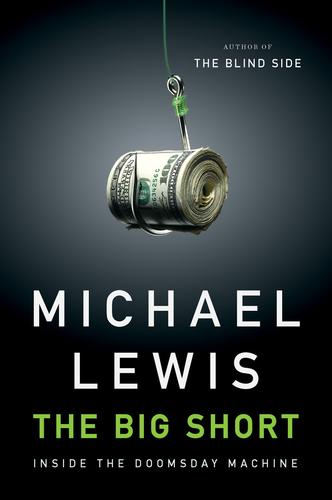
Others: Positive The #1 New York Times bestseller: a brilliant account—character-rich and darkly humorous—of how the U.S. economy was driven over the cliff. When the crash of the U. S. stock market became public knowledge in the fall of 2008, it was already old news. The real crash, the silent crash, had taken place over the previous year, in bizarre feeder markets where the sun doesn’t shine, and the SEC doesn’t dare, or bother, to tread: the bond and real estate derivative markets where geeks invent impenetrable securities to profit from the misery of lower- and middle-class Americans who can’t pay their debts. The smart people who understood what was or might be happening were paralyzed by hope and fear; in any case, they weren’t talking. The crucial question is this: Who understood the risk inherent in the assumption of ever-rising real estate prices, a risk compounded daily by the creation of those arcane, artificial securities loosely based on piles of doubtful mortgages? Michael Lewis turns the inquiry on its head to create a fresh, character-driven narrative brimming with indignation and dark humor, a fitting sequel to his #1 best-selling Liar’s Poker. Who got it right? he asks. Who saw the real estate market for the black hole it would become, and eventually made billions of dollars from that perception? And what qualities of character made those few persist when their peers and colleagues dismissed them as Chicken Littles? Out of this handful of unlikely—really unlikely—heroes, Lewis fashions a story as compelling and unusual as any of his earlier bestsellers, proving yet again that he is the finest and funniest chronicler of our times.
Genres: nonfiction
Lists: …
Michael Pollan
2006 · 450 pages · 1 review
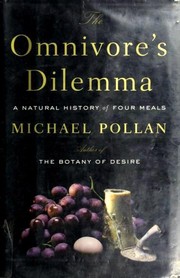
Others: PositiveWhat should we have for dinner? The question has confronted us since man discovered fire, but according to Michael Pollan, the bestselling author of The Botany of Desire, how we answer it today, at the dawn of the twenty-first century, may well determine our very survival as a species. Should we eat a fast-food hamburger? Something organic? Or perhaps something we hunt, gather, or grow ourselves? The omnivore’s dilemma has returned with a vengeance, as the cornucopia of the modern American supermarket and fast-food outlet confronts us with a bewildering and treacherous food landscape. What’s at stake in our eating choices is not only our own and our children’s health, but the health of the environment that sustains life on earth. In this groundbreaking book, one of America’s most fascinating, original, and elegant writers turns his own omnivorous mind to the seemingly straightforward question of what we should have for dinner. To find out, Pollan follows each of the food chains that sustain us—industrial food, organic or alternative food, and food we forage ourselves—from the source to a final meal, and in the process develops a definitive account of the American way of eating. His absorbing narrative takes us from Iowa cornfields to food-science laboratories, from feedlots and fast-food restaurants to organic farms and hunting grounds, always emphasizing our dynamic coevolutionary relationship with the handful of plant and animal species we depend on. Each time Pollan sits down to a meal, he deploys his unique blend of personal and investigative journalism to trace the origins of everything consumed, revealing what we unwittingly ingest and explaining how our taste for particular foods and flavors reflects our evolutionary inheritance. The surprising answers Pollan offers to the simple question posed by this book have profound political, economic, psychological, and even moral implications for all of us. Beautifully written and thrillingly argued, The Omnivore’s Dilemma promises to change the way we think about the politics and pleasure of eating. For anyone who reads it, dinner will never again look, or taste, quite the same.
What made the match, strongest first
Isabel Wilkerson
2020 · 496 pages · 2 reviews
 Others: Overwhelmingly positive
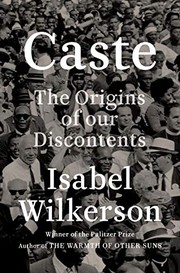
“As we go about our daily lives, caste is the wordless usher in a darkened theater, flashlight cast down in the aisles, guiding us to our assigned seats for a performance. The hierarchy of caste is not about feelings or morality. It is about power—which groups have it and which do not.” In this brilliant book, Isabel Wilkerson gives us a masterful portrait of an unseen phenomenon in America as she explores, through an immersive, deeply researched narrative and stories about real people, how America today and throughout its history has been shaped by a hidden caste system, a rigid hierarchy of human rankings. Beyond race, class, or other factors, there is a powerful caste system that influences people’s lives and behavior and the nation’s fate. Linking the caste systems of America, India, and Nazi Germany, Wilkerson explores eight pillars that underlie caste systems across civilizations, including divine will, bloodlines, stigma, and more. Using riveting stories about people—including Martin Luther King, Jr., baseball’s Satchel Paige, a single father and his toddler son, Wilkerson herself, and many others—she shows the ways that the insidious undertow of caste is experienced every day. She documents how the Nazis studied the racial systems in America to plan their out-cast of the Jews; she discusses why the cruel logic of caste requires that there be a bottom rung for those in the middle to measure themselves against; she writes about the surprising health costs of caste, in depression and life expectancy, and the effects of this hierarchy on our culture and politics. Finally, she points forward to ways America can move beyond the artificial and destructive separations of human divisions, toward hope in our common humanity. Beautifully written, original, and revealing, Caste: The Origins of Our Discontents is an eye-opening story of people and history, and a reexamination of what lies under the surface of ordinary lives and of American life today. --https://www.penguinrandomhouse.ca/books/653196/caste-oprahs-book-club-by-isabel-wilkerson/9780593230268
What made the match, strongest first
Ed Yong
2016 · 361 pages · 4 reviews
Others: Overwhelmingly positiveJoining the ranks of popular science classics like The Botany of Desire and The Selfish Gene, a groundbreaking, wondrously informative, and vastly entertaining examination of the most significant revolution in biology since Darwin—a “microbe’s-eye view” of the world that reveals a marvelous, radically reconceived picture of life on earth. Every animal, whether human, squid, or wasp, is home to millions of bacteria and other microbes. Ed Yong, whose humor is as evident as his erudition, prompts us to look at ourselves and our animal companions in a new light—less as individuals and more as the interconnected, interdependent multitudes we assuredly are. The microbes in our bodies are part of our immune systems and protect us from disease. In the deep oceans, mysterious creatures without mouths or guts depend on microbes for all their energy. Bacteria provide squid with invisibility cloaks, help beetles to bring down forests, and allow worms to cause diseases that afflict millions of people. Many people think of microbes as germs to be eradicated, but those that live with us—the microbiome—build our bodies, protect our health, shape our identities, and grant us incredible abilities. In this astonishing book, Ed Yong takes us on a grand tour through our microbial partners, and introduces us to the scientists on the front lines of discovery. It will change both our view of nature and our sense of where we belong in it.
What made the match, strongest first
Anushay Hossain
2021 · 296 pages · 1 review
 Others: Mixed
Explore real women’s tales of healthcare trauma and medical misogyny with this meticulously researched, in-depth examination of the women’s health crisis in America—and what we can do about it. When Anushay Hossain became pregnant in the US, she was so relieved. Growing up in Bangladesh in the 1980s, where the concept of women’s healthcare hardly existed, she understood how lucky she was to access the best in the world. But she couldn’t have been more wrong. Things started to go awry from the minute she stepped in the hospital, and after thirty hours of labor (two of which she spent pushing), Hossain’s epidural slipped. Her pain was so severe that she ran a fever of 104 degrees, and as she shook and trembled uncontrollably, the doctors finally performed an emergency C-section. Giving birth in the richest country on earth, Hossain never imagined she could die in labor. But she almost did. The experience put her on a journey to explore, understand, and share how women—especially women of color—are dismissed to death by systemic sexism in American healthcare. Following in the footsteps of feminist manifestos such as The Feminine Mystique and Rage Becomes Her , The Pain Gap is an eye-opening and stirring call to arms that encourages women to flip their “hysteria complex” on its head and use it to revolutionize women’s healthcare. This book tells the story of Hossain’s experiences—from growing up in South Asia surrounded by staggering maternal mortality rates to lobbying for global health legislation on Capitol Hill to nearly becoming a statistic herself. Along the way, she realized that a little fury might be just what the doctor ordered. Meticulously researched and deeply reported, this book explores real women’s traumatic experiences with America’s healthcare system—and empowers everyone to use their experiences to bring about the healthcare revolution women need.
What made the match, strongest first
Matthew Desmond
2016 · 442 pages · 5 reviews
Others: Overwhelmingly positiveEvicted: Poverty and Profit in the American City is a 2016 non-fiction book by American author Matthew Desmond. Set in the poorest areas of Milwaukee, Wisconsin, the book follows eight families struggling to pay rent to their landlords during the financial crisis of 2007–2008. Through a year of ethnographic fieldwork, Desmond's goal in the book is to highlight the issues of extreme poverty, affordable housing, and economic exploitation in the United States. Evicted was well-received and won multiple book awards such as the 2017 Pulitzer Prize for General Nonfiction and the Robert F. Kennedy Book Award. The Pulitzer committee selected the book "for a deeply researched exposé that showed how mass evictions after the 2008 economic crash were less a consequence than a cause of poverty."
What made the match, strongest first
Jane Ward
2020 · 216 pages · 1 review
Others: PositiveA troubling account of heterosexual desire in the era of #MeToo Heterosexuality is in crisis. Reports of sexual harassment, misconduct, and rape saturate the news in the era of #MeToo. Straight men and women spend thousands of dollars every day on relationship coaches, seduction boot camps, and couple’s therapy in a search for happiness. In The Tragedy of Heterosexuality, Jane Ward smartly explores what, exactly, is wrong with heterosexuality in the twenty-first century, and what straight people can do to fix it for good. She shows how straight women, and to a lesser extent straight men, have tried to mend a fraught patriarchal system in which intimacy, sexual fulfillment, and mutual respect are expected to coexist alongside enduring forms of inequality, alienation, and violence in straight relationships. Ward also takes an intriguing look at the multi-billion-dollar self-help industry, which markets goods and services to help heterosexual couples without addressing the root of their problems. Ultimately, she encourages straight men and women to take a page out of queer culture, reminding them “about the human capacity to desire, fuck, and show respect at the same time.”
What made the match, strongest first
Loved itwhich somehow made high finance understandable not a favorite though