
 Loved it
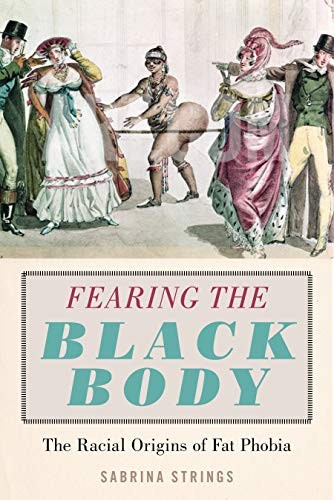
Fear in the Black Body: Racial Origins of Fat Phobia by Sabrina Strings was four stars.
Review 1 of 2
Others: Positive There is an obesity epidemic in this country and poor black women are particularly stigmatized as “diseased” and a burden on the public health care system. This is only the most recent incarnation of the fear of fat black women, which Sabrina Strings shows took root more than two hundred years ago. Strings weaves together an eye-opening historical narrative ranging from the Renaissance to the current moment, analyzing important works of art, newspaper and magazine articles, and scientific literature and medical journals―where fat bodies were once praised―showing that fat phobia, as it relates to black women, did not originate with medical findings, but with the Enlightenment era belief that fatness was evidence of “savagery” and racial inferiority. The author argues that the contemporary ideal of slenderness is, at its very core, racialized and racist. Indeed, it was not until the early twentieth century, when racialized attitudes against fatness were already entrenched in the culture, that the medical establishment began its crusade against obesity. An important and original work, Fearing the Black Body argues convincingly that fat phobia isn’t about health at all, but rather a means of using the body to validate race, class, and gender prejudice.
Genres: nonfiction
Lists: …
Elizabeth Comen
2024 · 5 reviews
Others: PositiveThe fascinating history of women’s health as it’s never been told before. For as long as medicine has been a practice, women's bodies have been treated like objects to be practiced on: examined and ignored, idealized and sexualized, shamed, subjugated, mutilated, and dismissed. The history of women’s healthcare is a story in which women themselves have too often been voiceless—a narrative instead written from the perspective of men who styled themselves as authorities on the female of the species, yet uninformed by women’s own voices, thoughts, fears, pain and experiences. The result is a cultural and societal legacy that continues to shape the (mis)treatment and care of women. While the modern age has seen significant advancements in the medical field, the notion that female bodies are flawed inversions of the male ideal lingers on—as do the pervasive societal stigmas and lingering ignorance that shape women’s health and relationships with their own bodies. Memorial Sloan Kettering oncologist and medical historian Dr. Elizabeth Comen peels back the curtain on the collective medical history of women to reintroduce us to our whole bodies—how they work, the actual doctors and patients whose perspectives and experiences laid the foundation for today’s medical thought, and the many oversights that still remain unaddressed. With a physician’s knowledge and empathy, Dr. Comen follows the road map of the eleven organ systems to share unique and untold stories, drawing upon medical texts and journals, interviews with expert physicians, as well as her own experience treating thousands of women. Empowering women to better understand ourselves and advocate for care that prioritizes healthy and joyful lives—for us and generations to come—All in Her Head is written with humor, wisdom, and deep scientific and cultural insight. Eye-opening, sometimes enraging, yet always captivating, this shared memoir of women’s medical history is an essential contribution to a holistic understanding and much-needed reclaiming of women’s history and bodies.
What made the match, strongest first
Jennifer L. Eberhardt, PhD
2019 · 368 pages · 3 reviews
Others: PositiveFrom one of the world's leading experts on unconscious racial bias, a personal examination of one of the central controversies and culturally powerful issues of our time, and its influence on contemporary race relations and criminal justice. We do not have to be racist to be biased. With a perspective that is scientific, investigative, and personal, Jennifer L. Eberhardt offers a reasoned look into the effects of implicit racial bias, ranging from the subtle to the dramatic. Racial bias can lead to disparities in education, employment, housing, and the criminal justice system--and then those very disparities further reinforce the problem. In Biased, Eberhardt reveals how even when we are not aware of bias and genuinely wish to treat all people equally, ingrained stereotypes infect our visual perception, attention, memory, and behavior. Eberhardt's extensive work as a consultant to law enforcement, as well as a researcher with unprecedented access to data, including footage from police officers' body-worn cameras, informs every aspect of her book and makes it much more than a work of social psychology. Her research occurs not just in the laboratory but in police departments, courtrooms, prisons, boardrooms, and on the street. Interviews are interwoven with memories and stories from Eberhardt's own life and family. She offers practical suggestions for reform, and takes the reader behind the scenes to police departments implementing her suggestions. Refusing to shy away from the tragic consequences of prejudice, Eberhardt addresses how racial bias is not the fault of, or restricted to, a few "bad apples" in police departments or other institutions. We can see evidence of bias at all levels of society in media, education, and business practices. In Biased, Eberhardt reminds us that racial bias is a human problem--one all people can play a role in solving.
What made the match, strongest first
Imani Perry
2025 · 256 pages · 2 reviews
Others: PositiveA surprising and beautiful meditation on the color blue—and its fascinating role in Black history and culture—from National Book Award winner Imani Perry Throughout history, the concept of Blackness has been remarkably intertwined with another color: blue. In daily life, it is evoked in countless ways. Blue skies and blue water offer hope for that which lies beyond the current conditions. But blue is also the color of deep melancholy and heartache, echoing Louis Armstrong’s question, “What did I do to be so Black and blue?” In this book, celebrated author Imani Perry uses the world’s favorite color as a springboard for a riveting emotional, cultural, and spiritual journey—an examination of race and Blackness that transcends politics or ideology. Perry traces both blue and Blackness from their earliest roots to their many embodiments of contemporary culture, drawing deeply from her own life as well as art and history: The dyed indigo cloths of West Africa that were traded for human life in the 16th century. The mixture of awe and aversion in the old-fashioned characterization of dark-skinned people as “Blue Black.” The fundamentally American art form of blues music, sitting at the crossroads of pain and pleasure. The blue flowers Perry plants to honor a loved one gone too soon. Poignant, spellbinding, and utterly original, Black in Blues is a brilliant new work that could only have come from the mind of one of our greatest writers and thinkers. Attuned to the harrowing and the sublime aspects of the human experience, it is every bit as vivid, rich, and striking as blue itself.
What made the match, strongest first
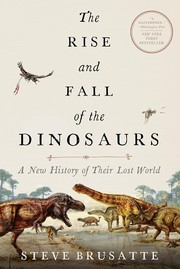
Stephen Brusatte
2018 · 404 pages · 1 review
Others: PositiveA sweeping narrative scientific history that tells the epic story of the dinosaurs, examining their origins, their habitats, their extinction, and their living legacy. Print run 75,000.
What made the match, strongest first
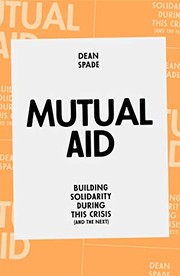
Dean Spade
2020 · 128 pages · 2 reviews
Others: Leaning positiveAround the world, people are faced with crisis after crisis, from the COVID-19 pandemic and climate change-induced fires, floods, and storms to the ongoing horrors of mass incarceration, brutal immigration enforcement, endemic gender violence, and severe wealth inequality. As governments fail to respond to—or actively engineer—each crisis, ordinary people are finding bold and innovative ways to share resources and support vulnerable members of their communities. This survival work, when done alongside social movement demands for transformative change, is called mutual aid. This book is about mutual aid: why it is so important, what it looks like, and how to do it. It provides a grassroots theory of mutual aid, describes how mutual aid has been a part of all larger, powerful social movements, and offers concrete tools for organizing, such as how to work in groups, decision-making process, how to prevent and address conflict, and how to deal with burnout. Mutual aid isn’t charity: it’s a form of organizing where people get to create new systems of care and generosity so we can survive.
What made the match, strongest first
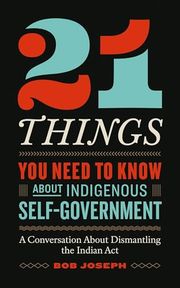
Bob Joseph
2025 · 200 pages · 1 review
Others: PositiveBob Joseph's 21 Things® You May Not Know About the Indian Act captured the attention of hundreds of thousands of Canadians by shining a light on the Indian Act and the problems associated with it. In that book, readers learned that the Consolidated Indian Act of 1876 has controlled the lives of Indigenous Peoples in Canada for generations, and despite its objective to assimilate Indians into the economic and political mainstream, it has had the opposite effect: segregation. They live under different laws and on different lands. People came away from that book with questions such as "Can we get rid of the Indian Act?" and "What would that look like? Would self-government work?" These are timely questions, given that 2026 will mark 150 years since the Consolidated Indian Act of 1876. The short answer to these questions is, yes, we can dismantle the Act, and there are current examples of self-government arrangements that are working. With his trademark wisdom, humility, and deep understanding, Bob Joseph shows us the path forward, in which Indigenous self-governance is already happening and not to be feared--and negotiating more such arrangements, sooner rather than later, is an absolute necessity. Beginning with the relationship between Indigenous Peoples, the Crown, and settlers in at the early days of colonization, Joseph travels to the current landscape and the tremendous possibility for reconciliation--a future every Canadian can support. He illustrates the widespread negative consequences of the reserve system that can only be redressed by self-government. With insight and clarity, he busts myths about taxation, the so-called benefits of the Indian Act, and the trustee-wardship relationship. And he provides inspiring examples of how self-government agreements are working well, from the Nisga'a Final Agreement to the James Bay and Northern Quebec Agreement, while showing how key the United Nations Declaration on the Rights of Indigenous Peoples is to defining what sovereignty really means. 21 Things You Need to Know About Indigenous Self-Government: A Conversation about Dismantling the Indian Act illuminates what Canadians need to know to stand in the work of reconciliation as individuals, as organizations, and as a country of many nations. Bob Joseph shows us a way forward with his trademark wisdom, humility, and deep understanding, Indigenous self-governance is not only a possibility, but an absolute necessity.
What made the match, strongest first
Loved itFear in the Black Body: Racial Origins of Fat Phobia by Sabrina Strings was four stars.