

 Loved it
Definitely recommend this one. I gave it a four star.
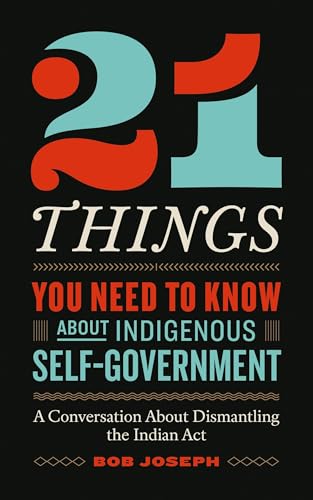
Others: Positive Bob Joseph's 21 Things® You May Not Know About the Indian Act captured the attention of hundreds of thousands of Canadians by shining a light on the Indian Act and the problems associated with it. In that book, readers learned that the Consolidated Indian Act of 1876 has controlled the lives of Indigenous Peoples in Canada for generations, and despite its objective to assimilate Indians into the economic and political mainstream, it has had the opposite effect: segregation. They live under different laws and on different lands. People came away from that book with questions such as "Can we get rid of the Indian Act?" and "What would that look like? Would self-government work?" These are timely questions, given that 2026 will mark 150 years since the Consolidated Indian Act of 1876. The short answer to these questions is, yes, we can dismantle the Act, and there are current examples of self-government arrangements that are working. With his trademark wisdom, humility, and deep understanding, Bob Joseph shows us the path forward, in which Indigenous self-governance is already happening and not to be feared--and negotiating more such arrangements, sooner rather than later, is an absolute necessity. Beginning with the relationship between Indigenous Peoples, the Crown, and settlers in at the early days of colonization, Joseph travels to the current landscape and the tremendous possibility for reconciliation--a future every Canadian can support. He illustrates the widespread negative consequences of the reserve system that can only be redressed by self-government. With insight and clarity, he busts myths about taxation, the so-called benefits of the Indian Act, and the trustee-wardship relationship. And he provides inspiring examples of how self-government agreements are working well, from the Nisga'a Final Agreement to the James Bay and Northern Quebec Agreement, while showing how key the United Nations Declaration on the Rights of Indigenous Peoples is to defining what sovereignty really means. 21 Things You Need to Know About Indigenous Self-Government: A Conversation about Dismantling the Indian Act illuminates what Canadians need to know to stand in the work of reconciliation as individuals, as organizations, and as a country of many nations. Bob Joseph shows us a way forward with his trademark wisdom, humility, and deep understanding, Indigenous self-governance is not only a possibility, but an absolute necessity.
Genres: nonfiction
Lists: …
Bob Joseph
2018 · 160 pages · 2 reviews
Others: PositiveA guide to understanding the Indian Act and its impact on generations of Indigenous Peoples, as well as an examination of how Indigenous Peoples can return to self-government, self-determination, and self-reliance.
What made the match, strongest first
Julian Sher
2023 · 3 reviews
Others: PositiveA riveting, dramatic account of the years, months and days leading up to the assassination of Abraham Lincoln, revolving around the unexpected ways Canadians were deeply involved in every aspect of the American Civil War. Canadians take pride in being on the “good side” of the American Civil War, serving as a haven for 30,000 escaped slaves on the Underground Railroad. But dwelling in history's shadow is the much darker role Canada played in supporting the slave South and in fomenting the many plots against Lincoln. The North Star weaves together the different strands of several extraordinary Canadians and a handful of Confederate agents in Canada as they all make their separate, fateful journeys to the night of the assassination on April 14, 1865. They ended up crossing paths with Lincoln or his assassin John Wilkes Booth, as they were caught up in the maelstrom of history. The book shines a spotlight on the stories of such intrepid figures as Anderson Abbot, Canada’s first Black doctor, who joined the Union Army; Emma Edmonds, the New Brunswick woman who disguised herself as a man to enlist as a Union nurse; and Edward P. Doherty, the Quebec man who led the hunt to track down John Wilkes Booth. We also meet the wealthy men who aided and supported the Confederate side, such as Toronto aristocrat George Taylor Denison III and banker and Montreal mayor Henry Starnes. Sher creates vivid portraits of places we thought we knew. Montreal was a sort of 19th-century Casablanca of the North: a hub for assassins, money-men, mercenaries and soldiers on the run. Toronto was a headquarters for Confederate plotters and gun-runners. The two largest hotels in the country became nests of Confederate spies. Meticulously researched and richly illustrated, The North Star is a sweeping tale that makes long-ago events leap off the page with a relevance to today.
What made the match, strongest first
Rashid Khalidi
2020 · 352 pages · 3 reviews
Others: Leaning positiveA landmark history of one hundred years of war waged against the Palestinians from the foremost US historian of the Middle East, told through pivotal events and family history In 1899, Yusuf Diya al-Khalidi, mayor of Jerusalem, alarmed by the Zionist call to create a Jewish national home in Palestine, wrote a letter aimed at Theodore Herzl: the country had an indigenous people who would not easily accept their own displacement. He warned of the perils ahead, ending his note, “in the name of God, let Palestine be left alone.” Thus Rashid Khalidi, al-Khalidi’s great-great-nephew, begins this sweeping history, the first general account of the conflict told from an explicitly Palestinian perspective. Drawing on a wealth of untapped archival materials and the reports of generations of family members—mayors, judges, scholars, diplomats, and journalists—The Hundred Years' War on Palestine upends accepted interpretations of the conflict, which tend, at best, to describe a tragic clash between two peoples with claims to the same territory. Instead, Khalidi traces a hundred years of colonial war on the Palestinians, waged first by the Zionist movement and then Israel, but backed by Britain and the United States, the great powers of the age. He highlights the key episodes in this colonial campaign, from the 1917 Balfour Declaration to the destruction of Palestine in 1948, from Israel’s 1982 invasion of Lebanon to the endless and futile peace process. Original, authoritative, and important, The Hundred Years' War on Palestine is not a chronicle of victimization, nor does it whitewash the mistakes of Palestinian leaders or deny the emergence of national movements on both sides. In reevaluating the forces arrayed against the Palestinians, it offers an illuminating new view of a conflict that continues to this day.
What made the match, strongest first
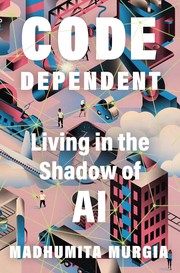
Madhumita Murgia
2024 · 320 pages · 2 reviews
Others: PositiveShortlisted for the Women’s Prize for Non-Fiction Named one of the best books of the year by Publishers Weekly. A riveting story of what it means to be human in a world changed by artificial intelligence, revealing the perils and inequities of our growing reliance on automated decision-making On the surface, a British poet, an UberEats courier in Pittsburgh, an Indian doctor, and a Chinese activist in exile have nothing in common. But they are in fact linked by a profound common experience—unexpected encounters with artificial intelligence. In Code Dependent, Murgia shows how automated systems are reshaping our lives all over the world, from technology that marks children as future criminals, to an app that is helping to give diagnoses to a remote tribal community. AI has already infiltrated our day-to-day, through language-generating chatbots like ChatGPT and social media. But it’s also affecting us in more insidious ways. It touches everything from our interpersonal relationships, to our kids’ education, work, finances, public services, and even our human rights. By highlighting the voices of ordinary people in places far removed from the cozy enclave of Silicon Valley, Code Dependent explores the impact of a set of powerful, flawed, and often-exploitative technologies on individuals, communities, and our wider society. Murgia exposes how AI can strip away our collective and individual sense of agency, and shatter our illusion of free will. The ways in which algorithms and their effects are governed over the coming years will profoundly impact us all. Yet we can’t agree on a common path forward. We cannot decide what preferences and morals we want to encode in these entities—or what controls we may want to impose on them. And thus, we are collectively relinquishing our moral authority to machines. In Code Dependent, Murgia not only sheds light on this chilling phenomenon, but also charts a path of resistance. AI is already changing what it means to be human, in ways large and small, and Murgia reveals what could happen if we fail to reclaim our humanity.
What made the match, strongest first
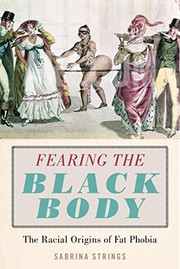
Sabrina Strings
2019 · 304 pages · 2 reviews
Others: PositiveThere is an obesity epidemic in this country and poor black women are particularly stigmatized as “diseased” and a burden on the public health care system. This is only the most recent incarnation of the fear of fat black women, which Sabrina Strings shows took root more than two hundred years ago. Strings weaves together an eye-opening historical narrative ranging from the Renaissance to the current moment, analyzing important works of art, newspaper and magazine articles, and scientific literature and medical journals―where fat bodies were once praised―showing that fat phobia, as it relates to black women, did not originate with medical findings, but with the Enlightenment era belief that fatness was evidence of “savagery” and racial inferiority. The author argues that the contemporary ideal of slenderness is, at its very core, racialized and racist. Indeed, it was not until the early twentieth century, when racialized attitudes against fatness were already entrenched in the culture, that the medical establishment began its crusade against obesity. An important and original work, Fearing the Black Body argues convincingly that fat phobia isn’t about health at all, but rather a means of using the body to validate race, class, and gender prejudice.
What made the match, strongest first
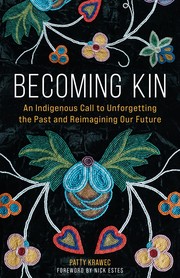
Patty Krawec
2022 · 1 review
 Others: Mixed
Included in the Lakota People's Law Project Decolonized Reading List for 2025 We find our way forward by going back. The invented history of the Western world is crumbling fast, Anishinaabe writer Patty Krawec says, but we can still honor the bonds between us. Settlers dominated and divided, but Indigenous peoples won't just send them all "home." Weaving her own story with the story of her ancestors and with the broader themes of creation, replacement, and disappearance, Krawec helps readers see settler colonialism through the eyes of an Indigenous writer. Settler colonialism tried to force us into one particular way of living, but the old ways of kinship can help us imagine a different future. Krawec asks, What would it look like to remember that we are all related? How might we become better relatives to the land, to one another, and to Indigenous movements for solidarity? Braiding together historical, scientific, and cultural analysis, Indigenous ways of knowing, and the vivid threads of communal memory, Krawec crafts a stunning, forceful call to "unforget" our history. This remarkable sojourn through Native and settler history, myth, identity, and spirituality helps us retrace our steps and pick up what was lost along the chances to honor rather than violate treaties, to see the land as a relative rather than a resource, and to unravel the history we have been taught.
What made the match, strongest first
Loved itDefinitely recommend this one. I gave it a four star.