 Mixed
This one borders the line of so weird or unique that I'm not quite sure I liked it. This one follows a man who is descending into insanity and you really feel it in the story.
 Others: Leaning positive
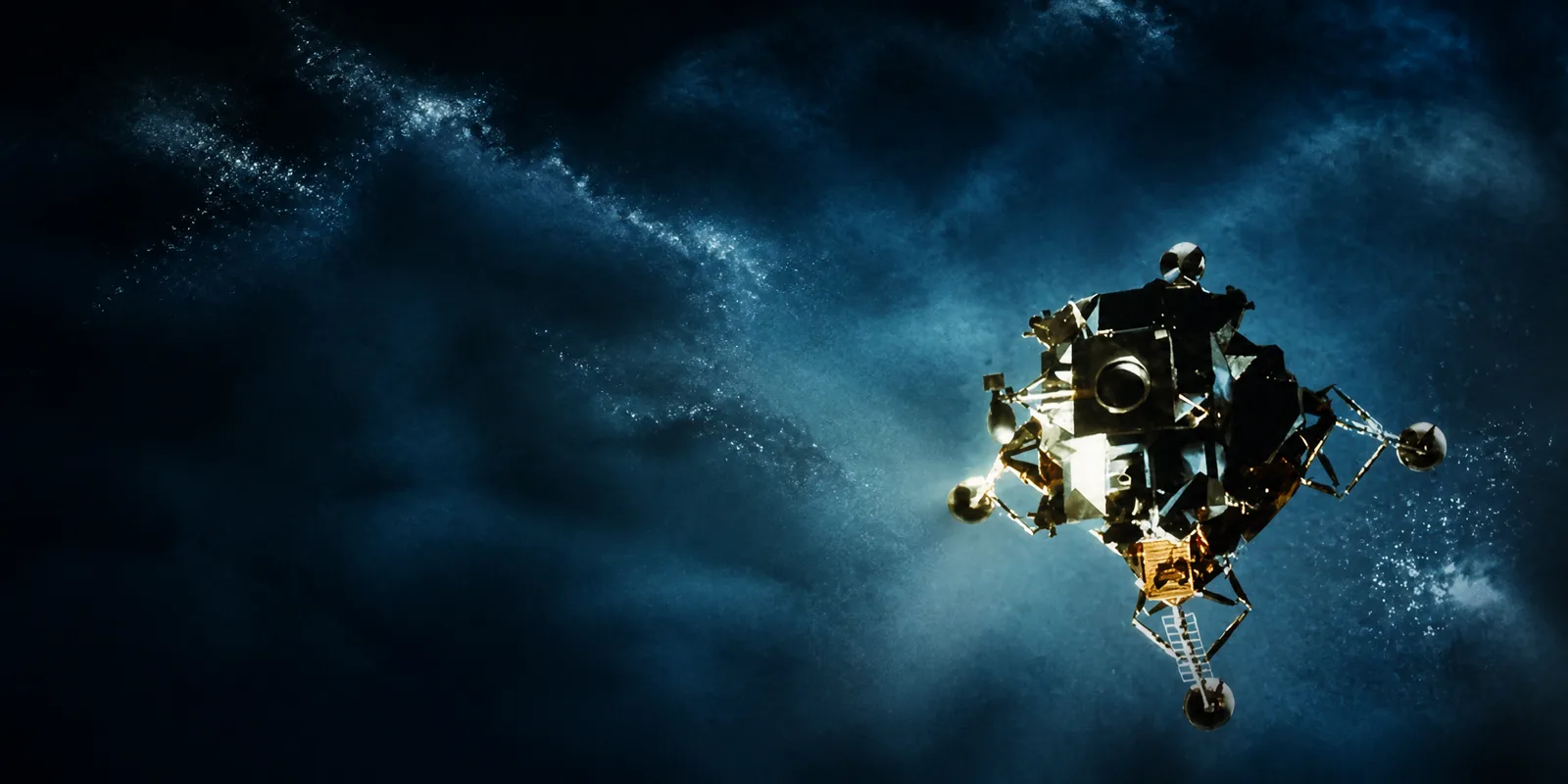
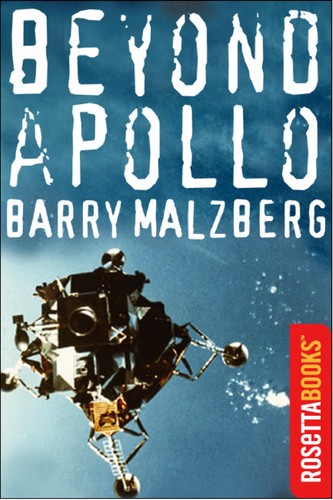
A two-man mission to Venus fails and is aborted; when it returns, the Captain is missing and the other astronaut, Harry M. Evans, is unable to explain what has happened. Or, conversely, he has too many explications; his journal of the expedition - compiled in the mental institution to which NASA has embarrassedly committed him - offers contradictory stories: he murdered the Captain, mad Venusian invaders murdered the Captain, the Captain vanished, no one was murdered and the Captain has returned in Evans' guise...as the explanations pyramid and as the supervising psychiatrist's increasingly desperate efforts to get a straight story fail, it becomes apparent that Evans's madness and his inability to explain what happened are expressions of humanity's incompetence at the enormity of space exploration. The novel, published by Random House as its inaugural work in a proposed new science fiction program, was controversial and became even more so when it won the first John W. Campbell Memorial Award for best novel. Many felt that the award, regardless of the novel's accomplishment, was an insult to Campbell (1910-1971), the great editor of Astounding Science Fiction Magazine whose name had always been synonymous with the wonder and complexity of space exploration. Campbell, some argued, would never have published a novel given an award in his name; others responded that Campbell had always honored controversy and the expansion of familiar means of thought, a category into which Beyond Apollo certainly fell. Beyond Apollo has been in and out of print in the thirty years since its publication but an edition has always been available in the USA or in one or more of the 12 European and Scandinavian countries to which it was sold.
Genres: science fiction, classics
Lists: …
Robert A. Heinlein
1961 · 418 pages · 4 reviews
Others: MixedStranger in a Strange Land is a 1961 science fiction novel by American author Robert A. Heinlein. It tells the story of Valentine Michael Smith, a human who comes to Earth in early adulthood after being born on the planet Mars and raised by Martians. The novel explores his interaction with—and eventual transformation of—terrestrial culture. The title is an allusion to the phrase in Exodus 2:22. According to Heinlein, the novel's working title was The Heretic. Several later editions of the book have promoted it as "The most famous Science Fiction Novel ever written".
What made the match, strongest first
Christopher Priest
1974 · 272 pages · 10 reviews
Others: Mostly positiveThe city is winched along tracks through a devastated land full of hostile tribes. Rails must be freshly laid ahead of the city and carefully removed in its wake. Rivers and mountains present nearly insurmountable challenges to the ingenuity of the city's engineers. But if the city does not move, it will fall farther and farther behind the "optimum" into the crushing gravitational field that has transformed life on Earth. The only alternative to progress is death. The secret directorate that governs the city makes sure that its inhabitants know nothing of this. Raised in common in creches, nurtured on synthetic food, prevented above all from venturing outside the closed circuit of the city, they are carefully sheltered from the dire necessities that have come to define human existence. And yet the city is in crisis. The people are growing restive, the population is dwindling, and the rulers know that, for all their efforts, slowly but surely the city is slipping ever farther behind the optimum. Helward Mann is a member of the city's elite. Better than anyone, he knows how tenuous is the city's continued existence. But the world--he is about to discover--is infinitely stranger than the strange world he believes he knows so well.
What made the match, strongest first
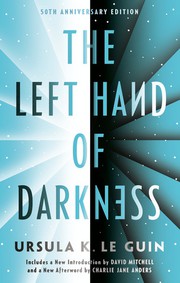
Ursula K. Le Guin
1969 · 304 pages · 13 reviews
Others: Mostly positiveComment by Kim Stanley Robinson, on The Guardian's website: The Left Hand of Darkness by Ursula K Le Guin (1969) One of my favorite novels is The Left Hand of Darkness, by Ursula K Le Guin. For more than 40 years I've been recommending this book to people who want to try science fiction for the first time, and it still serves very well for that. One of the things I like about it is how clearly it demonstrates that science fiction can have not only the usual virtues and pleasures of the novel, but also the startling and transformative power of the thought experiment. In this case, the thought experiment is quickly revealed: "The king was pregnant," the book tells us early on, and after that we learn more and more about this planet named Winter, stuck in an ice age, where the humans are most of the time neither male nor female, but with the potential to become either. The man from Earth investigating this situation has a lot to learn, and so do we; and we learn it in the course of a thrilling adventure story, including a great "crossing of the ice". Le Guin's language is clear and clean, and has within it both the anthropological mindset of her father Alfred Kroeber, and the poetry of stories as magical things that her mother Theodora Kroeber found in native American tales. This worldly wisdom applied to the romance of other planets, and to human nature at its deepest, is Le Guin's particular gift to us, and something science fiction will always be proud of. Try it and see – you will never think about people in quite the same way again.
What made the match, strongest first
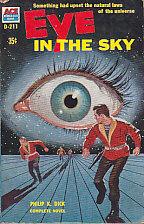
Philip K. Dick
1957 · 255 pages · 2 reviews
Others: PositiveEye in the Sky is a science fiction novel by American writer Philip K. Dick, originally published in 1957. After an accident at the Belmont Bevatron, eight people are forced into several different alternate universes. These ersatz universes are later revealed to be solipsistic manifestations of each individual's innermost fears and prejudices, bringing the story in line with Dick's penchant for subjective realities. As well as his future discussions of theology and fears about McCarthy-era authoritarianism, the novel skewers several human foibles. The title refers to the eye of God, who appears as a character in the universe of religious fundamentalist Arthur Sylvester.
What made the match, strongest first
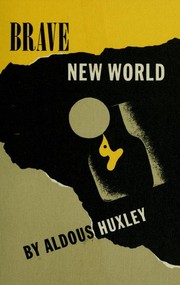
Aldous Huxley
1932 · 232 pages · 11 reviews
Others: Leaning positiveOriginally published in 1932, this outstanding work of literature is more crucial and relevant today than ever before. Cloning, feel-good drugs, antiaging programs, and total social control through politics, programming, and media -- has Aldous Huxley accurately predicted our future? With a storyteller's genius, he weaves these ethical controversies in a compelling narrative that dawns in the year 632 AF (After Ford, the deity). When Lenina and Bernard visit a savage reservation, we experience how Utopia can destroy humanity. A powerful work of speculative fiction that has enthralled and terrified readers for generations, Brave New World is both a warning to be heeded and thought-provoking yet satisfying entertainment. - Container.
What made the match, strongest first
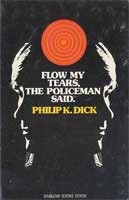
Philip K. Dick
1974 · 231 pages · 5 reviews
Others: Mostly positiveFlow My Tears, the Policeman Said is a 1974 science fiction novel by American writer Philip K. Dick. The story follows a genetically enhanced pop singer and television star who wakes up in a world where he has never existed. The novel is set in a futuristic dystopia, where the United States has become a police state in the aftermath of a Second Civil War. It was nominated for a Nebula Award in 1974 and a Hugo Award in 1975, and was awarded the John W. Campbell Memorial Award for Best Science Fiction Novel in 1975. TV star Jason Taverner is no more. Overnight, he looses his ID cards, the records about him in the official databases have strangely vanished and no one seems to know him any more. Even the songs he recorded don’t exist any more. In an oppressing police state, Jason struggels not to get arrested.
What made the match, strongest first
MixedThis one borders the line of so weird or unique that I'm not quite sure I liked it. This one follows a man who is descending into insanity and you really feel it in the story.
Loved itThis also would be, I think, if you have not read Maulsberg before, probably a good taster. Not just because it's the most famous book, also because it's a stroke of genius. I adore this novel.