
 Loved it
I love this book for like three reasons - I mean, the first one is that I just love reading about genetics, and this was a really great book about genetics and how it actually works.
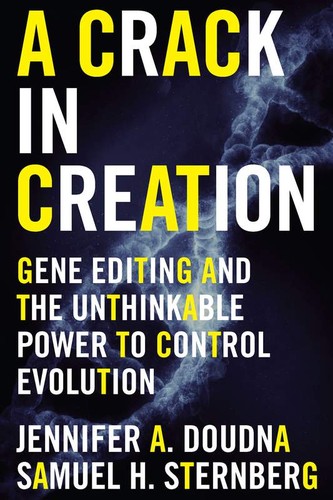
Others: Positive A trailblazing biologist grapples with her role in the biggest scientific discovery of our era: a cheap, easy way of rewriting genetic code, with nearly limitless promise and peril. Not since the atomic bomb has a technology so alarmed its inventors that they warned the world about its use. Not, that is, until the spring of 2015, when biologist Jennifer Doudna called for a worldwide moratorium on the use of the new gene-editing tool CRISPR—a revolutionary new technology that she helped create—to make heritable changes in human embryos. The cheapest, simplest, most effective way of manipulating DNA ever known, CRISPR may well give us the cure to HIV, genetic diseases, and some cancers, and will help address the world’s hunger crisis. Yet even the tiniest changes to DNA could have myriad, unforeseeable consequences—to say nothing of the ethical and societal repercussions of intentionally mutating embryos to create “better” humans. Writing with fellow researcher Samuel Sternberg, Doudna shares the thrilling story of her discovery, and passionately argues that enormous responsibility comes with the ability to rewrite the code of life. With CRISPR, she shows, we have effectively taken control of evolution. What will we do with this unfathomable power?
Lists: …
Nessa Carey
2011 · 339 pages · 1 review
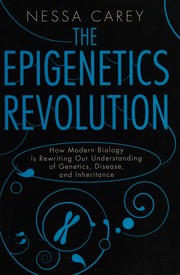
Others: Positive"Epigenetics can potentially revolutionize our understanding of the structure and behavior of biological life on Earth. It explains why mapping an organism's genetic code is not enough to determine how it develops or acts and shows how nurture combines with nature to engineer biological diversity. Surveying the twenty-year history of the field while also highlighting its latest findings and innovations, this volume provides a readily understandable introduction to the foundations of epigenetics. Nessa Carey, a leading epigenetics researcher, connects the field's arguments to such diverse phenomena as how ants and queen bees control their colonies; why tortoiseshell cats are always female; why some plants need cold weather before they can flower; and how our bodies age and develop disease. Reaching beyond biology, epigenetics now informs work on drug addiction, the long-term effects of famine, and the physical and psychological consequences of childhood trauma. Carey concludes with a discussion of the future directions for this research and its ability to improve human health and well-being."--Amazon.com.
What made the match, strongest first
Siddhartha Mukherjee
2016 · 593 pages · 1 review
Others: PositiveThe Gene: An Intimate History is a book written by Siddhartha Mukherjee, an Indian-born American physician and oncologist. It was published on 17 May 2016 by Scribner. The book chronicles the history of the gene and genetic research, all the way from Aristotle to Crick, Watson and Franklin and then the 21st century scientists who mapped the human genome. The book discusses the power of genetics in determining people's well-being and traits. It delves into the personal genetic history of Siddhartha Mukherjee's family, including mental illness. However, it is also a cautionary message toward not letting genetic predispositions define a person or their fate, a mentality that the author says led to the rise of eugenics in history.
What made the match, strongest first
Andrea Wulf
2015 · 473 pages · 1 review
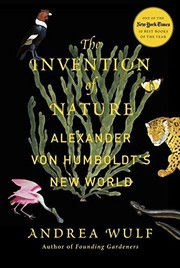
Others: PositiveFrom the Prologue... When nature is perceived as a web, its vulnerability also becomes obvious. Everything hangs together. If one thread is pulled, the whole tapestry may unravel. After he saw the devastating environmental effects of colonial plantations at Lake Valencia in Venezuela in 1800, Humboldt became the first scientist to talk about harmful human-induced climate change. Deforestation there had made the land barren, water levels of the lake were falling and with the disappearance of brushwood torrential rains had washed away the soils on the surrounding mountain slopes. Humboldt was the first to explain the forest's ability to enrich the atmosphere with moisture and its cooling effect, as well as its importance for water retention and protection against soil erosion. He warned that humans were meddling with the climate and that this could have an unforeseeable impact on ‘future generations'. The Invention of Nature traces the invisible threads that connect us to this extraordinary man. Humboldt influenced many of the greatest thinkers, artists and scientists of his day. Thomas Jefferson called him ‘one of the greatest ornaments of the age'. Charles Darwin wrote that ‘nothing ever stimulated my zeal so much as reading Humboldt's Personal Narrative,' saying that he would not have boarded the Beagle, nor conceived of the Origin of Species, without Humboldt. William Wordsworth and Samuel Taylor Coleridge both incorporated Humboldt's concept of nature into their poems. And America's most revered nature writer, Henry David Thoreau, found in Humboldt's books an answer to his dilemma on how to be a poet and a naturalist – Walden would have been a very different book without Humboldt. Simón Bolívar, the revolutionary who liberated South America from Spanish colonial rule, called Humboldt the ‘discoverer of the New World' and Johann Wolfgang von Goethe, Germany's greatest poet, declared that spending a few days with Humboldt was like ‘having lived several years'.
What made the match, strongest first
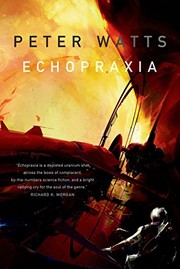
Peter Watts
2014 · 384 pages · 1 review
Others: PositiveA follow-up to the Hugo Award-nominated Blindsight, Echopraxia is set in a 22nd-century world transformed by scientific evangelicals, supernatural beings and ghosts, where defunct biologist Daniel Bruks becomes trapped on a spaceship destined to make an evolutionary-changing discovery.
Connie Willis
1992 · 578 pages · 2 reviews
 Others: Overwhelmingly positive
Somewhere in the future, ordinary history students must travel back in time as part of their university degree. An award-winning best-seller in the United States, this is the first of Connie Willis' brilliant Oxford trilogy.Kivrin knows everything about the Middle Ages - she's read all the books. She knows it's dangerous: cutthroats in the woods, witch hunts, cholera, and millions dying in the plague. For a young historian, it's fascinating.When Kivrin's tutors in Oxford's history lab finally agree to send her on an on-site study trip, she jumps at the chance to observe medieval life first-hand. But a crisis that strangely links the past and future leaves her stranded in the most deadly and terrifying era in human history, face to face with the heart-rending reality behind the statistics. And while she fights for her own life, Kivrin finds she has become an unlikely angel of hope in this dark time.Five years in the writing, Doomsday Book is a storytelling triumph. Connie Willis draws upon her understanding of the universalities of human nature to explore the timeless issues of evil, suffering and the indomitable will of the human spirit.
What made the match, strongest first
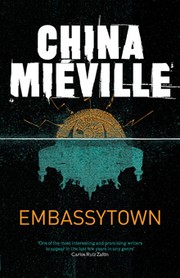
China Miéville
2011 · 350 pages · 4 reviews
Others: Overwhelmingly positiveEmbassytown: a city of contradictions on the outskirts of the universe. Avice is an immerser, a traveller on the immer, the sea of space and time below the everyday, now returned to her birth planet. Here on Arieka, Humans are not the only intelligent life, and Avice has a rare bond with the natives, the enigmatic Hosts - who cannot lie. Only a tiny cadre of unique human Ambassadors can speak Language, and connect the two communities. But an unimaginable new arrival has come to Embassytown. And when this Ambassador speaks, everything changes. Catastrophe looms. Avice knows the only hope is for her to speak directly to the alien Hosts. And that is impossible.
What made the match, strongest first
Loved itI love this book for like three reasons - I mean, the first one is that I just love reading about genetics, and this was a really great book about genetics and how it actually works.