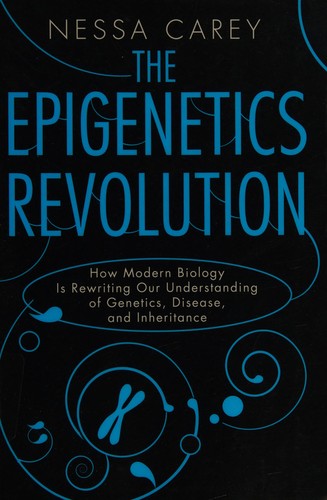
The epigenetics revolution
The epigenetics revolutionNessa Carey
Buy on Amazon

The epigenetics revolution (2011)

Nessa Carey

Others: Positive

"Epigenetics can potentially revolutionize our understanding of the structure and behavior of biological life on Earth. It explains why mapping an organism's genetic code is not enough to determine how it develops or acts and shows how nurture combines with nature to engineer biological diversity. Surveying the twenty-year history of the field while also highlighting its latest findings and innovations, this volume provides a readily understandable introduction to the foundations of epigenetics. Nessa Carey, a leading epigenetics researcher, connects the field's arguments to such diverse phenomena as how ants and queen bees control their colonies; why tortoiseshell cats are always female; why some plants need cold weather before they can flower; and how our bodies age and develop disease. Reaching beyond biology, epigenetics now informs work on drug addiction, the long-term effects of famine, and the physical and psychological consequences of childhood trauma. Carey concludes with a discussion of the future directions for this research and its ability to improve human health and well-being."--Amazon.com.

ISBN:
9780231161176
Length:
339 pages

Genres: nonfiction

Lists: …

Similar books

1 of 6
  • Ace

    Angela Chen

    2020 · 224 pages · 3 reviews

    Others: Overwhelmingly positive

    An engaging exploration of what it means to be asexual in a world that's obsessed with sexual attraction, and what the ace perspective can teach all of us about desire and identity. What exactly is sexual attraction and what is it like to go through life not experiencing it? What does asexuality reveal about gender roles, about romance and consent, and the pressures of society? This accessible examination of asexuality shows that the issues that aces face-confusion around sexual activity, the intersection of sexuality and identity, navigating different needs in relationships-are the same conflicts that nearly all of us will experience. Through a blend of reporting, cultural criticism, and memoir, Ace addresses the misconceptions around the "A" of LGBTQIA and invites everyone to rethink pleasure and intimacy. Journalist Angela Chen creates her path to understanding her own asexuality with the perspectives of a diverse group of asexual people. Vulnerable and honest, these stories include a woman who had blood tests done because she was convinced that "not wanting sex" was a sign of serious illness, and a man who grew up in a religious household and did everything "right," only to realise after marriage that his experience of sexuality had never been the same as that of others. Disabled aces, aces of colour, gender-nonconforming aces, and aces who both do and don't want romantic relationships all share their experiences navigating a society in which a lack of sexual attraction is considered abnormal. Chen's careful cultural analysis explores how societal norms limit understanding of sex and relationships and celebrates the breadth of sexuality and queerness.

    Why?

    What made the match, strongest first

    Also nonfiction
    82%
    Kalanadi loved both
    14%
    Similar descriptions
    4%
    Personalize your recommendations
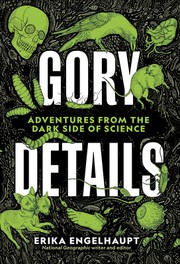
  • Gory Details

    Erika Engelhaupt

    2020 · 320 pages · 1 review

    Others: Positive

    Science reporter Erika Engelhaupt investigates the gross, strange, and morbid absurdities of our bodies and our universe. From the research biologist who stung himself with every conceivable insect to the world's most murderous mammals, this book explores oft-ignored but alluring facets of biology, anatomy, space exploration, nature, and more. Featuring interviews with leading researchers in the field and a large dose of wit, the author reveals the most intriguing real-world applications of science in all their glory.

    Why?

    What made the match, strongest first

    Also nonfiction
    86%
    Similar descriptions
    14%
    Personalize your recommendations
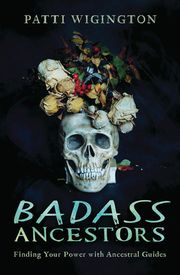
  • Badass Ancestors

    Patti Wigington

    2020 · 256 pages · 1 review

    Others: Mixed

    Cultivate Relationships with Your People for Empowerment and Healing This groundbreaking book shows you how to work with different types of ancestors to find, develop, and celebrate the personal power of your inner badass. By embracing the strength of your lineage―both blood relatives and those chosen by the heart―you can receive wisdom and guidance when you need it the most. Badass Ancestors provides a compelling series of rituals, meditations, mantras, and exercises that connect you with ancestral guides. You'll discover advice on genealogy research, the history of ancestor veneration in cultures around the world, ways to deal with problematic ancestors, and how to leave your own legacy for future generations. Each chapter offers unique calls to action―including crafts and recipes―that help you build self-confidence and overall badassery with your ancestors' assistance. When you develop relationships with your relatives and with spiritual or archetypal ancestors, you engage the process of healing trauma and achieving a deep sense of emotional and spiritual well-being.

    Why?

    What made the match, strongest first

    Also nonfiction
    87%
    Similar descriptions
    13%
    Personalize your recommendations
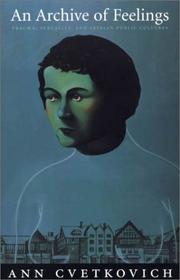
  • An Archive of Feelings

    Ann Cvetkovich

    2003 · 355 pages · 1 review

    Others: Negative

    "In this bold new work of cultural criticism, Ann Cvetkovich develops a queer approach to trauma. She argues for the importance of recognizing--and archiving--accounts of trauma that belong as much to the ordinary and everyday as to the domain of catastrophe. An Archive of Feelings contends that the field of trauma studies, limited by too strict a division between the public and the private, has overlooked the experiences of women and queers. Rejecting the pathologizing understandings of trauma that permeate medical and clinical discourses on the subject, Cvetkovich develops instead a sex-positive approach missing even from most feminist work on trauma. She challenges the field to engage more fully with sexual trauma and the wide range of feelings in its vicinity, including those associated with butch-femme sex and aids activism and caretaking. An Archive of Feelings brings together oral histories from lesbian activists involved in act up/New York; readings of literature by Dorothy Allison, Leslie Feinberg, Cherríe Moraga, and Shani Mootoo; videos by Jean Carlomusto and Pratibha Parmar; and performances by Lisa Kron, Carmelita Tropicana, and the bands Le Tigre and Tribe 8. Cvetkovich reveals how activism, performance, and literature give rise to public cultures that work through trauma and transform the conditions producing it. By looking closely at connections between sexuality, trauma, and the creation of lesbian public cultures, Cvetkovich makes those experiences that have been pushed to the peripheries of trauma culture the defining principles of a new construction of sexual trauma--one in which trauma catalyzes the creation of cultural archives and political communities."--Publisher's description.
    Why?

    What made the match, strongest first

    Also nonfiction
    89%
    Similar descriptions
    11%
    Personalize your recommendations
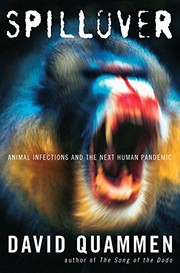
  • Spillover

    David Quammen

    2012 · 592 pages · 1 review

    Others: Positive

    This work examines the emergence and causes of new diseases all over the world, describing a process called "spillover" where illness originates in wild animals before being passed to humans and discusses the potential for the next huge pandemic. The emergence of strange new diseases is a frightening problem that seems to be getting worse. In this age of speedy travel, it threatens a worldwide pandemic. We hear news reports of Ebola, SARS, AIDS, and something called Hendra killing horses and people in Australia; but those reports miss the big truth that such phenomena are part of a single pattern. The bugs that transmit these diseases share one thing: they originate in wild animals and pass to humans by a process called spillover. As globalization spreads and as we destroy the ancient ecosystems, penetrating ever deeper into the furthest reaches of the planet, we encounter strange and dangerous infections that originate in animals but can be transmitted to humans. It is reckoned that at least 60% of our infections diseases derive from animals. Diseases that were contained are being set free and the results are potentially catastrophic. The author tracks this subject around the world. He recounts adventures in the field, netting bats in China, trapping monkeys in Bangladesh, stalking gorillas in the Congo, with the world's leading disease scientists. He takes the reader along on this quest to learn how, where from, and why these diseases emerge, and he asks the terrifying question: What might the next big one be?

    Why?

    What made the match, strongest first

    Also nonfiction
    90%
    Similar descriptions
    10%
    Personalize your recommendations
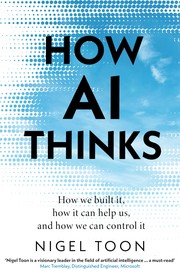
  • How AI Thinks

    Nigel Toon

    2024 · 320 pages · 2 reviews

    Others: Mixed

    THE #2 TIMES BESTSELLER'Artificial intelligence is going to have a massive impact on everyone’s lives... an accessible and sensible read that helps demystify AI' Deborah Meaden, entrepreneur and star of Dragon's Den'Nigel Toon is a visionary leader in the field of artificial intelligence... a must-read' Marc Tremblay, Distinguished Engineer, MicrosoftThose who understand how AI thinks are about to win big.We are used to thinking of computers as being a step up from calculators - very good at storing information, and maybe even at playing a logical game like chess. But up to now they haven't been able to think in ways that are intuitive, or respond to questions as a human might. All that has changed, dramatically, in the past few years.Our search engines are becoming answer engines. Artificial intelligence is already revolutionising sectors from education to healthcare to the creative arts. But how does an AI understand sentiment or context? How does it play and win games that have an almost infinite number of moves? And how can we work with AI to produce insights and innovations that are beyond human capacity, from writing code in an instant to unfolding the elaborate 3D puzzles of proteins?We stand at the brink of a historic change that will disrupt society and at the same time create enormous opportunities for those who understand how AI thinks. Nigel Toon shows how we train AI to train itself, so that it can paint images that have never existed before or converse in any language. In doing so he reveals the strange and fascinating ways that humans think, too, as we learn how to live in a world shared by machine intelligences of our own creation.

    Why?

    What made the match, strongest first

    Also nonfiction
    91%
    Similar descriptions
    9%
    Personalize your recommendations

Reviews1

Kalanadi
Loved it

It is not a light, easy non-fiction read by any means, but for me, I learned so much from this book. It was a much more technical, cutting-edge book about recent discoveries and genetics, rather than just rehashing the history of the field again, and that is what I wanted.