 Loved
And of course, Michael Bishop, he referenced that in his wonderful novel Ancient of Days, where a primitive proto-human just appears in modern California.
LovedAnd of course, Michael Bishop, he referenced that in his wonderful novel Ancient of Days, where a primitive proto-human just appears in modern California.
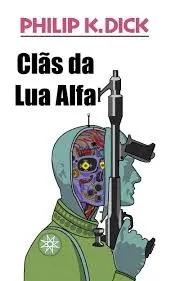
LovedClans of the Alphane Moon is in the thumbnail for this video, but I don't consider it minor at all. I think it's a wonderful and very funny book.
 Liked
However, in itself, I don't think it's a bad read. It's minor, but it's entertaining. He tries to pull off some rather complex time loops and paradoxes later in the novel.
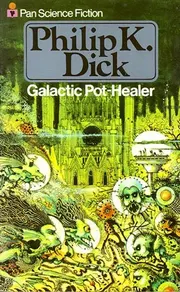
LikedHis aliens, as I say, are either there for comedic or satiric effect, which works really well in things like Clans of the Alphane Moon and Galactic Pot-Healer.
 Mixed
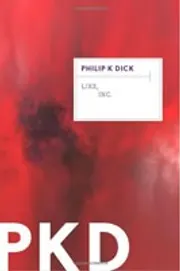
When you get to the Lies, Inc. versions, there are additions of LSD trips and things like that, which are more Dickian in some ways, but actually the two things hang together quite poorly. But it's still a very interesting book to look at.
 Disliked
What happens in this book is the characters drift in and out of focus. Some are badly underdeveloped, while a psychedelic subplot, which involves a drug called JJ 180, only muddies the water.
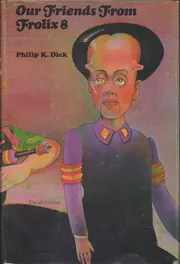
LovedAnd there's also the superb hugely underrated Our Friends from Frolix 8. Frolix 8 is often described by critics as one of his weakest works. I completely disagree and there is a video on the channel where I review Frolix 8 and talk about that.
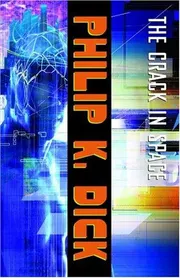
MixedA classic example of a broken-backed novel from Dick's sort of 60s period is The Crack in Space. And this now is entitled in the UK Cantata 140 because the original shorter version was called Cantata 140. And really this is quite a weak book, but a very interesting one nonetheless.
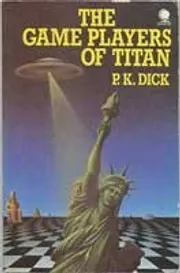
DislikedOne theory that I broadly agree with, which was put forward by Kim Stanley Robinson, is the idea that the appearance of evil aliens in a PKD novel is an indication of weak work in his oeuvre. So in which books do these evil aliens, which are part of ramshackle plots, pop up? Well, they come up notably in The Game Players of Titan.
DislikedAnd I reread this couple of years back and I really didn't enjoy it at all.
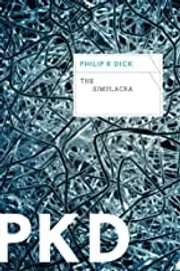
DislikedThe result at the end of The Simulacra is a kitchen sink of a book that even by PKD standard of multi-conceptual construction simply fails and falls apart. There are too many plates spinning, too many loose ends which are not tied up and remain loose, and it's a rare example of mid-'60s PKD letting everything just get out of control as natural literary entropy takes its toll.
LikedAnd it is one of those things where you're reading it, you're enjoying it, but if you've read other Philip K. Dick's, it doesn't quite measure up. It does have its comedic elements.
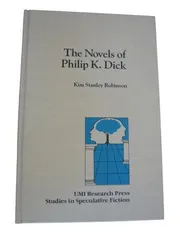
LovedAnother sign of weakness in Dick's work is where you get what Kim Stanley Robinson, I'm again invoking Kim because he wrote a wonderful, wonderful book about Philip K. Dick's novels called The Novels of Philip K. Dick, which is very, very rare, hard to find now.
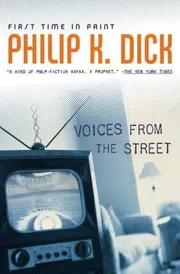
DislikedIn his mainstream canon, I would put it against Voices from the Street, which is the only PKD I put down for weeks before going back to halfway through.
LikedI actually think Vulcan's Hammer is okay. I've read it twice. I enjoyed it.