


 Loved it
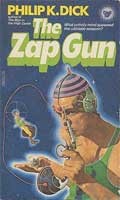
I think the zap gun is one of the best examples of Philip K. Dick writing about real world politics in his own unique way.
Others: Positive The Zap Gun is a 1967 science fiction novel by American author Philip K. Dick. It was written in 1964 and first published under the title Project Plowshare as a serial in the November 1965 and January 1966 issues of Worlds of Tomorrow magazine.[1]
Genres: science fiction
Lists: …
Philip K. Dick
1964 · 240 pages · 5 reviews
Others: Mostly positiveMartian Time-Slip is a 1964 science fiction novel by American writer Philip K. Dick. The novel uses the common science fiction concept of a human colony on Mars. However, it also includes the themes of mental illness, the physics of time and the dangers of centralized authority. The novel was first published under the title All We Marsmen, serialized in the August, October and December 1963 issues of Worlds of Tomorrow magazine. The subsequent 1964 publication as Martian Time-Slip is virtually identical, with different chapter breaks.
What made the match, strongest first
Philip K. Dick
1970 · 298 pages · 1 review
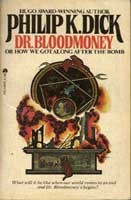
Others: PositiveDr. Bloodmoney, or How We Got Along After the Bomb is a 1965 science fiction novel by American writer Philip K. Dick. It was nominated for the Nebula Award for Best Novel in 1965.[1] Dick wrote the novel in 1963 with working titles In Earth's Diurnal Course and A Terran Odyssey. Ace editor Donald Wollheim however suggested the final title which references the film Dr. Strangelove or: How I Learned to Stop Worrying and Love the Bomb (1964).[2]
What made the match, strongest first
Frederik Pohl
1952 · 171 pages · 2 reviews
 Others: Mixed
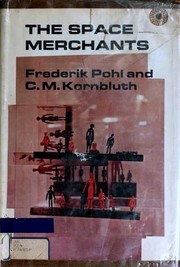
The Space Merchants is a 1952 science fiction novel by American writers Frederik Pohl and Cyril M. Kornbluth. Originally published in Galaxy Science Fiction magazine as a serial entitled Gravy Planet, the novel was first published as a single volume in 1953, and has sold heavily since. It deals satirically with a hyper-developed consumerism, seen through the eyes of an advertising executive. In 1984, Pohl published a sequel, The Merchants' War. In 2012, it was included in the Library of America omnibus American Science Fiction: Four Classic Novels 1953–1956. Pohl revised the original novel in 2011 with added material and more contemporary references. It was rated the 24th "all-time best novel" in a 1975 Locus poll, jointly with The Martian Chronicles and The War of the Worlds. The novel was also included in David Pringle's list of 100 best science fiction novels.
What made the match, strongest first
Orson Scott Card
1985 · 324 pages · 17 reviews
 Others: Overwhelmingly positive
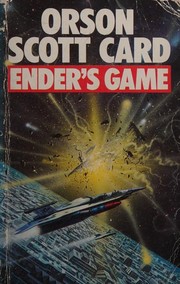
Ender's Game is a 1985 military science fiction novel by American author Orson Scott Card. Set at an unspecified date in Earth's future, the novel presents an imperiled humankind after two conflicts with the Formics, an insectoid alien species they dub the "buggers". In preparation for an anticipated third invasion, children, including the novel's protagonist, Andrew "Ender" Wiggin, are trained from a very young age by putting them through increasingly difficult games, including some in zero gravity, where Ender's tactical genius is revealed. The book originated as a short story of the same name, published in the August 1977 issue of Analog Science Fiction and Fact. The novel was published on January 15, 1985. Later, by elaborating on characters and plotlines depicted in the novel, Card was able to write additional books in the Ender's Game series. Card also released an updated version of Ender's Game in 1991, changing some political facts to reflect the times more accurately (e.g., to include the recent collapse of the Soviet Union and the end of the Cold War). The novel has been translated into 34 languages. Reception of the book has been mostly positive. It has become suggested reading for many military organizations, including the United States Marine Corps. Ender's Game was recognized as "best novel" by the 1985 Nebula Award[3] and the 1986 Hugo Award[4] in the genres of science fiction and fantasy. Its four sequels—Speaker for the Dead (1986), Xenocide (1991), Children of the Mind (1996), and Ender in Exile (2008)—follow Ender's subsequent travels to many different worlds in the galaxy. In addition, the later novella A War of Gifts (2007) and novel Ender's Shadow (1999), plus other novels in the Shadow saga, take place during the same time period as the original.
What made the match, strongest first
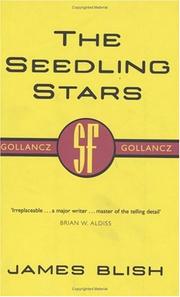
James Blish
1957 · 185 pages · 2 reviews
Others: MixedThe Seedling Stars is a collection of science fiction short stories by James Blish. It was first published by Gnome Press in 1957 in an edition of 5000 copies. The stories all concern adapting humans to alien environments. The stories all originally appeared in the magazine Fantasy & Science Fiction, If, Super Science Stories & Galaxy Science Fiction. Contents: "Seeding Program" "The Thing in the Attic" "Surface Tension" "Watershed"
What made the match, strongest first
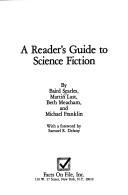
Baird Searles
1979 · 256 pages · 1 review
Others: MixedFrom A to Z (Akers and Asimov to Zebrowski and Zelazny), from the first astounding magazine to DUNE, A READER"S GUIDE TO SCIENCE FICTION is an invaluable reference work, chronicling where science fiction has been, and where you-the reader-can travel next in the most exciting literature of the cosmos.
What made the match, strongest first
Loved itI think the zap gun is one of the best examples of Philip K. Dick writing about real world politics in his own unique way.