


 Loved it
But as a neutral reader with none of those misgivings, I had fun reading this. I give Yellow Booty 8 out of 10. It's a stellar splender.
Others: Positive A group of Soviet authors are shocked to watch the science fiction story they wrote 40 years ago slowly come to life, beginning with Chernobyl.
Genres: science fiction
Lists: …
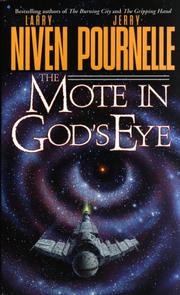
Larry Niven
1974 · 560 pages · 6 reviews
Others: Leaning positiveScience fiction classic about the rise, fall and subsequent rise of a civilization where the peak catastrophe is known as the "crazy eddy point". Introduces the concept of frictionless toilets that don't have any water in them but I suspect the authors didn't think it all the way through - I don't recall a negative air pressure that would keep odours in their rightfull place. Nevertheless a fascinating read. I haven't read this for donkeys years which is why I'm searching for an e-copy.
What made the match, strongest first
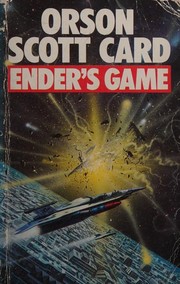
Orson Scott Card
1985 · 324 pages · 17 reviews
 Others: Overwhelmingly positive
Ender's Game is a 1985 military science fiction novel by American author Orson Scott Card. Set at an unspecified date in Earth's future, the novel presents an imperiled humankind after two conflicts with the Formics, an insectoid alien species they dub the "buggers". In preparation for an anticipated third invasion, children, including the novel's protagonist, Andrew "Ender" Wiggin, are trained from a very young age by putting them through increasingly difficult games, including some in zero gravity, where Ender's tactical genius is revealed. The book originated as a short story of the same name, published in the August 1977 issue of Analog Science Fiction and Fact. The novel was published on January 15, 1985. Later, by elaborating on characters and plotlines depicted in the novel, Card was able to write additional books in the Ender's Game series. Card also released an updated version of Ender's Game in 1991, changing some political facts to reflect the times more accurately (e.g., to include the recent collapse of the Soviet Union and the end of the Cold War). The novel has been translated into 34 languages. Reception of the book has been mostly positive. It has become suggested reading for many military organizations, including the United States Marine Corps. Ender's Game was recognized as "best novel" by the 1985 Nebula Award[3] and the 1986 Hugo Award[4] in the genres of science fiction and fantasy. Its four sequels—Speaker for the Dead (1986), Xenocide (1991), Children of the Mind (1996), and Ender in Exile (2008)—follow Ender's subsequent travels to many different worlds in the galaxy. In addition, the later novella A War of Gifts (2007) and novel Ender's Shadow (1999), plus other novels in the Shadow saga, take place during the same time period as the original.
What made the match, strongest first
Philip K. Dick
1964 · 240 pages · 5 reviews
Others: Mostly positiveMartian Time-Slip is a 1964 science fiction novel by American writer Philip K. Dick. The novel uses the common science fiction concept of a human colony on Mars. However, it also includes the themes of mental illness, the physics of time and the dangers of centralized authority. The novel was first published under the title All We Marsmen, serialized in the August, October and December 1963 issues of Worlds of Tomorrow magazine. The subsequent 1964 publication as Martian Time-Slip is virtually identical, with different chapter breaks.
What made the match, strongest first
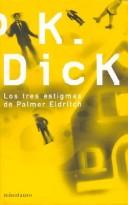
Philip K. Dick
1965 · 233 pages · 6 reviews
Others: Overwhelmingly positiveThe Three Stigmata of Palmer Eldritch is a 1965 science fiction novel by Philip K. Dick. It was nominated for the Nebula Award for Best Novel in 1965.[1] The novel takes place in 2016. Under United Nations authority, humankind has colonized every habitable planet and moon in the Solar System. Like many of Dick's novels, it utilizes an array of science fiction concepts, features several layers of reality and unreality and philosophical ideas. It is one of Dick's first works to explore religious themes.
What made the match, strongest first
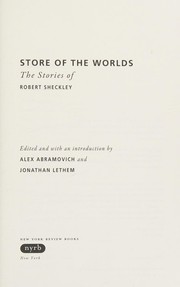
Robert Sheckley
2012 · 396 pages · 1 review
Others: PositivePresents a collection of short stories by the famed science fiction author.
What made the match, strongest first
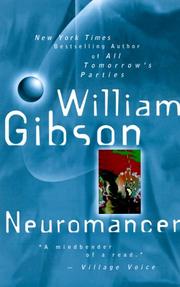
William Gibson
1984 · 288 pages · 13 reviews
Others: Mostly positiveThe first of William Gibson's Sprawl trilogy, Neuromancer is the classic cyberpunk novel. The winner of the Hugo, Nebula, and Philip K. Dick Awards, Neuromancer was the first fully-realized glimpse of humankind’s digital future — a shocking vision that has challenged our assumptions about our technology and ourselves, reinvented the way we speak and think, and forever altered the landscape of our imaginations. Henry Dorsett Case was the sharpest data-thief in the business, until vengeful former employees crippled his nervous system. But now a new and very mysterious employer recruits him for a last-chance run. The target: an unthinkably powerful artificial intelligence orbiting Earth in service of the sinister Tessier-Ashpool business clan. With a dead man riding shotgun and Molly, mirror-eyed street-samurai, to watch his back, Case embarks on an adventure that ups the ante on an entire genre of fiction. Hotwired to the leading edges of art and technology, Neuromancer is a cyberpunk, science fiction masterpiece — a classic that ranks with 1984 and Brave New World as one of the twentieth century’s most potent visions of the future.
What made the match, strongest first
Loved itBut as a neutral reader with none of those misgivings, I had fun reading this. I give Yellow Booty 8 out of 10. It's a stellar splender.