 Loved it
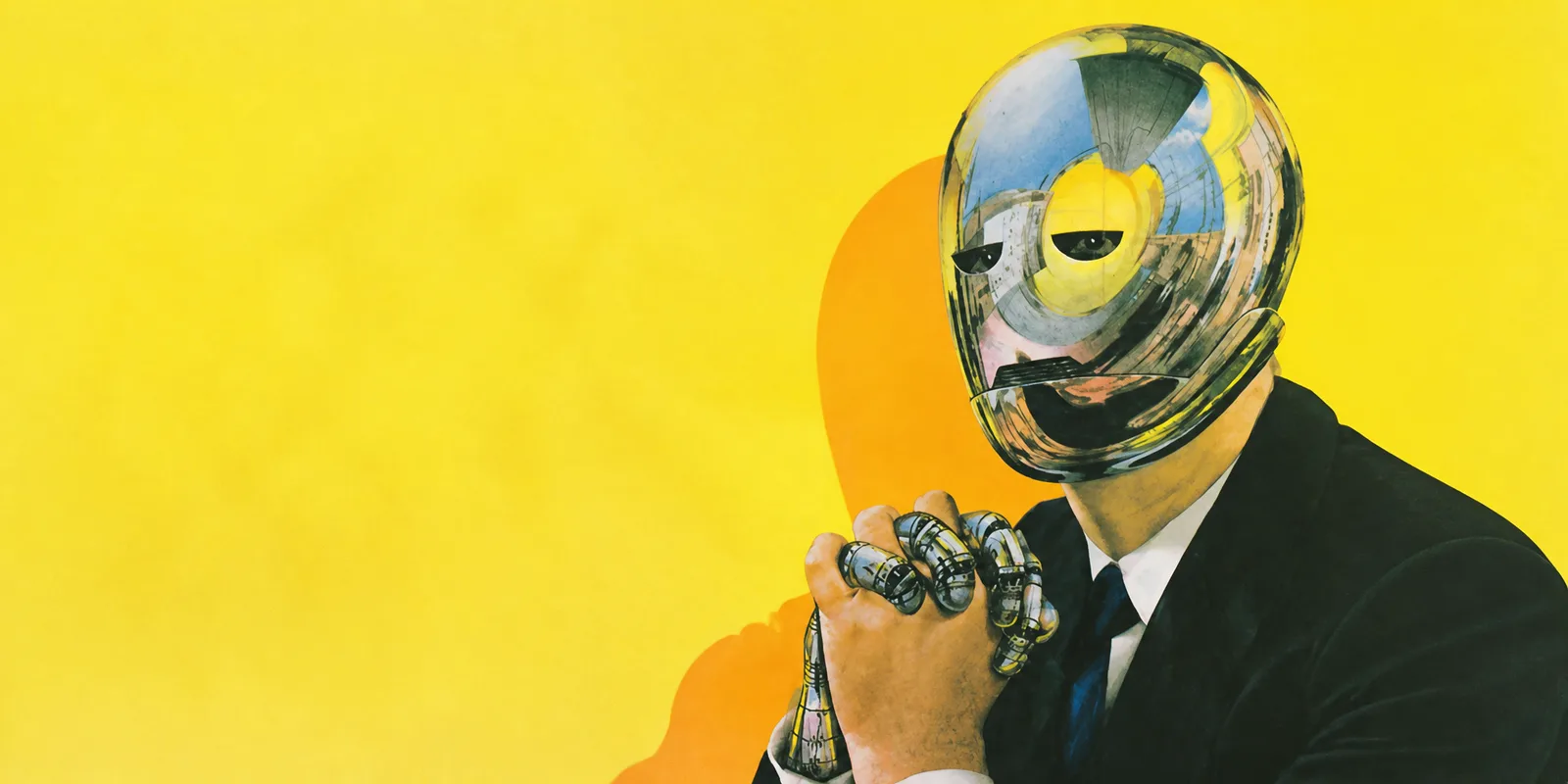
I read this quite recently. Who Budris highly recommend like a cold war science fiction body modification. Fascinating.
Others: Positive Martino was a very important scientist, working on something called the K-88. But the K-88 exploded in his face, and he was dragged across the Soviet border. There he stayed for months. When they finally gave him back, the Soviets had given him a metal arm...and an expressionless metal skull. So how could Allied Security be sure he actually was Martino ?
Genres: science fiction
Lists: …
Douglas Coupland
1998 · 284 pages · 1 review
Others: PositiveA New Age novel on a Vancouver woman who falls into a coma which lasts nearly two decades. The novel traces the impact on her family, especially on her boyfriend and a daughter she gave birth to just before the coma. By the author of Life after God.
What made the match, strongest first
Roger Zelazny
1967 · 259 pages · 6 reviews
 Others: Leaning negative
A colony of humankind is subjugated by the First Colonists, the crew of the starship that brought them to their new home 1000 years before. They have taken control of ancient technologies and enhanced themselves with godlike psychic powers and virtual immortality. Adopting the panoply of the venerable Hindu religion, they live lives as its Gods, surrounded by advanced technology within the trappings of a primitive civilization. Our hero Sam, unready to battle the tyrannical forces of the Celestial City allied with his former wife, now the rapturous Kali, Goddess of Destruction. A story of the classic drama of power, love, honor, pride, and fantasy erupting in an epic war of the Gods and ultimate transcendence.
What made the match, strongest first
Carter Scholz
1984 · 265 pages · 2 reviews
Others: NegativeWhile exploring an ancient site used by Neanderthal Man, a young anthropologist stumbles upon a mysterious metal cube made of an unknown alloy, an artifact that can yield a clue to the secrets of time travel
What made the match, strongest first
Arkady Natanovich Strugatsky
1978 · 160 pages · 11 reviews
 Others: Overwhelmingly positive
Comment by Hari Kunru in The Guardian: Soviet-era Russian science fiction deserves a wider audience in English. The Strugatsky brothers collaborated on numerous novels and stories, the best known of which is this, partly because it was filmed by Andrei Tarkovsky as Stalker, in 1977. The novel takes place 10 years after a mysterious alien visitation, which seems to have no rational explanation. No one saw the visitors. Their presence caused disease and blindness in the areas where they landed. Now, in the six "Zones", the laws of physics (and, seemingly, of reality) are disturbed by anomalies, and littered with inexplicable, deadly wreckage. Only a few brave "stalkers" risk their lives to enter the zones to gather alien artefacts for sale. Some of these artefacts offer the promise of extraordinary powers. Unlike Tarkovsky's film, which concentrates on the hallucinatory, vacated landscape of the zones, the novels portray a society adapting to an inexplicable, terrifying event, an eruption of the unknown. Though written in 1971 and published in English in 1977, the novel was heavily bowdlerised by Soviet censors, and an authoritative text wasn't available in Russian until 2000. It's a book with an extraordinary atmosphere – and a demonstration of how science fiction, by using a single bold central metaphor, can open up the possibilities of the novel. Original Title: Пикник на обочине
What made the match, strongest first
Orson Scott Card
1985 · 324 pages · 17 reviews
Others: Overwhelmingly positiveEnder's Game is a 1985 military science fiction novel by American author Orson Scott Card. Set at an unspecified date in Earth's future, the novel presents an imperiled humankind after two conflicts with the Formics, an insectoid alien species they dub the "buggers". In preparation for an anticipated third invasion, children, including the novel's protagonist, Andrew "Ender" Wiggin, are trained from a very young age by putting them through increasingly difficult games, including some in zero gravity, where Ender's tactical genius is revealed. The book originated as a short story of the same name, published in the August 1977 issue of Analog Science Fiction and Fact. The novel was published on January 15, 1985. Later, by elaborating on characters and plotlines depicted in the novel, Card was able to write additional books in the Ender's Game series. Card also released an updated version of Ender's Game in 1991, changing some political facts to reflect the times more accurately (e.g., to include the recent collapse of the Soviet Union and the end of the Cold War). The novel has been translated into 34 languages. Reception of the book has been mostly positive. It has become suggested reading for many military organizations, including the United States Marine Corps. Ender's Game was recognized as "best novel" by the 1985 Nebula Award[3] and the 1986 Hugo Award[4] in the genres of science fiction and fantasy. Its four sequels—Speaker for the Dead (1986), Xenocide (1991), Children of the Mind (1996), and Ender in Exile (2008)—follow Ender's subsequent travels to many different worlds in the galaxy. In addition, the later novella A War of Gifts (2007) and novel Ender's Shadow (1999), plus other novels in the Shadow saga, take place during the same time period as the original.
What made the match, strongest first
Philip K. Dick
1970 · 298 pages · 1 review
Others: PositiveDr. Bloodmoney, or How We Got Along After the Bomb is a 1965 science fiction novel by American writer Philip K. Dick. It was nominated for the Nebula Award for Best Novel in 1965.[1] Dick wrote the novel in 1963 with working titles In Earth's Diurnal Course and A Terran Odyssey. Ace editor Donald Wollheim however suggested the final title which references the film Dr. Strangelove or: How I Learned to Stop Worrying and Love the Bomb (1964).[2]
What made the match, strongest first
Loved itI read this quite recently. Who Budris highly recommend like a cold war science fiction body modification. Fascinating.