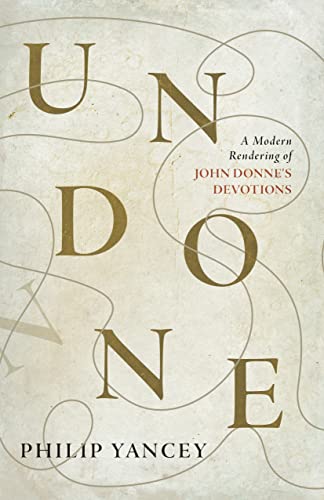
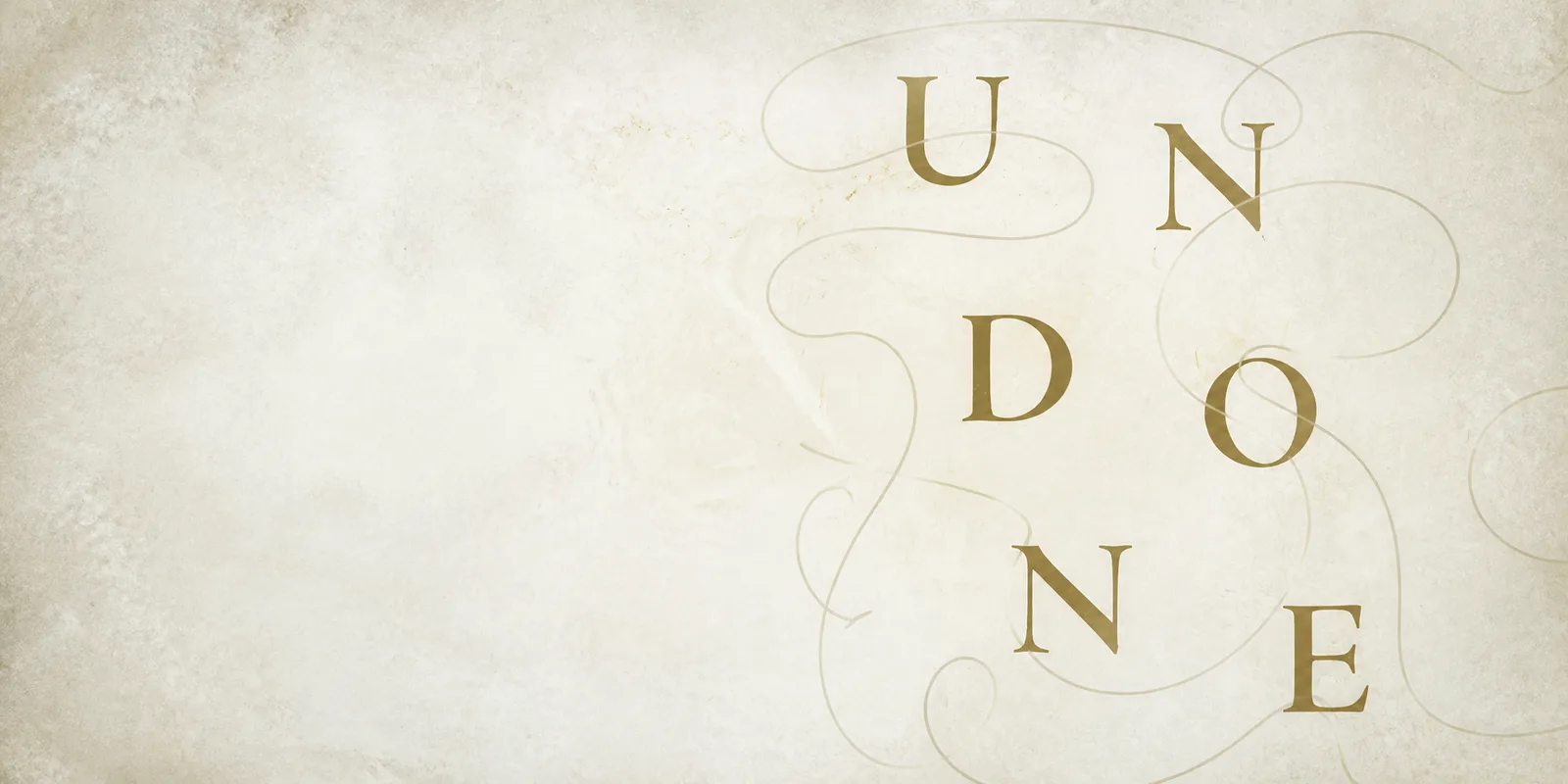
another book that I started actually last winter because I got it for Christmas and then I put it down for a while is undone by Philip yansy and this is a modern rendering of John DA's devotions it deals a lot with the themes of illness and death and prayer and it's a nice short read
Undone (2024)
As the world entered the long night of 2020, Philip Yancey turned to John Donne's Devotions, a nearly 400-year-old manuscript, for guidance. In it, he found a trustworthy companion for living through a global pandemic--or any other crisis. As Yancey says, "Nothing had prepared me for Donne's raw account of confrontations with God." By faithfully and poetically rendering Donne's 17th century prose into 21st century vernacular, Yancey opens up this classic work to a new generation of readers. He presents these Job-like meditations on sickness and suffering, alongside his own reflections, in a series of 30 readings that examine the frailty of the human heart, the goodness and sovereignty of God, and the eternal hope of the Resurrection.
- ISBN:
- 9781951872328
Genres: classics, nonfiction
Lists: …
Similar books
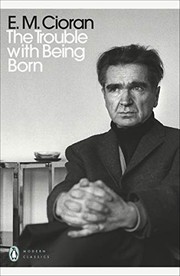
Trouble with Being Born
Emil Michel Cioran
2011 · 224 pages · 1 review
Others: PositiveIn this volume, which reaffirms the uncompromising brilliance of his mind, Cioran strips the human condition down to its most basic components, birth and death, suggesting that disaster lies not in the prospect of death but in the fact of birth, "that laughable accident." In the lucid, aphoristic style that characterizes his work, Cioran writes of time and death, God and religion, suicide and suffering, and the temptation to silence. Through sharp observation and patient contemplation, Cioran cuts to the heart of the human experience.
Why?
What made the match, strongest first
Also classics and nonfiction87%Similar descriptionsPersonalize your recommendations13%Meditations
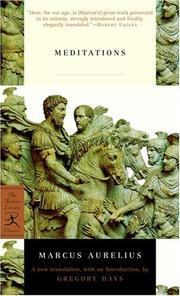
Marcus Aurelius
1626 · 206 pages · 0 reviews
Meditations is a collection of personal reflections and notes by the Roman Emperor Marcus Aurelius (reigned 161 to 180 AD), offering a profound look into the philosophy of Stoicism. It was never intended for publication, making it a raw and intimate self-help manual for the emperor during his campaigns and rule. The central theme revolves around living a good, rational, and virtuous life in harmony with nature and the cosmos. Aurelius continually reminds himself that everything in the universe is constantly changing and fleeting, urging the reader to accept the impermanence of life and the inevitability of death. He stresses the importance of focusing on what one can control—namely, their own thoughts and actions—and accepting everything else with tranquility, including the behavior of others and external events. This inner fortress of the mind is the only true source of peace. The book emphasizes duty and service to the greater community. As a rational being, one's purpose is to act justly and benevolently towards fellow humans. Aurelius encourages practicing humility, rising above petty insults, and viewing difficulties as opportunities for growth and the exercise of virtue. He advocates for an objective, detached perspective on all things, stripping away subjective judgment to see the world as it truly is. Ultimately, Meditations is a powerful, timeless guide on how to face adversity, manage emotions, maintain personal integrity, and find contentment through disciplined, rational self-examination and adherence to virtue.
Why?
What made the match, strongest first
Also classics and nonfiction88%Similar descriptionsPersonalize your recommendations12%A Brief History of Time
Stephen Hawking
1988 · 208 pages · 2 reviews
Others: MixedStephen Hawking's ‘A Brief History of Time* has become an international publishing phenomenon. Translated into thirty languages, it has sold over ten million copies worldwide and lives on as a science book that continues to captivate and inspire new readers each year. When it was first published in 1988 the ideas discussed in it were at the cutting edge of what was then known about the universe. In the intervening twenty years there have been extraordinary advances in the technology of observing both the micro- and macro-cosmic world. Indeed, during that time cosmology and the theoretical sciences have entered a new golden age . Professor Hawking is one of the major scientists and thinkers to have contributed to this renaissance.
Why?
What made the match, strongest first
Also classics and nonfiction95%Similar descriptionsPersonalize your recommendations5%A People's History of the United States
Howard Zinn
1980 · 729 pages · 1 review
Others: MixedKnown for its lively, clear prose as well as its scholarly research, A People's History of the United States is the only volume to tell America's story from the point of view of -- and in the words of -- America's women, factory workers, African Americans, Native Americans, working poor, and immigrant laborers.
Why?
What made the match, strongest first
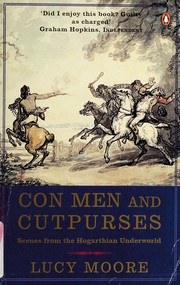
Also classics and nonfiction96%Similar descriptionsPersonalize your recommendations4%Con men and cutpurses
Lucy Moore
2001 · 299 pages · 1 review
Others: PositiveAn enthralling anthology of 18th-century writings that gives a fascinating insight into the dreadful misdeeds of - and the horrible punishments meeted out to - an array of rogues and criminals, from murderers and swindlers to prostitutes and pirates. Captured in memoirs, letters, ballads and court transcripts are some of the most colourful villains ever to take their last gasp at the hangman's noose, including daring thief Jack Sheppherd, highwayman Dick Turpin and ingenious pickpocket Jenny Diver. Taking us from the backstreets and brothels to Newgate prison and the gallows at Tyburn, this anthology reveals London's murky underworld in all its squalor and exuberance.For more than seventy years, Penguin has been the leading publisher of classic literature in the English-speaking world. With more than 1,700 titles, Penguin Classics represents a global bookshelf of the best works throughout history and across genres and disciplines. Readers trust the series to provide authoritative texts enhanced by introductions and notes by distinguished scholars and contemporary authors, as well as up-to-date translations by award-winning translators.
Why?
What made the match, strongest first
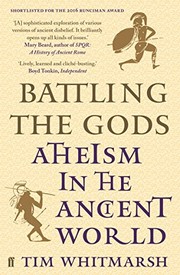
Also classics and nonfiction96%Similar descriptionsPersonalize your recommendations4%Battling the Gods
Tim Whitmarsh
2016 · 304 pages · 1 review

Others: PositiveHow new is atheism? Although adherents and opponents alike today present it as an invention of the European Enlightenment, when the forces of science and secularism broadly challenged those of faith, disbelief in the gods, in fact, originated in a far more remote past. In Battling the Gods, Tim Whitmarsh journeys into the ancient Mediterranean, a world almost unimaginably different from our own, to recover the stories and voices of those who first refused the divinities.Homer’s epic poems of human striving, journeying, and passion were ancient Greece’s only “sacred texts,” but no ancient Greek thought twice about questioning or mocking his stories of the gods. Priests were functionaries rather than sources of moral or cosmological wisdom. The absence of centralized religious authority made for an extraordinary variety of perspectives on sacred matters, from the devotional to the atheos, or “godless.” Whitmarsh explores this kaleidoscopic range of ideas about the gods, focusing on the colorful individuals who challenged their existence. Among these were some of the greatest ancient poets and philosophers and writers, as well as the less well known: Diagoras of Melos, perhaps the first self-professed atheist; Democritus, the first materialist; Socrates, executed for rejecting the gods of the Athenian state; Epicurus and his followers, who thought gods could not intervene in human affairs; the brilliantly mischievous satirist Lucian of Samosata.Before the revolutions of late antiquity, which saw the scriptural religions of Christianity and Islam enforced by imperial might, there were few constraints on belief. Everything changed, however, in the millennium between the appearance of the Homeric poems and Christianity’s establishment as Rome’s state religion in the fourth century AD. As successive Greco-Roman empires grew in size and complexity, and power was increasingly concentrated in central capitals, states sought to impose collective religious adherence, first to cults devoted to individual rulers, and ultimately to monotheism. In this new world, there was no room for outright disbelief: the label “atheist” was used now to demonize anyone who merely disagreed with the orthodoxy—and so it would remain for centuries.As the twenty-first century shapes up into a time of mass information, but also, paradoxically, of collective amnesia concerning the tangled histories of religions, Whitmarsh provides a bracing antidote to our assumptions about the roots of freethinking. By shining a light on atheism’s first thousand years, Battling the Gods offers a timely reminder that nonbelief has a wealth of tradition of its own, and, indeed, its own heroes. From the Hardcover edition.
Why?
What made the match, strongest first
Also classics and nonfiction96%Similar descriptionsPersonalize your recommendations4%