 Loved it
If we were talking cold, hard quality, this would probably be top three.
Others: Positive The Transmigration of Timothy Archer, the final novel in the trilogy that also includes Valis and The Divine Invasion, is an anguished, learned, and very moving investigation of the paradoxes of belief. It is the story of Timothy Archer, an urbane Episcopal bishop haunted by the suicides of his son and mistress--and driven by them into a bizarre quest for the identity of Christ.From the Trade Paperback edition.
Genres: science fiction
Lists: …
Philip K. Dick
1981 · 249 pages · 6 reviews
 Others: Mixed
VALIS is the first book in Philip K. Dick's incomparable final trio of novels (the others being The Divine Invasion and The Transmigration of Timothy Archer). This disorienting and bleakly funny work is about a schizophrenic hero named Horselover Fat; the hidden mysteries of Gnostic Christianity; and reality as revealed through a pink laser. VALIS is a theological detective story, in which God is both a missing person and the perpetrator of the ultimate crime.
What made the match, strongest first
Philip K. Dick
1970 · 298 pages · 1 review
Others: PositiveDr. Bloodmoney, or How We Got Along After the Bomb is a 1965 science fiction novel by American writer Philip K. Dick. It was nominated for the Nebula Award for Best Novel in 1965.[1] Dick wrote the novel in 1963 with working titles In Earth's Diurnal Course and A Terran Odyssey. Ace editor Donald Wollheim however suggested the final title which references the film Dr. Strangelove or: How I Learned to Stop Worrying and Love the Bomb (1964).[2]
What made the match, strongest first
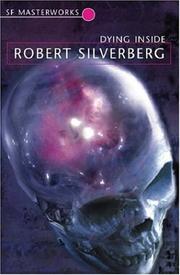
Robert Silverberg
1972 · 256 pages · 5 reviews
 Others: Overwhelmingly positive
From the back cover: David Selig is outwardly unimpressive. His early promise as a student and scholar is unrealised. He has no proper job, he has no girlfriend. But, inside, Selig has the power of a god, for he can probe other people's minds and read their thoughts and feelings. This extraordinary faculty defines his sense of self -- his power is him. But with the onset of middle age, Selig's capacity to read minds is failing fast, and he must struggle to come to terms with that loss -- to accept that he is dying inside...
What made the match, strongest first
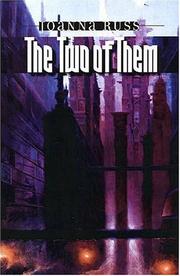
Joanna Russ
1978 · 181 pages · 1 review
Others: PositiveHow female solidarity begins―in experience, thought, action, and force of conviction. Irene, a rebellious product of an American 1950s upbringing, has fled from a repressive and sexist society into a life of apparent equality and adventure as part of the elite Trans-Temporal Authority's cadre of travelers. Under the tutelage of Ernst, a friend/lover and teacher/father, Irene has achieved status and dignity. Irene and Ernst are assigned to a Muslim world where they meet Zubedeyeh, a young girl whose creativity is being transformed into madness by the male chauvinistic society in which she lives. Vowing to rescue her, Irene unleashes a destructive cycle of violence. Originally published in 1978, The Two of Them is a powerful portrait of a future sexist society. This modern classic conveys its politics with rigor and complexity, in a story filled with suspense and unforgettable characters.
What made the match, strongest first
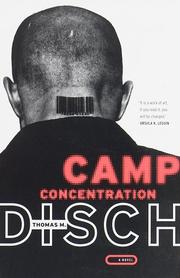
Thomas M. Disch
1968 · 177 pages · 1 review
Others: PositiveIn this chillingly plausible work of speculative fiction, Thomas M. Disch imagines an alternate 1970s in which America has declared war on the rest of the world and much of its own citizenry and is willing to use any weapon to assure victory. Louis Sacchetti, a poet imprisoned for draft resistance, is delivered to a secret facility called Camp Archimedes, where he is the unwilling witness to the army's conscienceless experiments in “intelligence maximization.” In the experiment, Prisoners are given Pallidine, a drug derived from the syphilis spirochete, and their mental abilities quickly rise to the level of genius. Unfortunately, a side effect of Pallidine is death.
What made the match, strongest first
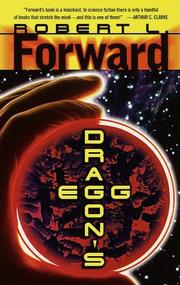
Robert L. Forward
1980 · 327 pages · 1 review
Others: PositiveIn a moving story of sacrifice and triumph, human scientists establish a relationship with intelligent lifeforms--the cheela--living on Dragon's Egg, a neutron star where one Earth hour is equivalent to hundreds of their years. The cheela culturally evolve from savagery to the discovery of science, and for a brief time, men are their diligent teachers . . .
What made the match, strongest first
Loved itIf we were talking cold, hard quality, this would probably be top three.