I think it's one of the best executed rock hard thought experiments I've ever read, and I can see the influence of this book all over this library. It's a special book that I think every science fiction fan should experience. Overall, I'd give it an 8 out of 10.
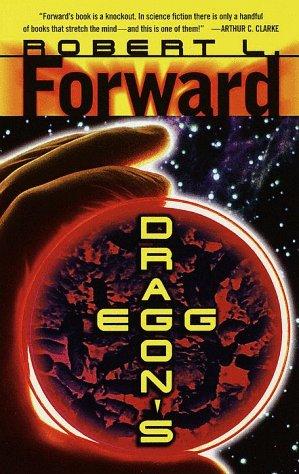
Dragon's egg (1980)
In a moving story of sacrifice and triumph, human scientists establish a relationship with intelligent lifeforms--the cheela--living on Dragon's Egg, a neutron star where one Earth hour is equivalent to hundreds of their years. The cheela culturally evolve from savagery to the discovery of science, and for a brief time, men are their diligent teachers . . .
- ISBN:
- 9780345435293
- Length:
- 327 pages
Genres: science fiction
Lists: …
Similar books
The Invincible
Stanisław Lem
1967 · 221 pages · 3 reviews
Others: NeutralReads initially like the sort of traditional science fiction you might see on TV - rocket lands on foreign planet, sends out teams to discover what gives. what follows is a gripping scientific detective story as we learn the terrible secrets of a past race, and Lem takes us on a journey of wonder and awe. Reminiscent of the final passages of HG Wells' Time Machine as the author shows us beings and worlds we could never imagine. I've read this several times and will read it again and you should too.
Why?
What made the match, strongest first
On 3 of the same lists59%Also science fiction39%Similar descriptionsPersonalize your recommendations2%A Fire upon the Deep
Vernor Vinge
1992 · 613 pages · 19 reviews
Others: Mostly positiveThousands of years in the future, humanity is no longer alone in a universe where a mind's potential is determined by its location in space, from superintelligent entities in the Transcend, to the limited minds of the Unthinking Depths, where only simple creatures, and technology, can function. Nobody knows what strange force partitioned space into these "regions of thought," but when the warring Straumli realm use an ancient Transcendent artifact as a weapon, they unwittingly unleash an awesome power that destroys thousands of worlds and enslaves all natural and artificial intelligence. Fleeing this galactic threat, Ravna crash lands on a strange world with a ship-hold full of cryogenically frozen children, the only survivors from a destroyed space-lab. They are taken captive by the Tines, an alien race with a harsh medieval culture, and used as pawns in a ruthless power struggle.
Why?
What made the match, strongest first
On 5+ of the same lists53%Also science fiction40%Media Death Cult loved bothPersonalize your recommendations7%A Deepness in the Sky (Zones of Thought)
Vernor Vinge
1999 · 606 pages · 12 reviews
Others: Mostly positiveFrom inside cover Tor First Edition March 1999: Thirty thousand years before the events of A Fire upon the Deep, Pham Nuwen is living in anonymity among the Qeng Ho interstellar trading fleet. In high orbit above the planet Arachna, they wait for the awakening of its dormant population, the Spiders, who have burrowed deep into the planet, awaiting the relighting of the On/Off star their planet orbits. For when light returns, Arachna will at long last explode into a Golden Age of technology and commerce. But the slumbering Spiders' vulnerability has attracted another lurking presence -- the Emergents, a band of traders whose plans for Arachna are more sinister than anything the Qeng Ho could envision. Reluctant to share their spoils with the Qeng Ho, the Emergents unleash an attack unlike any seen in the Qeng Ho's millennia-long history of exploration, reducing their fleet to serfdom... and then to something worse. Reaching into memories so old and painful he can barely recall them, Pham gathers the other "survivors" about him and makes a final attempt to be worthy of a reputation as ancient and storied as the history of the Qeng Ho itself. But time is running out, for soon the Emergents' assault will strip Arachna bare. As Pham's underground resistance cell struggles against its torturers in space, a wondrously gifted clan of Spiders on the planet below fights another battle - to advance their technology quickly enough to defeat their terrestrial foes, and to somehow overcome the invisible enemy lurking above.
Why?
What made the match, strongest first
On 5+ of the same lists52%Also science fiction41%Media Death Cult loved bothPersonalize your recommendations7%Eden
Stanisław Lem
1968 · 262 pages · 2 reviews
Others: MixedA six-man crew crash-lands on Eden, fourth planet from another sun. The men find a strange world that grows ever stranger, and everywhere there are images of death. The crew's attempt to communicate with this civilization leads to violence and to a cruel truth-cruel precisely because it is so human.
Why?
What made the match, strongest first
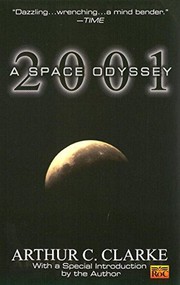
On 2 of the same lists55%Also science fiction41%Similar descriptionsPersonalize your recommendations4%2001: A Space Odyssey
Arthur C. Clarke
1968 · 228 pages · 5 reviews
Others: Overwhelmingly positiveA novel that proposes an idea about how the human race might have begun and where it might be headed...given a little help from out there. A colaboration of ideas with director Stanley Kubrick in the late 1960's it begins at "the dawn of man" and then leaps to the year 2001 where a mission to Saturn (Jupiter in the film) is mounted to try and answer questions raised by the discovery of an ancient artifact dug up on the moon. Though not particularly fast paced, the science is good, and there are a few hair raising events. There are also interesting speculations about the future, such as the space shuttle, and a device eerily similar to an iPad. Leaving plenty of room for contemplation and the appreciation for the inevitable trials of space travel, this is one of the truly landmark pieces of hard science fiction.
Why?
What made the match, strongest first
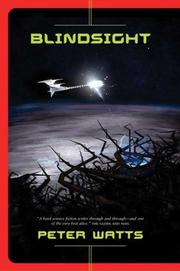
On 5+ of the same lists48%Also science fiction44%Media Death Cult loved bothPersonalize your recommendations8%Blindsight
Peter Watts
2006 · 366 pages · 12 reviews

Others: Overwhelmingly positiveTwo months since the stars fell... Two months since sixty-five thousand alien objects clenched around the Earth like a luminous fist, screaming to the heavens as the atmosphere burned them to ash. Two months since that moment of brief, bright surveillance by agents unknown. Two months of silence while a world holds its breath. Now some half-derelict space probe, sparking fitfully past Neptune's orbit, hears a whisper from the edge of the solar system: a faint signal sweeping the cosmos like a lighthouse beam. Whatever's out there isn't talking to us. It's talking to some distant star, perhaps. Or perhaps to something closer, something en route. So who do you send to force introductions on an intelligence with motives unknown, maybe unknowable? Who do you send to meet the alien when the alien doesn't want to meet? You send a linguist with multiple personalities, her brain surgically partitioned into separate, sentient processing cores. You send a biologist so radically interfaced with machinery that he sees X-rays and tastes ultrasound, so compromised by grafts and splices that he no longer feels his own flesh. You send a pacifist warrior in the faint hope she won't be needed, and a fainter hope that she'll do any good if she is needed. You send a monster to command them all, an extinct hominid predator once called "vampire," recalled from the grave with the voodoo of recombinant genetics and the blood of sociopaths. And you send a synthesist—an informational topologist with half his mind gone—as an interface between here and there, a conduit through which the Dead Center might hope to understand the Bleeding Edge. You send them all to the edge of interstellar space, praying you can trust such freaks and retrofits with the fate of a world. You fear they may be more alien than the thing they've been sent to find. But you'd give anything for that to be true, if you only knew what was waiting for them....
Why?
What made the match, strongest first
On 5+ of the same lists56%Also science fiction42%Similar descriptionsPersonalize your recommendations2%