 Loved it
So this one is my favorite of Heinland's novels so far. I think it's one of my favorites because I just fell in love with these characters.
 Others: Mixed
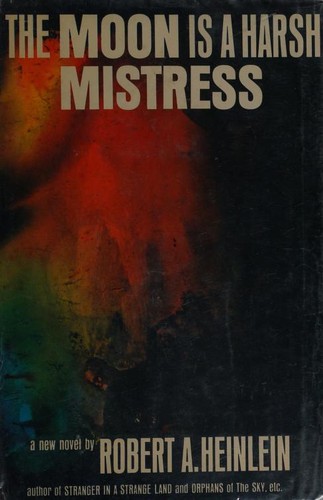
It is the late 21st Century and the Moon has been colonized -- as a giant, open, prison. Every aspect of life is overseen by the Federated Nations "Lunar Authority"; until one day when a self-aware Super-Computer, a Jack of all Trades Technician, an Anarchist Professor, and a beautiful Blonde Revolutionary decide to change their world. The conspirators' plans go along beautifully...for a while. TANSTAAFL! There ain't no such thing as a free lunch! Robert A. Heinlein was the most influential science fiction writer of his era, an influence so large that, as Samuel R. Delany notes, "modern critics attempting to wrestle with that influence feel themselves dealing with an object rather like the sky or an ocean." He won the Hugo Award for best novel four times, a record that still stands. The Moon Is a Harsh Mistress was the last of these Hugo-winning novels, and it is widely considered his finest work. It is a tale of revolution, of the rebellion of the former Lunar penal colony against the Lunar Authority that controls it from Earth. It is the tale of the disparate people -- a computer technician, a vigorous young female agitator, and an elderly academic -- who become the rebel movement's leaders. And it is the story of Mike, the supercomputer whose sentience is known only to this inner circle, and who for reasons of his own is committed to the revolution's ultimate success. The Moon Is a Harsh Mistress is one of the high points of modern science fiction, a novel bursting with politics, humanity, passion, innovative technical speculation, and a firm belief in the pursuit of human freedom. - Back cover.
Genres: science fiction
Lists: …
Robert A. Heinlein
1985 · 385 pages · 1 review
 Others: Negative
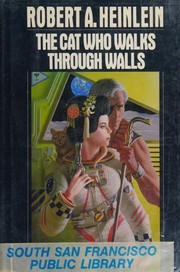
Mission: retrieve the computer backups that can restore the sentient computer who masterminded the 2075 revolution that freed Luna.
What made the match, strongest first
Kate Wilhelm
1976 · 207 pages · 3 reviews
 Others: Overwhelmingly positive
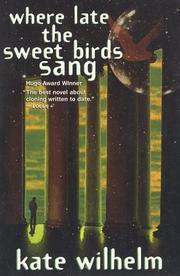
Before becoming one of today's most intriguing and innovative mystery writers, Kate Wilhelm was a leading writer of science fiction, acclaimed for classics like The Infinity Box and The Clewiston Test. Now one of her most famous novels returns to print, the spellbinding story of an isolated post-holocaust community determined to preserve itself, through a perilous experiment in cloning. Sweeping, dramatic, rich with humanity, and rigorous in its science, Where Later the Sweet Birds Sang is widely regarded as a high point of both humanistic and "hard" SF, and won SF's Hugo Award and Locus Award on its first publication. It is as compelling today as it was then. Where Late the Sweet Birds Sang is the winner of the 1977 Hugo Award for Best Novel.
What made the match, strongest first
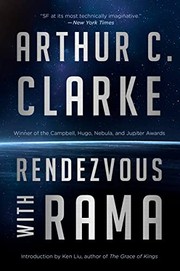
Arthur C. Clarke
1953 · 274 pages · 8 reviews
Others: Mostly positiveWritten in 1973, a massive 50 kilometre long alien cylinder begins to pass through the solar system provoking a hurried effort to intercept it. The closest available ship rushes to rendezvous so as to have a quick study before it gets too close to the sun. Able to enter via an airlock on one end of the ship, the crew explores the huge world found inside, a world full of wonder and mystery. As usual, the science is spot on. This is the best novel of Clarke's since 2001 and Childhood's End and is a truly grand adventure full of puzzles and ideas that lead you asking more questions than are answered. Enough questions in fact to lead to numerous inferior sequels, but enough answers to leave you satisfied. Don't pass up this gem of hard science fiction.
What made the match, strongest first
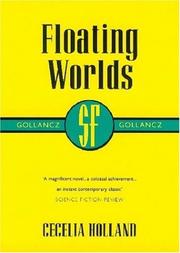
Cecelia Holland
1975 · 465 pages · 1 review
Others: Positive2000 years in the future, runaway pollution has made the Earth uninhabitable except in giant biodomes. The society is an anarchy, with disputes mediated through the Machiavellian Committee for the Revolution. Mars, Venus and the Moon support flourishing colonies of various political stripes. On the fringes of the solar system, in the Gas Planets, a strange, new, violent kind of human has evolved.In this unstable system the anarchist Paula Mendoza, an agent of the Committee, works to make peace, and ultimately protect her people, in a catastrophic clash of worlds that destroys the order she knows.
What made the match, strongest first
Harry Harrison
1960 · 157 pages · 2 reviews
Others: Mixed"Deathworld" centers on Jason dinAlt, a professional gambler who uses his somewhat erratic psionic abilities to tip the odds in his favor. He is challenged by a man named Kerk Pyrrus (who turns out to be the ambassador from the planet Pyrrus) to turn a large amount of money into an immense sum by gambling at a government-run casino. He succeeds and survives the planetary government's desperate efforts to steal back the money. In a fit of ennui, he decides to accompany Kerk to his home, despite being warned that it is the deadliest world ever colonized by humans...DEATHWORLD! DEATHWORLD is one of the classics of the Golden Age of science fiction, born in the pages of Astounding Science Fiction under the editorship of John W. Campbell, Jr. Enjoy!
What made the match, strongest first
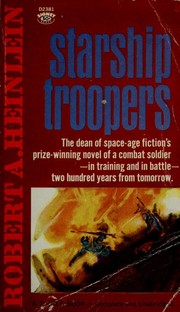
Robert A. Heinlein
1959 · 222 pages · 4 reviews
Others: Leaning positiveStarship Troopers takes place in the midst of an interstellar war between the Terran Federation of Earth and the Arachnids (referred to as "The Bugs") of Klendathu. It is narrated as a series of flashbacks by Juan Rico, and is one of only a few Heinlein novels set out in this fashion. The novel opens with Rico aboard the corvette Rodger Young, about to embark on a raid against the planet of the "Skinnies," who are allies of the Arachnids. We learn that he is a cap(sule) trooper in the Terran Federation's Mobile Infantry. The raid itself, one of the few instances of actual combat in the novel, is relatively brief: the Mobile Infantry land on the planet, destroy their targets, and retreat, suffering a single casualty in the process. The story then flashes back to Rico's graduation from high school, and his decision to sign up for Federal Service over the objections of his father. This is the only chapter that describes Rico's civilian life, and most of it is spent on the monologues of two people: retired Lt. Col. Jean V. Dubois, Rico's school instructor in "History and Moral Philosophy," and Fleet Sergeant Ho, a recruiter for the armed forces of the Terran Federation. Dubois serves as a stand-in for Heinlein throughout the novel, and delivers what is probably the book's most famous soliloquy on violence, and how it "has settled more issues in history than has any other factor." Fleet Sergeant Ho's monologues examine the nature of military service, and his anti-military tirades appear in the book primarily as a contrast with Dubois. (It is later revealed that his rants are calculated to scare off the weaker applicants). Interspersed throughout the book are other flashbacks to Rico's high school History and Moral Philosophy course, which describe how in the Terran Federation of Rico's day, the rights of a full Citizen (to vote, and hold public office) must be earned through some form of volunteer Federal service. Those residents who have not exercised their right to perform this Federal Service retain the other rights generally associated with a modern democracy (free speech, assembly, etc.), but they cannot vote or hold public office. This structure arose ad hoc after the collapse of the 20th century Western democracies, brought on by both social failures at home and military defeat by the Chinese Hegemony overseas (assumed looking forward into the late 20th century from the time the novel was written in the late 1950s). In the next section of the novel Rico goes to boot camp at Camp Arthur Currie, on the northern prairies. Five chapters are spent exploring Rico's experience entering the service under the training of his instructor, Career Ship's Sergeant Charles Zim. Camp Currie is so rigorous that less than ten percent of the recruits finish basic training; the rest either resign, are expelled, or die in training. One of the chapters deals with Ted Hendrick, a fellow recruit and constant complainer who is flogged and expelled for striking a superior officer. Another recruit, a deserter who committed a heinous crime while AWOL, is hanged by his battalion. Rico himself is flogged for poor handling of (simulated) nuclear weapons during a drill; despite these experiences he eventually graduates and is assigned to a unit. At some point during Rico's training, the 'Bug War' has begun to brew, and Rico finds himself taking part in combat operations. The war "officially" starts with an Arachnid attack that annihilates the city of Buenos Aires, although Rico makes it clear that prior to the attack there were plenty of "'incidents,' 'patrols,' or 'police actions.'" Rico briefly describes the Terran Federation's loss at the Battle of Klendathu where his unit is decimated and his ship destroyed. Following Klendathu, the Terran Federation is reduced to making hit-and-run raids similar to the one described at the beginning of the novel (which, chronologically would be placed between Chapters 10 and 11). Rico meanwhile finds himself posted to Rasczak's Roughnecks, named after Lieutenant Rasczak (his first name is never given). This part of the book focuses on the daily routine of military life, as well as the relationship between officers and non-commissioned officers, personified in this case by Rasczak and Sergeant Jelal. Eventually, Rico decides to become a career soldier and attends Officer Candidate School, which turns out to be just like boot camp, only "squared and cubed with books added."[15] Rico is commissioned a temporary Third Lieutenant as a field-test final exam and commands his own unit during Operation Royalty; eventually he graduates as a Second Lieutenant and full-fledged officer. The final chapter serves as more of a coda, depicting Rico aboard the Rodger Young as the lieutenant in command of Rico's Roughnecks, preparing to drop to Klendathu as part of a major strike, with his father (having joined the Service earlier in the novel) as his senior sergeant and a Third Lieutenant-in-training of his own under his wing.
What made the match, strongest first
Loved itSo this one is my favorite of Heinland's novels so far. I think it's one of my favorites because I just fell in love with these characters.
Not a fanworst book that I read this year was the Moon is a Harsh Mistress by Robert heinlin