


 Loved it
So there's a lot of really interesting aspects to this novel, and it's also just an entertaining read.
Others: Positive To the Right Honourable and Mighty Lord, THOMAS EARLE OF SUSSEX, Viscount Fitzwalter, Lord of Egremont and of Burnell, Knight of the most noble Order of the Garter, Iustice of the forrests and Chases from Trent Southward; Captain of the Gentleman Pensioners of the House of the QUEENE our Soveraigne Lady.
Genres: fantasy, historical fiction, classics
Lists: …
Robert Graves
1944 · 449 pages · 1 review
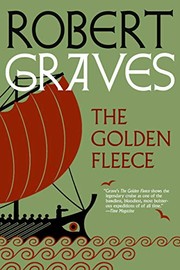
Others: PositiveReissued by Creative Age Press in 1945 as Hercules, My Shipmate, a novel about the voyage of the Argo. Written with ideas on The White Goddess as a cultural/anthropological backdrop to the ancient Greek tale. What the Golden Fleece really was—a cloak tossed to earth by a drunken Zeus, a sheepskin book of alchemic secrets or the gilded epidermis of a young human sacrifice named Mr. Ram—nobody knows. But Graves is quite sure that, whatever the Golden Fleece was, the voyage of Jason & his Argonauts really happened. His story shows the legendary cruise as one of the bawdiest, bloodiest, most boisterous expeditions of all time. In I, Claudius & its Claudius the God sequel, Graves brought the teeming life of Claudian Rome so vividly alive that they became bestsellers. In the not-so-successful Wife to Mr. Milton, his blend of imagination & scholarship projected his readers into 17th-Century England & the bedchamber temper tantrums of the blind poet-politician. With Hercules & shipmates, Graves becomes an ancient Greek, moving among demigods & goddesses, myths & monsters with an easy familiarity & a wealth of erudite detail. Both sometimes seem too much of a good thing. Atomic-age readers, ill-attuned to the leisurely, formal talk of myth-age Greeks, may find themselves skipping some of the longer speeches. Most of the Argo's 50-oar crew were princes, each with a special talent & gift of the gods. The only woman aboard was a princess: Atalanta of Calydon, a virgin huntress who could outrun any man in Greece. Argus, who built the Argo, was the world's finest shipwright. Castor & Pollux, sons of Leda & Zeus-as-swan, were champion prizefighters. Nauplius, Poseidon's son, was an unrivaled navigator. Orpheus could make sticks & stones dance to his lyre. Hercules of Tiryns was the world's strongest man. He would've captained the Argonauts were it not that in moments of insanity he murdered friend & foe alike. Captaincy devolved on Jason of lolcos—a man nobody liked or trusted, but who had a power denied to all the others: women instantly fell in love with him. Even surly Hercules agreed it a quality worth all the rest. Backed by divine blessings & equinoctal winds, the Argonauts set sail. On the Island of Lemnos, peopled solely by women, they generously stopped off to help out with spring sowing. Nine months later, 200 children were born, of whom no less than 60 were said to be the spitting image of Hercules. On Samothrace, they were initiated into the sacred mysteries. The Goddess of All Being mated with the Serpent Priapus to be delivered of a bull. Then the sacred nymphs leapt on them & scratched & bit until even Hercules passed out. Thereafter, the Argonauts glowed with "a faint nimbus of light." The Argonauts boldly pushed on thru the dread Hellespont & entered the Black Sea. To their dismay, Hercules deserted, summoned home to perform another of his mighty labors. "Holy Serpents!" he growled. "Tell me what this time?" The job—cleaning the Augean Stables—didn't take long. He stayed around afterwards with the Lydian high priestess—who in due time bore male triplets. In gratitude, she taught him to spin, tying up his hair in blue braids. He was crazy about it, admitting confidentially he'd always wanted to be a woman. The Argonauts went on without Hercules. Reaching Colchis, Aphrodite won the Fleece for them. She made her son Eros wait behind a pillar with his bow until handsome Jason strode into the King of Colchis' palace. Eros shot Medea thru the heart, & the smitten princess helped to get the Fleece from her father's temple. Mythology's most famous voyage had reached its goal, but Graves takes 150 more pages to wind things up.
What made the match, strongest first
Homer
2023 · 848 pages · 3 reviews
 Others: Overwhelmingly positive
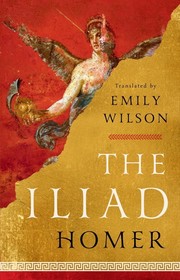
The greatest literary landmark of antiquity masterfully rendered by the most celebrated translator of our time. When Emily Wilson’s translation of The Odyssey appeared in 2017―revealing the ancient poem in a contemporary idiom that was “fresh, unpretentious and lean” (Madeline Miller, Washington Post)―critics lauded it as “a revelation” (Susan Chira, New York Times) and “a cultural landmark” (Charlotte Higgins, Guardian) that would forever change how Homer is read in English. Now Wilson has returned with an equally revelatory translation of Homer’s other great epic―the most revered war poem of all time. The Iliad roars with the clamor of arms, the bellowing boasts of victors, the fury and grief of loss, and the anguished cries of dying men. It sings, too, of the sublime magnitude of the world―the fierce beauty of nature and the gods’ grand schemes beyond the ken of mortals. In Wilson’s hands, this thrilling, magical, and often horrifying tale now gallops at a pace befitting its legendary battle scenes, in crisp but resonant language that evokes the poem’s deep pathos and reveals palpably real, even “complicated,” characters―both human and divine. The culmination of a decade of intense engagement with antiquity’s most surpassingly beautiful and emotionally complex poetry, Wilson’s Iliad now gives us a complete Homer for our generation.
What made the match, strongest first
Charles Perrault
1675 · 156 pages · 1 review
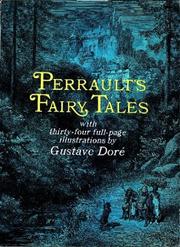
Others: PositiveIn these two volumes bound as one are seven fairy tales each from Perrault and Andersen.
What made the match, strongest first
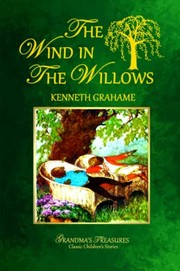
Kenneth Grahame
1908 · 192 pages · 2 reviews
Others: PositiveThe adventures of four amiable animals, Rat, Toad, Mole and Badger, along a river in the English countryside.
What made the match, strongest first
Franz Kafka
1825 · 279 pages · 0 reviews
Byzantine and claustrophobic novel of a man arrested by the secret police and charged with an unspecified crime. Unable to defend himself and disorientated by the legal process at work around him the man soon becomes apathetic and acquiescent, accepting his eventual sentence as inevitable.
What made the match, strongest first
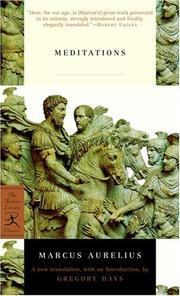
Marcus Aurelius
1626 · 206 pages · 0 reviews
Meditations is a collection of personal reflections and notes by the Roman Emperor Marcus Aurelius (reigned 161 to 180 AD), offering a profound look into the philosophy of Stoicism. It was never intended for publication, making it a raw and intimate self-help manual for the emperor during his campaigns and rule. The central theme revolves around living a good, rational, and virtuous life in harmony with nature and the cosmos. Aurelius continually reminds himself that everything in the universe is constantly changing and fleeting, urging the reader to accept the impermanence of life and the inevitability of death. He stresses the importance of focusing on what one can control—namely, their own thoughts and actions—and accepting everything else with tranquility, including the behavior of others and external events. This inner fortress of the mind is the only true source of peace. The book emphasizes duty and service to the greater community. As a rational being, one's purpose is to act justly and benevolently towards fellow humans. Aurelius encourages practicing humility, rising above petty insults, and viewing difficulties as opportunities for growth and the exercise of virtue. He advocates for an objective, detached perspective on all things, stripping away subjective judgment to see the world as it truly is. Ultimately, Meditations is a powerful, timeless guide on how to face adversity, manage emotions, maintain personal integrity, and find contentment through disciplined, rational self-examination and adherence to virtue.
What made the match, strongest first
Loved itSo there's a lot of really interesting aspects to this novel, and it's also just an entertaining read.