
 Loved it
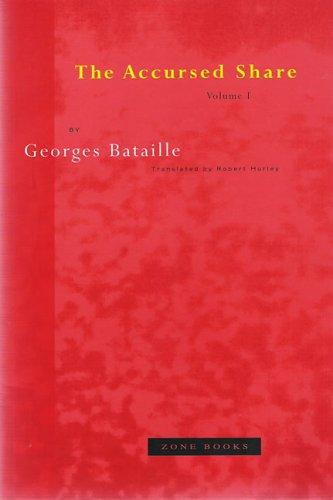
I think Bataille thought of war in a similar way in his book The Accursed Share, which I haven't read in forever, but I remember really enjoying it.
Others: Positive Most Anglo-American readers know Bataille as a novelist. The "Accursed Share "provides an excellent introduction to Bataille the philosopher. Here he uses his unique economic theory as the basis for an incisive inquiry into the very nature of civilization. Unlike conventional economic models based on notions of scarcity, Bataille's theory develops the concept of excess: a civilization, he argues, reveals its order most clearly in the treatment of its surplus energy. The result is a brilliant blend of ethics, aesthetics, and cultural anthropology that challenges both mainstream economics and ethnology. The three volumes of "The Accursed Share" address what Georges Bataille sees as the paradox of utility: namely, if being useful means serving a further end, then the ultimate end of utility can only be uselessness. The first volume, the only one published before Bataille's death, treated this paradox in economic terms, showing that "it is not necessity but its contrary, luxury, that presents living matter and mankind with their fundamental problems." In the second and third volumes, "The History of Eroticism" and "Sovereignty", Bataille explores the same paradox of utility from an anthropological and an ethical perspective, respectively. "The History of Eroticism" analyzes the fears and fascination, the prohibitions and transgressions attached to the realm of eroticism as so many expressions of the "uselessness" of erotic life. In the third volume, Bataille raises the ethical problems of sovereignty, of "the independence of man relative to useful ends."
Genres: nonfiction
Lists: …
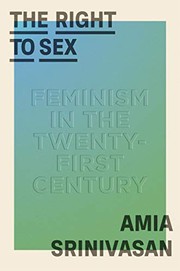
Amia Srinivasan
2019 · 304 pages · 2 reviews
Others: Positive"A work of nonfiction by philosopher Amia Srinivasan that upends the way we discuss-or avoid discussing-the problems and politics of sex"--
What made the match, strongest first
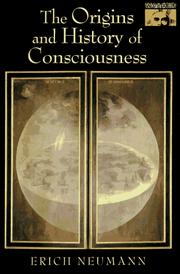
Erich Neumann
1949 · 493 pages · 1 review
Others: PositiveThe Origins and History of Consciousness draws on a full range of world mythology to show how individual consciousness undergoes the same archetypal stages of development as human consciousness as a whole. Erich Neumann was one of C. G. Jung's most creative students and a renowned practitioner of analytical psychology in his own right. In this influential book, Neumann shows how the stages begin and end with the symbol of the Uroboros, the tail-eating serpent. The intermediate stages are projected in the universal myths of the World Creation, Great Mother, Separation of the World Parents, Birth of the Hero, Slaying of the Dragon, Rescue of the Captive, and Transformation and Deification of the Hero. Throughout the sequence, the Hero is the evolving ego consciousness. Featuring a foreword by Jung, this Princeton Classics edition introduces a new generation of readers to this eloquent and enduring work. Wikipedia discussion: https://en.wikipedia.org/wiki/The_Origins_and_History_of_Consciousness Jordan B. Peterson: Erich Neumann is the most well-regarded student, analyst & distiller of Carl Jung's work.
What made the match, strongest first
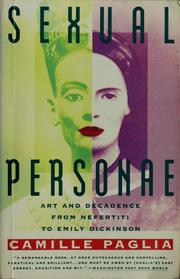
Camille Paglia
1990 · 718 pages · 1 review
Others: PositiveDiscusses the works of Edmund Spenser, Shakespeare, Rousseau, de Sade, Goethe, Blake, Wordsworth, Coleridge, Byron, Shelley, Keats, Balzac, Gautier, Baudelaire, Huysmans, Emily Bronte, Swinburne, Oscar Wilde, Poe, Hawthorne, Melville, Emerson, Whitman, Henry James, and Emily Dickinson.
What made the match, strongest first
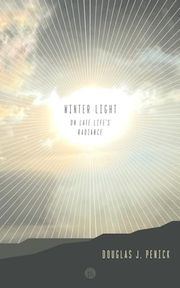
Douglas J. Penick
2025 · 1 review
Others: PositiveWhat made the match, strongest first
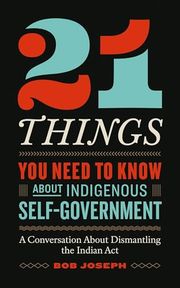
Bob Joseph
2025 · 200 pages · 1 review
Others: PositiveBob Joseph's 21 Things® You May Not Know About the Indian Act captured the attention of hundreds of thousands of Canadians by shining a light on the Indian Act and the problems associated with it. In that book, readers learned that the Consolidated Indian Act of 1876 has controlled the lives of Indigenous Peoples in Canada for generations, and despite its objective to assimilate Indians into the economic and political mainstream, it has had the opposite effect: segregation. They live under different laws and on different lands. People came away from that book with questions such as "Can we get rid of the Indian Act?" and "What would that look like? Would self-government work?" These are timely questions, given that 2026 will mark 150 years since the Consolidated Indian Act of 1876. The short answer to these questions is, yes, we can dismantle the Act, and there are current examples of self-government arrangements that are working. With his trademark wisdom, humility, and deep understanding, Bob Joseph shows us the path forward, in which Indigenous self-governance is already happening and not to be feared--and negotiating more such arrangements, sooner rather than later, is an absolute necessity. Beginning with the relationship between Indigenous Peoples, the Crown, and settlers in at the early days of colonization, Joseph travels to the current landscape and the tremendous possibility for reconciliation--a future every Canadian can support. He illustrates the widespread negative consequences of the reserve system that can only be redressed by self-government. With insight and clarity, he busts myths about taxation, the so-called benefits of the Indian Act, and the trustee-wardship relationship. And he provides inspiring examples of how self-government agreements are working well, from the Nisga'a Final Agreement to the James Bay and Northern Quebec Agreement, while showing how key the United Nations Declaration on the Rights of Indigenous Peoples is to defining what sovereignty really means. 21 Things You Need to Know About Indigenous Self-Government: A Conversation about Dismantling the Indian Act illuminates what Canadians need to know to stand in the work of reconciliation as individuals, as organizations, and as a country of many nations. Bob Joseph shows us a way forward with his trademark wisdom, humility, and deep understanding, Indigenous self-governance is not only a possibility, but an absolute necessity.
What made the match, strongest first
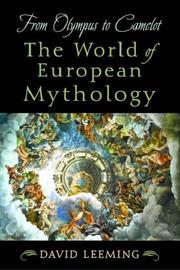
David Leeming
2003 · 228 pages · 2 reviews
Others: PositiveFrom the stories suggested by the great cave paintings of the Paleolithic period to the thought experiments of modern scientists, From Olympus to Camelot provides a sweeping history of the development of the rich and varied European mythological tradition. David Leeming, an authority on world mythology, begins with a general introduction to mythology and mythological terms, and then turns to the stories themselves. Discussing well-known figures such as Zeus, Aphrodite, Thor, and Cuchulainn, and less familiar ones such as Perun, Mari, and the Sorcerer of Lescaux, Leeming illustrates and analyzes the enduring human endeavor to make sense of existence through deities and heroes. Following an initial exploration of the Indo-European sources of European mythology and the connections between the myths of Europe and those of India and Iran, the book proceeds to survey the major beliefs of Greek, Roman, Celtic, Germanic, Baltic, and Slavic cultures, as well as the mythologies of non-Indo-European cultures such as the Etruscans and the Finns. Among its contents are introductions to the pantheons of various mythologies, examinations of major mythological works, and retellings of the influential mythical stories. This work also examines European deities, creation myths, and heroes in the context of Christian belief, and considers the translation of traditional stories into the mythologies of modern European political, scientific, philosophical, and economic movements. European mythology is the core mythology of Western civilization. This wide-ranging volume offers a lively and informative survey, along with a provocative new way of understanding this fundamental aspect of European culture.
What made the match, strongest first
Loved itI think Bataille thought of war in a similar way in his book The Accursed Share, which I haven't read in forever, but I remember really enjoying it.