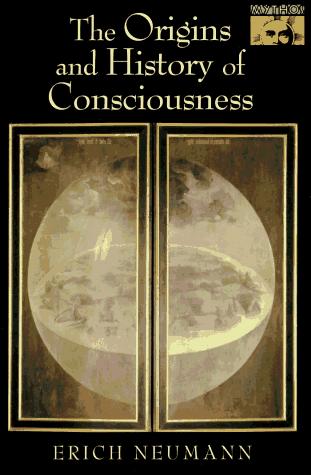
The origins and history of consciousness
The origins and history of consciousnessErich Neumann
Buy on Amazon

The origins and history of consciousness (1949)

Erich Neumann

Others: Positive

The Origins and History of Consciousness draws on a full range of world mythology to show how individual consciousness undergoes the same archetypal stages of development as human consciousness as a whole. Erich Neumann was one of C. G. Jung's most creative students and a renowned practitioner of analytical psychology in his own right. In this influential book, Neumann shows how the stages begin and end with the symbol of the Uroboros, the tail-eating serpent. The intermediate stages are projected in the universal myths of the World Creation, Great Mother, Separation of the World Parents, Birth of the Hero, Slaying of the Dragon, Rescue of the Captive, and Transformation and Deification of the Hero. Throughout the sequence, the Hero is the evolving ego consciousness. Featuring a foreword by Jung, this Princeton Classics edition introduces a new generation of readers to this eloquent and enduring work. Wikipedia discussion: https://en.wikipedia.org/wiki/The_Origins_and_History_of_Consciousness Jordan B. Peterson: Erich Neumann is the most well-regarded student, analyst & distiller of Carl Jung's work.

ISBN:
9780415209441
Length:
493 pages

Genres: nonfiction

Lists: …

Similar books

1 of 6
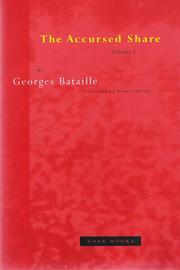
  • The accursed share

    Georges Bataille

    1988 · 200 pages · 1 review

    Others: Positive

    Most Anglo-American readers know Bataille as a novelist. The "Accursed Share "provides an excellent introduction to Bataille the philosopher. Here he uses his unique economic theory as the basis for an incisive inquiry into the very nature of civilization. Unlike conventional economic models based on notions of scarcity, Bataille's theory develops the concept of excess: a civilization, he argues, reveals its order most clearly in the treatment of its surplus energy. The result is a brilliant blend of ethics, aesthetics, and cultural anthropology that challenges both mainstream economics and ethnology. The three volumes of "The Accursed Share" address what Georges Bataille sees as the paradox of utility: namely, if being useful means serving a further end, then the ultimate end of utility can only be uselessness. The first volume, the only one published before Bataille's death, treated this paradox in economic terms, showing that "it is not necessity but its contrary, luxury, that presents living matter and mankind with their fundamental problems." In the second and third volumes, "The History of Eroticism" and "Sovereignty", Bataille explores the same paradox of utility from an anthropological and an ethical perspective, respectively. "The History of Eroticism" analyzes the fears and fascination, the prohibitions and transgressions attached to the realm of eroticism as so many expressions of the "uselessness" of erotic life. In the third volume, Bataille raises the ethical problems of sovereignty, of "the independence of man relative to useful ends."

    Why?

    What made the match, strongest first

    Also nonfiction
    84%
    Better Than Food loved both
    14%
    Similar descriptions
    2%
    Personalize your recommendations
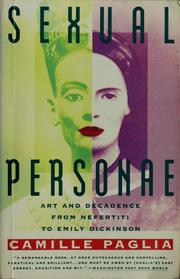
  • Sexual Personae

    Camille Paglia

    1990 · 718 pages · 1 review

    Others: Positive

    Discusses the works of Edmund Spenser, Shakespeare, Rousseau, de Sade, Goethe, Blake, Wordsworth, Coleridge, Byron, Shelley, Keats, Balzac, Gautier, Baudelaire, Huysmans, Emily Bronte, Swinburne, Oscar Wilde, Poe, Hawthorne, Melville, Emerson, Whitman, Henry James, and Emily Dickinson.

    Why?

    What made the match, strongest first

    Also nonfiction
    86%
    Better Than Food loved both
    14%
    Personalize your recommendations
  • Winter Light: On Late Life's Radiance

    Douglas J. Penick

    2025 · 1 review

    Others: Positive

    Why?

    What made the match, strongest first

    Also nonfiction
    86%
    Better Than Food loved both
    14%
    Personalize your recommendations
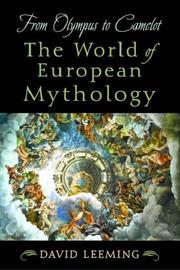
  • From Olympus to Camelot

    David Leeming

    2003 · 228 pages · 2 reviews

    Others: Positive

    From the stories suggested by the great cave paintings of the Paleolithic period to the thought experiments of modern scientists, From Olympus to Camelot provides a sweeping history of the development of the rich and varied European mythological tradition. David Leeming, an authority on world mythology, begins with a general introduction to mythology and mythological terms, and then turns to the stories themselves. Discussing well-known figures such as Zeus, Aphrodite, Thor, and Cuchulainn, and less familiar ones such as Perun, Mari, and the Sorcerer of Lescaux, Leeming illustrates and analyzes the enduring human endeavor to make sense of existence through deities and heroes. Following an initial exploration of the Indo-European sources of European mythology and the connections between the myths of Europe and those of India and Iran, the book proceeds to survey the major beliefs of Greek, Roman, Celtic, Germanic, Baltic, and Slavic cultures, as well as the mythologies of non-Indo-European cultures such as the Etruscans and the Finns. Among its contents are introductions to the pantheons of various mythologies, examinations of major mythological works, and retellings of the influential mythical stories. This work also examines European deities, creation myths, and heroes in the context of Christian belief, and considers the translation of traditional stories into the mythologies of modern European political, scientific, philosophical, and economic movements. European mythology is the core mythology of Western civilization. This wide-ranging volume offers a lively and informative survey, along with a provocative new way of understanding this fundamental aspect of European culture.
    Why?

    What made the match, strongest first

    Also nonfiction
    86%
    Similar descriptions
    14%
    Personalize your recommendations
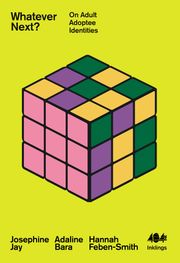
  • Whatever Next? On Adult Adoptee Identities

    Josephine Jay

    2022 · 1 review

    Others: Positive

    For adoptees, the word ‘lucky’ gets thrown around a lot. They’re regularly told they’re lucky to not be in an orphanage, lucky to have been brought into a family, lucky to be adopted at all. Often they’re depicted in media as being broken, in need of saving and fixing. Then they’re expected to become the hero of their own journeys and overcome their origins. Whatever Next? considers how these traditional narratives surrounding adoption have both dominated and damaged adoptive communities for many years, and what we should do to avoid these pitfalls. Inspired by the conversations within their Whatever Next? community project, Jo, Addie and Hannah explore the key tropes that adoptees grapple with and how these conversations are evolving, with the goal of kickstarting new dialogues around the adoption experience more broadly, and showcase how beneficial shared discussion can be.

    Why?

    What made the match, strongest first

    Also nonfiction
    87%
    Similar descriptions
    13%
    Personalize your recommendations
  • Myths of China

    Xiaobing Wang

    2024 · 1 review

    Others: Positive

    Delve into a world of magical creatures, powerful gods and brave warriors in this thrilling compendium of ancient Chinese myths. With 20 exciting tales alongside fascinating historical information, this is a must-have introduction for young readers intrigued by the ancient civilization of China. From the creation of the world to the first emperors, this book charts the full sweep of ancient Chinese mythology, revealing fascinating elements of culture and religion along the way. The enthralling stories introduce mighty gods and mischievous creatures, while a handy reference section is packed with information about the ancient Chinese people themselves. Learn why the Chinese New Year is celebrated with lots of noise, how Yi the Archer shot down nine suns shining in the sky, and how the Chinese zodiac began. It's time to ride on the back of a Chinese dragon, cross the Milky Way on the bridge of magpies, and join the Jade Rabbit on the Moon. This book brings the world of ancient China to life and is the perfect gift for children who love history and mythology.

    Why?

    What made the match, strongest first

    Also nonfiction
    88%
    Similar descriptions
    12%
    Personalize your recommendations

Reviews1

Loved it

the history and origins of consciousness by Eric nyman was a student of Carl Young this book is an enormous theory of the stages of Consciousness and how it manifests in the individual as well as a collective exploring how the stages have manifested in symbols myths archetypes and religions heavy stuff but wonderful it seemed to have been an enormous undertaking definitely essential reading if you're into analytical psychology incredible that he was just able to construct it into a coherent Theory you know