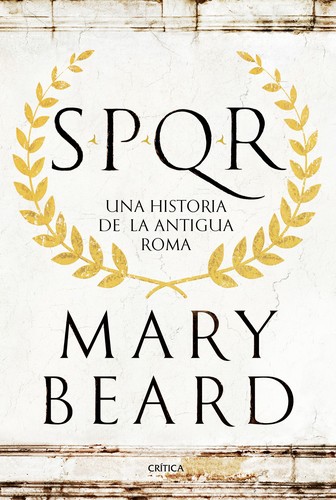

 Loved it
this is a history of ancient rome and a really fascinating one too and one of the things that i really like about spqr is that mary beard talks a lot about social and economic history
Review 1 of 2
Others: Positive "Ancient Rome matters. Its history of empire, conquest, cruelty and excess is something against which we still judge ourselves. Its myths and stories - from Romulus and Remus to the Rape of Lucretia - still strike a chord with us. And its debates about citizenship, security and the rights of the individual still influence our own debates on civil liberty today. SPQR is a new look at Roman history from one of the world's foremost classicists. It explores not only how Rome grew from an insignificant village in central Italy to a power that controlled territory from Spain to Syria, but also how the Romans thought about themselves and their achievements, and why they are still important to us. Covering 1,000 years of history, and casting fresh light on the basics of Roman culture from slavery to running water, as well as exploring democracy, migration, religious controversy, social mobility and exploitation in the larger context of the empire, this is a definitive history of ancient Rome. SPQR is the Romans' own abbreviation for their state: Senatus Populusque Romanus, 'the Senate and People of Rome'"--Jacket.
Lists: …
Robert Harris
2009 · 464 pages · 1 review
Others: PositiveThe year is 63 BC. In an age of political titans, Cicero stands supreme: the senior consul of the Roman republic. But jealous rivals are determined to destroy him and seize control of the state. To thwart them will take all his guile - and will lead him, and Rome, to the brink of destruction.
What made the match, strongest first
Emma Southon
2020 · 320 pages · 1 review
Others: PositiveIn Ancient Rome all the best stories have one thing in common - murder. Romulus killed Remus to found the city; Caesar was assassinated to save the Republic. Caligula was butchered in the theatre, Claudius was poisoned at dinner and Galba was beheaded in the forum. In one fifty-year period, twenty-six emperors were murdered. But what did killing mean in a city where gladiators fought to the death to sate a crowd? Emma Southon examines real-life homicides from Roman history to explore how perpetrator, victim and the act itself were regarded by ordinary people. Inside Ancient Rome's unique culture of crime and punishment, we see how the Romans viewed life, death, and what it means to be human.
Jane Draycott
2025 · 296 pages · 2 reviews
Others: PositiveThe charismatic Fulvia amassed a degree of military and political power that was unprecedented for a woman in Ancient Rome. Married three times to men who moved in powerful circles, including Marc Antony, Fulvia was not content to play the usual background role that was expected of a wife - instead she challenged the Roman patriarchy and sought to increase her influence in the face of determined opposition. It's rare to know so much about a particular Roman woman, but Fulvia was so despised by her male detractors that she was much written about. Acclaimed historian Jane Draycott has used original sources to piece together Fulvia's life and sort fact from fiction, while also exploring the role of women in Roman society. Set during the chaotic period when Rome was violently transitioning from a republic to the dictatorship of the Roman Empire, this is an original and fascinating take on an endlessly popular period of history.
Emma Southon
2023 · 1 review
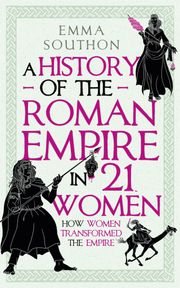
Others: PositiveHere’s how the history of the Roman Empire usually goes… We start with Romulus, go on to Brutus overthrowing Tarquin, bounce through an appallingly tedious list of battles and generals and consuls, before emerging into the political stab-fest of the late Republic. From there, it runs through all the emperors, occasionally mentioning a wife or mother to show how bad things get when women get out of control, until Constantine invents Christianity and then Attila the Hun comes and ruins everything. But the history of Rome and empire is so much more than these Important Things. In this alternative history, Emma Southon traces the story of the Roman Empire through women: Vestal Virgins and sex workers, business owners and poets, martyrs and saints. Each gives a different perspective on women’s lives and how they changed, across time and across class lines.
Orlando Figes
1996 · 923 pages · 2 reviews
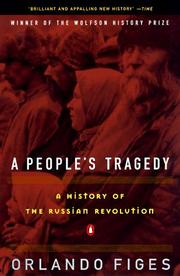
Others: PositiveIt is a history on an epic yet human scale. Orlando Figes provides a panorama of Russian society on the eve of the revolution, and then narrates the story of how these social forces were violently suppressed. Within the broad strokes of war and revolution are miniature histories of individuals - pieced together from their private writings - in which Figes follows the main players' fortunes as they saw their hopes die and their world crash into ruins. There is the patriotic general Brusilov, the progressive peasant Semenov, the critical socialist Maxim Gorky...individuals whose lives collapsed under the weight of history. Thus develops a remarkable and unique perspective on what is considered by some to be the century's most important event. Figes depicts the revolution as a tragedy - both for the Russians as a people and for so many individuals whose lives became caught up in the storm. Yet he also shows that the major social forces - the peasantry, the workers, the soldiers, and the subject people of the empire - were not just the victims of the Bolsheviks but also actors in their own complex revolutionary tragedies. Figes argues that the failure of democracy in 1917 was deeply rooted in Russian culture and social history and that what had begun as a people's revolution contained the seeds of its degeneration into violence and dictatorship.
What made the match, strongest first
Holly Furneaux
2009 · 293 pages · 2 reviews
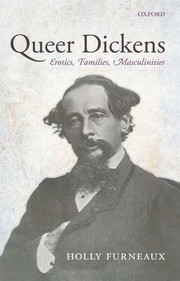
Others: Positive"This book offers a radically new reading of Dickens and his major works. It demonstrates that, rather than representing a largely conventional, conservative view of sexuality and gender, he presents a distinctly queer corpus, everywhere fascinated by the diversity of gender roles, the expandability of notions of the family, and the complex multiplicity of sexual desire. The book examines the long overlooked figures of bachelor fathers, maritally resistant men, and male nurses. It explores Dickens's attention to a longing, not to reproduce, but to nurture, his interest in healing touch, and his articulation, over the course of his career, of homoerotic desire." "Holly Furneaux places Dickens's writing in a broad literary and social context, alongside authors including Bulwer-Lytton, Tennyson, Braddon, Collins, and Whitman, to make a case for Dickens's central position in queer literary history. Examining novels, poetry, life-writing, journalism, and legal and political debates, Queer Dickens argues that this eminent Victorian can direct us to the ways in which his culture could, and did, comfortably accommodate homoeroticism and families of choice. Further, it contends that Dickens's portrayals of nurturing masculinity and his concern with touch and affect between men challenge what we have been used to thinking about Victorian ideals of maleness." "Queer Dickens intervenes in current debates about the Victorians (neither so punitive nor so prudish as we once imagined) and about the methodologies of the histories of the family and of sexuality. It makes the case for a more optimistic, nurturing, and life-affirming trajectory in queer theory."--Jacket.
What made the match, strongest first
Loved itthis is a history of ancient rome and a really fascinating one too and one of the things that i really like about spqr is that mary beard talks a lot about social and economic history