

 Loved it
they're very dramatic very exciting absolutely gripping a wonderful series
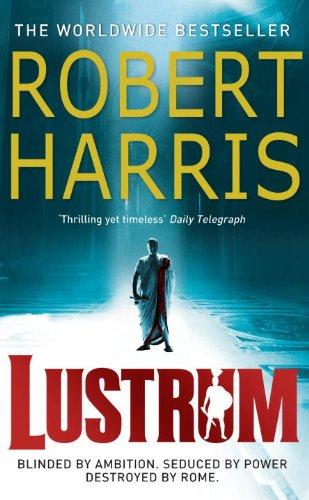
Others: Positive The year is 63 BC. In an age of political titans, Cicero stands supreme: the senior consul of the Roman republic. But jealous rivals are determined to destroy him and seize control of the state. To thwart them will take all his guile - and will lead him, and Rome, to the brink of destruction.
Genres: historical fiction
Lists: …
Robert Harris
2006 · 384 pages · 1 review
Others: PositiveBook #1 in The Cicero Trilogy. Historical fiction about the legal and political intrigues of the Roman statesman, Cicero, as told by his slave and secretary, Tiro.
What made the match, strongest first
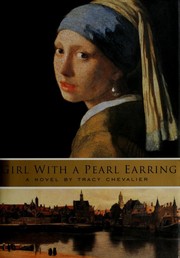
Tracy Chevalier
1999 · 252 pages · 2 reviews
Others: PositiveThis book "centres on Vermeer's prosperous household in Delft in the 1660s. The appointment of the quiet, perceptive heroine of the novel, the servant Griet, gradually throws the household into turmoil as Vermeer and Griet become increasingly intimate, an increasingly tense situation that culminates in her working for Vermeer as his assistant, and ultimately sitting for him as a model. Chevalier deliberately cultivates a limpid, painstakingly observed style in homage to Vermeer, and the complex domestic tensions of the Vermeer household are vividly evoked, from the jealous, vain, young wife to the wise, taciturn mother-in-law. At times the relationship between servant and master seems a little anachronistic, but Girl with a Pearl Earring does contain a final delicious twist in its tail."--Product description.
What made the match, strongest first
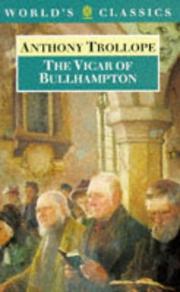
Anthony Trollope
1869 · 527 pages · 2 reviews
Others: PositiveFrank Fenwick, the vicar of the title and a likeable and energetic clergyman, sets out to prove a young man's innocence in a murder and to prevent the eviction of a prostitute from her home. Choosing a prostitute as a central female character, Trollope addresses a topical question of his time: how women should maintain due and proper regard for themselves without adopting either the manners of a prostitute or the political excesses of a feminist.
What made the match, strongest first
Andrea Levy
2004 · 448 pages · 2 reviews
 Others: Overwhelmingly positive
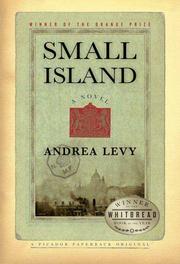
The story of Small Island revolves around four characters, Hortense, Gilbert, Queenie and Bernard. They are two couples, one white Queenie and Bernard and one Black, Hortense and Gilbert. The novel is narrated in the perspective of these four characters. Plot is set in England of 1948. Gilbert is a soldier in Royal force from Jamaica. He is living in a small room in the house owned by Queenie. The story starts with queenie, her perceptions and thoughts about her own life. Her husband is sent overseas during the war and hasn’t returned yet. Then the story shifts to Hortense , the lady always wanted to leave her ‘small island’ and reside in British isle as it was a ‘large’ one. She set out for England with plenty of expectations and wishes but is disappointed with her new groom and his state of living. Later the plot shifts from Gilbert to Bernard dealing with many issues of race and identity.
What made the match, strongest first
Charlotte Brontë
1800 · 603 pages · 3 reviews
Others: Overwhelmingly positiveShirley, published in 1849, was Charlotte Brontë’s second novel after Jane Eyre. Published under her pseudonym of “Currer Bell,” it differs in several respects from that earlier work. It is written in the third person with an omniscient narrator, rather than the first-person of Jane Eyre, and incorporates the themes of industrial change and the plight of unemployed workers. It also features strong pleas for the recognition of women’s intellect and right to their independence of thought and action. Set in the West Riding of Yorkshire during the Napoleonic period of the early 19th Century, the novel describes the confrontations between textile manufacturers and organized groups of workers protesting the introduction of mechanical looms. Three characters stand out: Robert Moore, a mill-owner determined to introduce modern methods despite sometimes violent opposition; his young cousin Caroline Helstone, who falls deeply in love with Robert; and Shirley Keeldar, a rich heiress who comes to live in the estate of Fieldhead, on whose land Robert’s mill stands. Robert’s business is in trouble, not so much because of the protests of the workers but because of a government decree which prevents him selling his finished cloth overseas during the duration of the war with Napoleon. He receives a loan from Miss Keeldar, and her interest in him seems to be becoming a romantic one, much to the distress of Caroline, who pines away for lack of any sign of affection from Robert. Shirley Keeldar is a remarkable female character for the time: strong, very independent-minded, dismissive of much of the standard rules of society, and determined to decide on her own future. Interestingly, up to this point, the name “Shirley” was almost entirely a male name; Shirley’s parents had hoped for a boy. Such was the success of Brontë’s novel, however, that it became increasingly popular as a female name and is now almost exclusively so. Although never as popular or successful as the more classically romantic Jane Eyre, Shirley is nevertheless now highly regarded by critics.
What made the match, strongest first
Pascal Quignard
2016 · 128 pages · 2 reviews
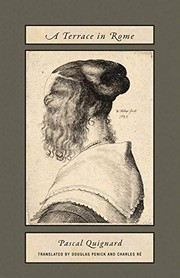
Others: PositiveA Terrace in Rome describes the tormented life of Geoffroy Meaume, a 17th-century engraver of encrypted shadows and erotic prints. After a passionate affair in his youth concludes with his face being burned by acid thrown by his lover's jealous fiancé, Meaume undertakes a lifetime of wandering, his psyche forever engraved by the memory of the woman who spurned him. With a face of boiled leather and a mind haunted by a nightmare of desire, he devotes himself to the black-and-white world of etchings and mezzotints, forsaking the paradise of color to engage in a science of shadows. This fragmented narrative of a man attacked by images is related in 47 short chapters which themselves act as engravings; a tale told by an antiquarian, full of fragmented vision and sexual hell. First published in French in 2000, A Terrace in Rome received the Grand Prix du Roman de l'Académie Française that same year, and went on to be translated into 19 languages. This is its first appearance in English. Pascal Quignard (born 1948) has written over 60 books of fiction, essays, and his own particular genre of philosophical reflection that straddles the personal journal, historical narrative and poetic theory. His books in English include Albucius, All the World's Mornings, The Sexual Night, Sex and Terror, On Wooden Tablets: Apronenia Avitia, and The Salon in Wurttemberg, as well as the multiple volumes of his ongoing book project The Last Kingdom, which, to date, includes The Roving Shadows, The Silent Crossing and Abysses.
What made the match, strongest first
Loved itthey're very dramatic very exciting absolutely gripping a wonderful series