

 Loved it
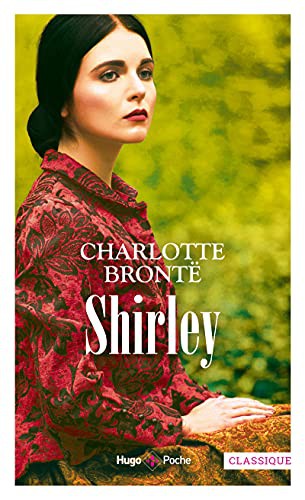
There is a lot of Charlotte Brontë that I don't like, but obviously Charlotte Brontë also is Shirley, which is one of my favorite books of all time.
Review 1 of 2
 Others: Overwhelmingly positive
Shirley, published in 1849, was Charlotte Brontë’s second novel after Jane Eyre. Published under her pseudonym of “Currer Bell,” it differs in several respects from that earlier work. It is written in the third person with an omniscient narrator, rather than the first-person of Jane Eyre, and incorporates the themes of industrial change and the plight of unemployed workers. It also features strong pleas for the recognition of women’s intellect and right to their independence of thought and action. Set in the West Riding of Yorkshire during the Napoleonic period of the early 19th Century, the novel describes the confrontations between textile manufacturers and organized groups of workers protesting the introduction of mechanical looms. Three characters stand out: Robert Moore, a mill-owner determined to introduce modern methods despite sometimes violent opposition; his young cousin Caroline Helstone, who falls deeply in love with Robert; and Shirley Keeldar, a rich heiress who comes to live in the estate of Fieldhead, on whose land Robert’s mill stands. Robert’s business is in trouble, not so much because of the protests of the workers but because of a government decree which prevents him selling his finished cloth overseas during the duration of the war with Napoleon. He receives a loan from Miss Keeldar, and her interest in him seems to be becoming a romantic one, much to the distress of Caroline, who pines away for lack of any sign of affection from Robert. Shirley Keeldar is a remarkable female character for the time: strong, very independent-minded, dismissive of much of the standard rules of society, and determined to decide on her own future. Interestingly, up to this point, the name “Shirley” was almost entirely a male name; Shirley’s parents had hoped for a boy. Such was the success of Brontë’s novel, however, that it became increasingly popular as a female name and is now almost exclusively so. Although never as popular or successful as the more classically romantic Jane Eyre, Shirley is nevertheless now highly regarded by critics.
Genres: historical fiction
Lists: …
Gill Hornby
2020 · 400 pages · 4 reviews
Others: Overwhelmingly positiveWhat made the match, strongest first
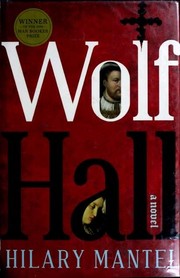
Hilary Mantel
2009 · 653 pages · 7 reviews
 Others: Mixed
Wolf Hall (2009) is a historical novel by English author Hilary Mantel, published by Fourth Estate, named after the Seymour family's seat of Wolfhall, or Wulfhall, in Wiltshire. Set in the period from 1500 to 1535, Wolf Hall is a sympathetic fictionalised biography documenting the rapid rise to power of Thomas Cromwell in the court of Henry VIII through to the death of Sir Thomas More. The novel won both the Man Booker Prize and the National Book Critics Circle Award. In 2012, The Observer named it as one of "The 10 best historical novels". The book is the first in a trilogy; the sequel Bring Up the Bodies was published in 2012. The last book in the trilogy is The Mirror and the Light (2020), which covers the last four years of Cromwell's life.
What made the match, strongest first
Wu Cheng'en
1900 · 306 pages · 1 review
Others: PositiveProbably the most popular book in the history of the Far East, this classic combination of picaresque novel and folk epic mixes satire, allegory, and history into a rollicking tale. It is the story of the roguish Monkey and his encounters with major and minor spirits, gods, demigods, demons, ogres, monsters, and fairies.
What made the match, strongest first
Anthony Trollope
1869 · 527 pages · 2 reviews
Others: PositiveFrank Fenwick, the vicar of the title and a likeable and energetic clergyman, sets out to prove a young man's innocence in a murder and to prevent the eviction of a prostitute from her home. Choosing a prostitute as a central female character, Trollope addresses a topical question of his time: how women should maintain due and proper regard for themselves without adopting either the manners of a prostitute or the political excesses of a feminist.
What made the match, strongest first
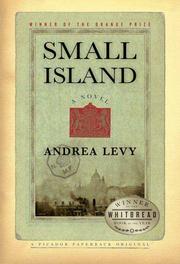
Andrea Levy
2004 · 448 pages · 2 reviews
Others: Overwhelmingly positiveThe story of Small Island revolves around four characters, Hortense, Gilbert, Queenie and Bernard. They are two couples, one white Queenie and Bernard and one Black, Hortense and Gilbert. The novel is narrated in the perspective of these four characters. Plot is set in England of 1948. Gilbert is a soldier in Royal force from Jamaica. He is living in a small room in the house owned by Queenie. The story starts with queenie, her perceptions and thoughts about her own life. Her husband is sent overseas during the war and hasn’t returned yet. Then the story shifts to Hortense , the lady always wanted to leave her ‘small island’ and reside in British isle as it was a ‘large’ one. She set out for England with plenty of expectations and wishes but is disappointed with her new groom and his state of living. Later the plot shifts from Gilbert to Bernard dealing with many issues of race and identity.
What made the match, strongest first
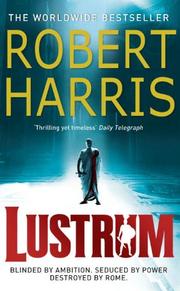
Robert Harris
2009 · 464 pages · 1 review
Others: PositiveThe year is 63 BC. In an age of political titans, Cicero stands supreme: the senior consul of the Roman republic. But jealous rivals are determined to destroy him and seize control of the state. To thwart them will take all his guile - and will lead him, and Rome, to the brink of destruction.
What made the match, strongest first
Loved itThere is a lot of Charlotte Brontë that I don't like, but obviously Charlotte Brontë also is Shirley, which is one of my favorite books of all time.
Loved itShirley is another great book and one I would highly recommend. It's a bit more industrial than the rest of Brontë's novels which is really interesting, and it's a really interesting book very interesting in terms of gender.