
 Loved it
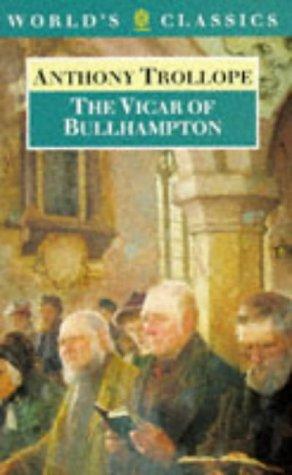
I think The Vicar of Bullhampton is fantastic, would highly recommend it. I also think it's a very like quintessentially Anthony Trollope book.
Review 1 of 2
Others: Positive Frank Fenwick, the vicar of the title and a likeable and energetic clergyman, sets out to prove a young man's innocence in a murder and to prevent the eviction of a prostitute from her home. Choosing a prostitute as a central female character, Trollope addresses a topical question of his time: how women should maintain due and proper regard for themselves without adopting either the manners of a prostitute or the political excesses of a feminist.
Genres: historical fiction
Lists: …
Tsitsi Dangarembga
1988 · 204 pages · 1 review
Others: PositiveThis is a book about the oppression of women by men.Men in a society have more rights than women and the women have to succumb to anything that men say.It also touches on religion and explains the roles of men and women.It also tells us about a young lady 'Nyasha" who left her home with her prents for England and went through a process called ASSIMILATION,which means that he suffered cultural schizophrenia.
What made the match, strongest first
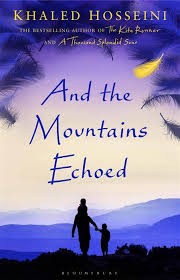
Khaled Hosseini
2013 · 446 pages · 2 reviews
 Others: Overwhelmingly positive
Presents a story inspired by human love, how people take care of one another, and how choices resonate through subsequent generations. Afghanistan, 1952. Abdullah and his sister Pari live with their father and step-mother in the small village of Shadbagh. Their father, Saboor, is constantly in search of work and they struggle together through poverty and brutal winters. To Adbullah, Pari, as beautiful and sweet-natured as the fairy for which she was named, is everything. What happens to them-and the large and small manners in which it echoes through the lives of so many other people-is proof of the moral complexity of life. This story begins in 1952 Afghanistan with two motherless siblings and moves through complex relationships and generations to the United States, Paris, and Greece, weaving a story of commitment, love, honor, and sacrifice. The plot contains violence.
What made the match, strongest first
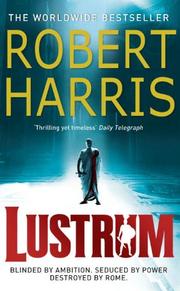
Robert Harris
2006 · 384 pages · 1 review
Others: PositiveBook #1 in The Cicero Trilogy. Historical fiction about the legal and political intrigues of the Roman statesman, Cicero, as told by his slave and secretary, Tiro.
What made the match, strongest first
Robert Harris
2009 · 464 pages · 1 review
Others: PositiveThe year is 63 BC. In an age of political titans, Cicero stands supreme: the senior consul of the Roman republic. But jealous rivals are determined to destroy him and seize control of the state. To thwart them will take all his guile - and will lead him, and Rome, to the brink of destruction.
What made the match, strongest first
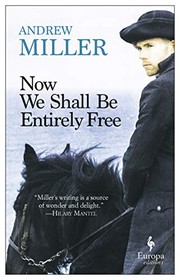
Andrew Miller
2018 · 432 pages · 3 reviews
Others: PositiveOne rain-swept February night in 1809, an unconscious man is carried into a house in Somerset. He is Captain John Lacroix, home from Britain's disastrous campaign against Napoleon's forces in Spain. Gradually Lacroix recovers his health, but not his peace of mind - he cannot talk about the war or face the memory of what happened in a village on the gruelling retreat to Corunna. After the command comes to return to his regiment, he sets out instead for the Hebrides, with the vague intent of reviving his musical interests and collecting local folksongs. Lacroix sails north incognito, unaware that he has far worse to fear than being dragged back to the army: a vicious English corporal and a Spanish officer are on his trail, with orders to kill. The haven he finds on a remote island with a family of free-thinkers and the sister he falls for are not safe, at all.--Provided by publisher.
What made the match, strongest first
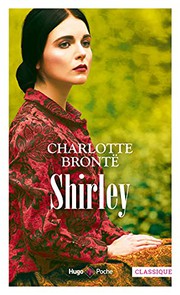
Charlotte Brontë
1800 · 603 pages · 3 reviews
Others: Overwhelmingly positiveShirley, published in 1849, was Charlotte Brontë’s second novel after Jane Eyre. Published under her pseudonym of “Currer Bell,” it differs in several respects from that earlier work. It is written in the third person with an omniscient narrator, rather than the first-person of Jane Eyre, and incorporates the themes of industrial change and the plight of unemployed workers. It also features strong pleas for the recognition of women’s intellect and right to their independence of thought and action. Set in the West Riding of Yorkshire during the Napoleonic period of the early 19th Century, the novel describes the confrontations between textile manufacturers and organized groups of workers protesting the introduction of mechanical looms. Three characters stand out: Robert Moore, a mill-owner determined to introduce modern methods despite sometimes violent opposition; his young cousin Caroline Helstone, who falls deeply in love with Robert; and Shirley Keeldar, a rich heiress who comes to live in the estate of Fieldhead, on whose land Robert’s mill stands. Robert’s business is in trouble, not so much because of the protests of the workers but because of a government decree which prevents him selling his finished cloth overseas during the duration of the war with Napoleon. He receives a loan from Miss Keeldar, and her interest in him seems to be becoming a romantic one, much to the distress of Caroline, who pines away for lack of any sign of affection from Robert. Shirley Keeldar is a remarkable female character for the time: strong, very independent-minded, dismissive of much of the standard rules of society, and determined to decide on her own future. Interestingly, up to this point, the name “Shirley” was almost entirely a male name; Shirley’s parents had hoped for a boy. Such was the success of Brontë’s novel, however, that it became increasingly popular as a female name and is now almost exclusively so. Although never as popular or successful as the more classically romantic Jane Eyre, Shirley is nevertheless now highly regarded by critics.
What made the match, strongest first
Loved itI think The Vicar of Bullhampton is fantastic, would highly recommend it. I also think it's a very like quintessentially Anthony Trollope book.