

 Loved it
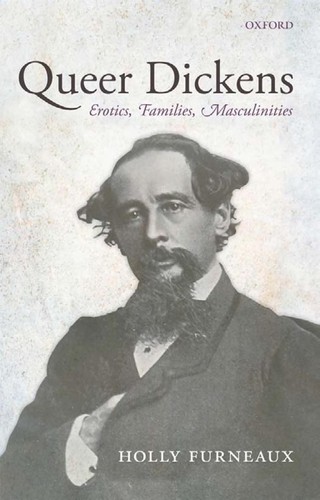
this is a really fascinating book which uses queer theory to examine charles dickens's work partly looking at how there are various characters within dickens work who you can read as being gay or bisexual
Review 1 of 2
Others: Positive "This book offers a radically new reading of Dickens and his major works. It demonstrates that, rather than representing a largely conventional, conservative view of sexuality and gender, he presents a distinctly queer corpus, everywhere fascinated by the diversity of gender roles, the expandability of notions of the family, and the complex multiplicity of sexual desire. The book examines the long overlooked figures of bachelor fathers, maritally resistant men, and male nurses. It explores Dickens's attention to a longing, not to reproduce, but to nurture, his interest in healing touch, and his articulation, over the course of his career, of homoerotic desire." "Holly Furneaux places Dickens's writing in a broad literary and social context, alongside authors including Bulwer-Lytton, Tennyson, Braddon, Collins, and Whitman, to make a case for Dickens's central position in queer literary history. Examining novels, poetry, life-writing, journalism, and legal and political debates, Queer Dickens argues that this eminent Victorian can direct us to the ways in which his culture could, and did, comfortably accommodate homoeroticism and families of choice. Further, it contends that Dickens's portrayals of nurturing masculinity and his concern with touch and affect between men challenge what we have been used to thinking about Victorian ideals of maleness." "Queer Dickens intervenes in current debates about the Victorians (neither so punitive nor so prudish as we once imagined) and about the methodologies of the histories of the family and of sexuality. It makes the case for a more optimistic, nurturing, and life-affirming trajectory in queer theory."--Jacket.
Lists: …
Charles Dickens
1800 · 788 pages · 6 reviews
Others: PositiveUpon its publication in 1857, Little Dorrit immediately outsold any of Dickens's previous books. The story of William Dorrit, imprisoned for debt in Marshalsea Prison, and his daughter and helpmate, Amy, or Little Dorrit, the novel charts the progress of the Dorrit family from poverty to riches. In his Introduction, David Gates argues that "intensity of imagination is the gift from which Dickens's other great attributes derive: his eye and ear, his near-universal empathy, his ability to entertain both a sense of the ridiculous and a sense of ultimate significance.
What made the match, strongest first
Charles Dickens
1861 · 484 pages · 9 reviews
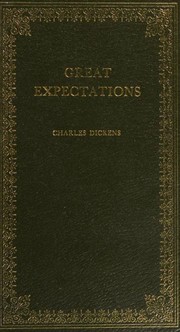
Others: Leaning positiveGreat Expectations is the thirteenth novel by Charles Dickens and his penultimate completed novel. It depicts the education of an orphan nicknamed Pip (the book is a bildungsroman; a coming-of-age story). It is Dickens' second novel, after David Copperfield, to be fully narrated in the first person. The novel was first published as a serial in Dickens's weekly periodical All the Year Round, from 1 December 1860 to August 1861. In October 1861, Chapman and Hall published the novel in three volumes. The novel is set in Kent and London in the early to mid-19th century and contains some of Dickens's most celebrated scenes, starting in a graveyard, where the young Pip is accosted by the escaped convict Abel Magwitch. Great Expectations is full of extreme imagery – poverty, prison ships and chains, and fights to the death – and has a colourful cast of characters who have entered popular culture. These include the eccentric Miss Havisham, the beautiful but cold Estella, and Joe, the unsophisticated and kind blacksmith. Dickens's themes include wealth and poverty, love and rejection, and the eventual triumph of good over evil. Great Expectations, which is popular both with readers and literary critics, has been translated into many languages and adapted numerous times into various media.
What made the match, strongest first
Truman Capote
1956 · 160 pages · 4 reviews
 Others: Overwhelmingly positive
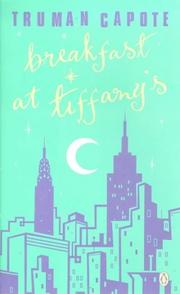
Published with three short stories this novella cemented Capote’s position at the forefront of American literature. It is the story of a friendship between New York neighbours, good time girl Holly Golightly and the unnamed male narrator.
What made the match, strongest first
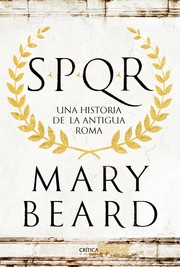
Mary Beard
2015 · 607 pages · 2 reviews
Others: Positive"Ancient Rome matters. Its history of empire, conquest, cruelty and excess is something against which we still judge ourselves. Its myths and stories - from Romulus and Remus to the Rape of Lucretia - still strike a chord with us. And its debates about citizenship, security and the rights of the individual still influence our own debates on civil liberty today. SPQR is a new look at Roman history from one of the world's foremost classicists. It explores not only how Rome grew from an insignificant village in central Italy to a power that controlled territory from Spain to Syria, but also how the Romans thought about themselves and their achievements, and why they are still important to us. Covering 1,000 years of history, and casting fresh light on the basics of Roman culture from slavery to running water, as well as exploring democracy, migration, religious controversy, social mobility and exploitation in the larger context of the empire, this is a definitive history of ancient Rome. SPQR is the Romans' own abbreviation for their state: Senatus Populusque Romanus, 'the Senate and People of Rome'"--Jacket.
What made the match, strongest first
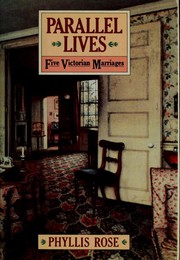
Phyllis Rose
1983 · 318 pages · 1 review
Others: PositiveIn her study of the married couple as the smallest political unit, Phyllis Rose uses the marriages of five Victorian writers who wrote about their own lives with unusual candor: Charles Dickens, John Ruskin, Thomas Carlyle, John Stuart Mill, and George Eliot--née Marian Evans.
What made the match, strongest first
Monica Dickens
1940 · 349 pages · 4 reviews
Others: Leaning positiveMonica Dickens's first book, published in 1940, could easily have been called Mariana - an Englishwoman. For that is what it is: the story of a young English girl's growth towards maturity in the 1930s. We see Mary at school in Kensington and on holiday in Somerset; her attempt at drama school; her year in Paris learning dressmaking and getting engaged to the wrong man; her time as a secretary and companion; and her romance with Sam.
What made the match, strongest first
Loved itthis is a really fascinating book which uses queer theory to examine charles dickens's work partly looking at how there are various characters within dickens work who you can read as being gay or bisexual