
 Loved it
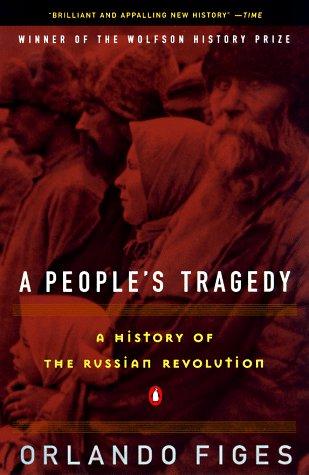
this is a history of the russian revolution which again is kind of focused on social history and specifically it takes i think it's five maybe six different people
Review 1 of 2
Others: Positive It is a history on an epic yet human scale. Orlando Figes provides a panorama of Russian society on the eve of the revolution, and then narrates the story of how these social forces were violently suppressed. Within the broad strokes of war and revolution are miniature histories of individuals - pieced together from their private writings - in which Figes follows the main players' fortunes as they saw their hopes die and their world crash into ruins. There is the patriotic general Brusilov, the progressive peasant Semenov, the critical socialist Maxim Gorky...individuals whose lives collapsed under the weight of history. Thus develops a remarkable and unique perspective on what is considered by some to be the century's most important event. Figes depicts the revolution as a tragedy - both for the Russians as a people and for so many individuals whose lives became caught up in the storm. Yet he also shows that the major social forces - the peasantry, the workers, the soldiers, and the subject people of the empire - were not just the victims of the Bolsheviks but also actors in their own complex revolutionary tragedies. Figes argues that the failure of democracy in 1917 was deeply rooted in Russian culture and social history and that what had begun as a people's revolution contained the seeds of its degeneration into violence and dictatorship.
Lists: …
Saara El-Arifi
2022 · 608 pages · 3 reviews
 Others: Overwhelmingly positive
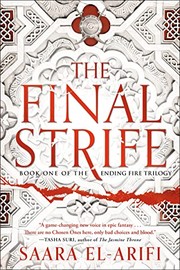
Red is the blood of the elite, of magic, of control. Blue is the blood of the poor, of workers, of the resistance. Clear is the blood of the slaves, of the crushed, of the invisible. Sylah dreams of days growing up in the resistance, being told she would spark a revolution that would free the empire from the red-blooded ruling classes’ tyranny. That spark was extinguished the day she watched her family murdered before her eyes. Anoor has been told she’s nothing, no one, a disappointment, by the only person who matters: her mother, the most powerful ruler in the empire. But when Sylah and Anoor meet, a fire burns between them that could consume the kingdom—and their hearts. Hassa moves through the world unseen by upper classes, so she knows what it means to be invisible. But invisibility has its uses: It can hide the most dangerous of secrets, secrets that can reignite a revolution. And when she joins forces with Sylah and Anoor, together these grains of sand will become a storm. As the empire begins a set of trials of combat and skill designed to find its new leaders, the stage is set for blood to flow, power to shift, and cities to burn. Book One of The Ending Fire Trilogy
What made the match, strongest first
Mary Beard
2015 · 607 pages · 2 reviews
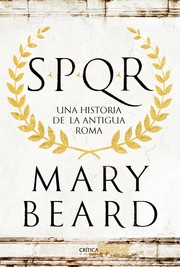
Others: Positive"Ancient Rome matters. Its history of empire, conquest, cruelty and excess is something against which we still judge ourselves. Its myths and stories - from Romulus and Remus to the Rape of Lucretia - still strike a chord with us. And its debates about citizenship, security and the rights of the individual still influence our own debates on civil liberty today. SPQR is a new look at Roman history from one of the world's foremost classicists. It explores not only how Rome grew from an insignificant village in central Italy to a power that controlled territory from Spain to Syria, but also how the Romans thought about themselves and their achievements, and why they are still important to us. Covering 1,000 years of history, and casting fresh light on the basics of Roman culture from slavery to running water, as well as exploring democracy, migration, religious controversy, social mobility and exploitation in the larger context of the empire, this is a definitive history of ancient Rome. SPQR is the Romans' own abbreviation for their state: Senatus Populusque Romanus, 'the Senate and People of Rome'"--Jacket.
What made the match, strongest first
Boris Pasternak
1940 · 542 pages · 2 reviews
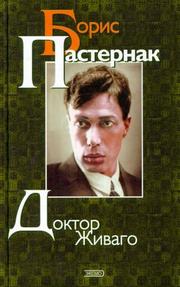
Others: PositiveThis epic tale about the effects of the Russian Revolution and its aftermath on a bourgeois family was not published in the Soviet Union until 1987. One of the results of its publication in the West was Pasternak's complete rejection by Soviet authorities; when he was awarded the Nobel Prize for Literature in 1958 he was compelled to decline it. The book quickly became an international best-seller. Dr. Yury Zhivago, Pasternak's alter ego, is a poet, philosopher, and physician whose life is disrupted by the war and by his love for Lara, the wife of a revolutionary. His artistic nature makes him vulnerable to the brutality and harshness of the Bolsheviks. The poems he writes constitute some of the most beautiful writing featured in the novel. --------- Doctor Zhivago, Boris Pasternak's only novel, is set between the early 1900s and World War II and contains complex plot lines and themes, including criticisms of the role of the government in the lives of citizens, and criticisms of the October Revolution and its aftermath. The book had been submitted for publication to Novyi Mir in 1956 and had been initially accepted, but at the last moment its publication was revoked by the authorities. However, a publisher in Milan had received a copy of the typescript from an Italian literary scout operating in Moscow and in 1957 the publisher, Giangiacomo Feltrinelli, released an Italian-language edition of Doctor Zhivago. The CIA, seeing the novel as a potent propaganda tool in the era of the Cold War, acquired a copy of the typescript in the original Russian in the summer of 1958. The agency promptly contacted the Dutch intelligence services which facilitated printing of the novel in the Hague with CIA funds to cover the print run. One thousand copies of the novel were published by Mouton Publishers but under Feltrinelli's imprint. The copies were distributed among CIA headquarters and Frankfurt, Berlin, Munich, London, Paris, and Brussels. In 1958 the first post-war World's Fair was held in Brussels with Soviet Union and United States building large exhibitions as part of the event. As the role of the United States in the publication of the novel could not have been compromised, the CIA turned to the Vatican pavilion to help distribute the books during the fair. The CIA considered the operation to be a great success. However, since a contract was never signed between the Dutch publisher and Feltrinelli, the latter was furious when he learned about the distribution of the novel in Brussels and threatened legal action. Mouton issued an apology and agreed to an "indemnity obligation" to print an additional five thousand copies for Feltrinelli Following the success of the first printing of the novel, the CIA decided to fund a second print run of seven thousand copies for individuals who would take them into the Soviet Union. Each of the copies was stamped as coming from the Societe d'Edition et d'Impression Mondiale, a nonexistent French publisher. Further deception was provided by a Russian emigre group in the distribution of the copies. Even though the scandal sparked interest and rumors, the involvement of the CIA in the publication of the novel was not confirmed until April, 2014.
What made the match, strongest first
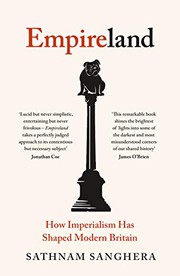
Sathnam Sanghera
2021 · 368 pages · 1 review
Others: PositiveIn his brilliantly illuminating new book Sathnam Sanghera demonstrates how so much of what we consider to be modern Britain is actually rooted in our imperial past. In prose that is, at once, both clear-eyed and full of acerbic wit, Sanghera shows how our past is everywhere: from how we live to how we think, from the foundation of the NHS to the nature of our racism, from our distrust of intellectuals in public life to the exceptionalism that imbued the campaign for Brexit and the government's early response to the Covid crisis. And yet empire is a subject, weirdly hidden from view. The British Empire ran for centuries and covered vast swathes of the world. It is, as Sanghera reveals, fundamental to understanding Britain. However, even among those who celebrate the empire there seems to be a desire not to look at it too closely - not to include the subject in our school history books, not to emphasize it too much in our favourite museums. At a time of great division, when we are arguing about what it means to be British, Sanghera's book urges us to address this bewildering contradiction. For, it is only by stepping back and seeing where we really come from, that we can begin to understand who we are, and what unites us. -- Provided by publisher.
What made the match, strongest first
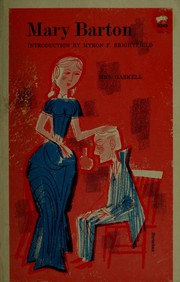
Elizabeth Gaskell
1848 · 429 pages · 3 reviews
Others: PositiveMary Barton, the daughter of disillusioned trade unionist, rejects her working-class lover Jem Wilson in the hope of marrying Henry Carson, the mill owner's son, and making a better life for herself and her father. But when Henry is shot down in the street and Jem becomes the main suspect, Mary finds herself painfully torn between the two men. Through Mary's dilemma, and the moving portrayal of her father, the embittered and courageous activist John Barton, Mary Barton (1848) powerfully dramatizes the class divides of the 'hungry forties' as personal tragedy. In its social and political setting, it looks towards Elizabeth Gaskell's great novels of the industrial revolution, in particular North and South.
What made the match, strongest first
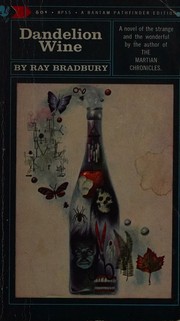
Ray Bradbury
1946 · 200 pages · 5 reviews
Others: Mostly positiveThe summer of '28 was a vintage season for a growing boy. A summer of green apple trees, mowed lawns, and new sneakers. Of half-burnt firecrackers, of gathering dandelions, of Grandma's belly-busting dinner. It was a summer of sorrows and marvels and gold-fuzzed bees. A magical, timeless summer in the life of a twelve-year-old boy named Douglas Spaulding—remembered forever by the incomparable Ray Bradbury. Dandelion Wine is unique amongst the works of the popular author Ray Bradbury, in that it provides us with perhaps the clearest insight into the thoughts and feelings of the author. The book was published in 1957, perhaps over twenty years after the era which it is about, thus providing an inevitable theme of nostalgia throughout the book. The principal character, Douglas Spalding, and his brother Tom, encounter a series of adventures which are described in a crafted and distinguished manner to provide a philosophical tone throughout the book. The narrative is enriched by the experiences of individuals such as Leo Auffman, who attempts (unsuccessfully) to construct a 'Happiness machine'. Overall, the book provides a nostalgic sense of childhood and an understanding of the beauty of the world and all its features; in this way, it appears to be Bradbury himself reminiscing on his past. Douglas has similar traits to those Bradbury has later in life identified in himself, strengthening this interpretation.
What made the match, strongest first
Loved itthis is a history of the russian revolution which again is kind of focused on social history and specifically it takes i think it's five maybe six different people