

 Loved it
i think is such a wonderful novel it's so well written it's so beautiful and so powerful
Review 1 of 2
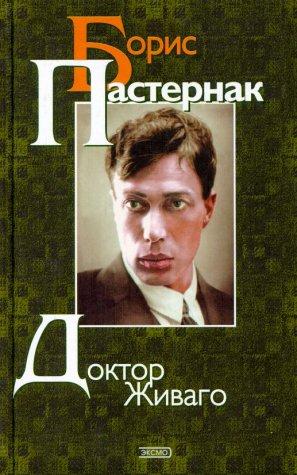
Others: Positive This epic tale about the effects of the Russian Revolution and its aftermath on a bourgeois family was not published in the Soviet Union until 1987. One of the results of its publication in the West was Pasternak's complete rejection by Soviet authorities; when he was awarded the Nobel Prize for Literature in 1958 he was compelled to decline it. The book quickly became an international best-seller. Dr. Yury Zhivago, Pasternak's alter ego, is a poet, philosopher, and physician whose life is disrupted by the war and by his love for Lara, the wife of a revolutionary. His artistic nature makes him vulnerable to the brutality and harshness of the Bolsheviks. The poems he writes constitute some of the most beautiful writing featured in the novel. --------- Doctor Zhivago, Boris Pasternak's only novel, is set between the early 1900s and World War II and contains complex plot lines and themes, including criticisms of the role of the government in the lives of citizens, and criticisms of the October Revolution and its aftermath. The book had been submitted for publication to Novyi Mir in 1956 and had been initially accepted, but at the last moment its publication was revoked by the authorities. However, a publisher in Milan had received a copy of the typescript from an Italian literary scout operating in Moscow and in 1957 the publisher, Giangiacomo Feltrinelli, released an Italian-language edition of Doctor Zhivago. The CIA, seeing the novel as a potent propaganda tool in the era of the Cold War, acquired a copy of the typescript in the original Russian in the summer of 1958. The agency promptly contacted the Dutch intelligence services which facilitated printing of the novel in the Hague with CIA funds to cover the print run. One thousand copies of the novel were published by Mouton Publishers but under Feltrinelli's imprint. The copies were distributed among CIA headquarters and Frankfurt, Berlin, Munich, London, Paris, and Brussels. In 1958 the first post-war World's Fair was held in Brussels with Soviet Union and United States building large exhibitions as part of the event. As the role of the United States in the publication of the novel could not have been compromised, the CIA turned to the Vatican pavilion to help distribute the books during the fair. The CIA considered the operation to be a great success. However, since a contract was never signed between the Dutch publisher and Feltrinelli, the latter was furious when he learned about the distribution of the novel in Brussels and threatened legal action. Mouton issued an apology and agreed to an "indemnity obligation" to print an additional five thousand copies for Feltrinelli Following the success of the first printing of the novel, the CIA decided to fund a second print run of seven thousand copies for individuals who would take them into the Soviet Union. Each of the copies was stamped as coming from the Societe d'Edition et d'Impression Mondiale, a nonexistent French publisher. Further deception was provided by a Russian emigre group in the distribution of the copies. Even though the scandal sparked interest and rumors, the involvement of the CIA in the publication of the novel was not confirmed until April, 2014.
Genres: romance, historical fiction, classics, poetry
Lists: …
Monica Dickens
1940 · 349 pages · 4 reviews
Others: Leaning positiveMonica Dickens's first book, published in 1940, could easily have been called Mariana - an Englishwoman. For that is what it is: the story of a young English girl's growth towards maturity in the 1930s. We see Mary at school in Kensington and on holiday in Somerset; her attempt at drama school; her year in Paris learning dressmaking and getting engaged to the wrong man; her time as a secretary and companion; and her romance with Sam.
What made the match, strongest first
Edith Wharton
1910 · 98 pages · 2 reviews
 Others: Overwhelmingly positive
Edith Wharton wrote Ethan Frome as a frame story — meaning that the prologue and epilogue constitute a "frame" around the main story How It All Goes Down It's winter. A nameless engineer is in Starkfield, Massachusetts on business and he first sees Ethan Frome at the post office. Ethan is a man in his early fifties who is obviously strong, and obviously crippled. The man becomes fascinated with Ethan and wants to know his story. When Ethan begins giving him occasional rides to the train station, the two men strike up a friendship. One night when the weather is particularly bad, Ethan invites the man to stay at his house. In the hall the man hears a woman talking angrily, on and on. When Ethan speaks, the voice stops. The man tells us that he learned something that night which allowed him to imagine Ethan's story. Now we go back in time 24 years and learn about Ethan's life. Ethan has walked from his farm and sawmill into town to pick up Mattie Silver from the church dance. He peeks in the windows of the church basement and sees Mattie dancing with Denis Eady and is jealous. Mattie is Ethan's wife's cousin. Her parents both died just over a year ago, and she was left with nothing. Her father had apparently swindled some of the relatives out of their savings, so nobody wanted to help Mattie. Zeena, Ethan's wife, is always sick, and decided to let Mattie live with them in exchange for doing the housework and helping the ailing Zeena. Ethan liked Mattie from the beginning and worried that Zeena was too hard on her. The two women soon adjusted to each other (sort of) and things weren't as bad as they could have been. Meanwhile, Ethan has fallen in love with Mattie and wants to spend all his time with her. Mattie soon comes out of the dance, and Ethan watches while Denis Eady tries to give her a ride home. She brushes him off and then Ethan reveals his presence. Ethan and Mattie are happy to see each other. They discuss possibly doing some sledding in the future. Neither is afraid to sled down the hill – at the bottom of which lies the deadly elm tree. The walk home is altogether lovely and romantic, but when they arrive, the house key isn't under the mat like it usually is. Soon, Zeena, looking ill and scary, comes downstairs and lets them in. She's usually in bed by this hour but she couldn't sleep. She is obviously suspicious of their behavior. The next day she announces that she will be gone overnight visiting a new doctor. Mattie and Ethan make good use of her absence and enjoy a romantic dinner for two. Unfortunately, the cat breaks Zeena's favorite dish and Ethan isn't able to locate any glue until after Zeena gets back. The first thing Zeena does when she gets home is to tell Ethan that she's kicking out Mattie. He protests, but fighting is useless. Then Zeena finds the broken pickle dish and is super upset (it had been a wedding gift). Ethan decides he'll run away with Mattie, but then a combination of lack of cash and guilt stop him. Still, he insists on driving Mattie to the train station. He takes her on the long route, so they can look at different places they enjoyed together. By the time they get to the town sledding hill, it's already dark. As they are contemplating sledding, and pondering the hopelessness of their situation, Mattie suggests that they sled into the elm tree and kill themselves. Ethan agrees and they smash into the tree. But they survive. Then the story goes back to the present and we find the engineer right where we left him, about to enter the Frome kitchen. When he does enter he learns that the woman who was talking on and on in an argumentative tone is…Mattie! She has spinal disease and can't move without assistance. Zeena is there too, cooking. They all three live together, an unhappy family in the Frome house.
What made the match, strongest first
E.M. Forster
1910 · 341 pages · 6 reviews
Others: Overwhelmingly positiveHowards End is a novel by E. M. Forster about social conventions, codes of conduct and relationships in turn-of-the-century England. A strong-willed and intelligent woman refuses to allow the pretensions of her husband's smug English family to ruin her life. Howards End is considered by some to be Forster's masterpiece
What made the match, strongest first
E.M. Forster
1971 · 256 pages · 4 reviews
Others: PositiveMaurice is a novel by E. M. Forster. A tale of homosexual love in early 20th-century England, it follows Maurice Hall from his schooldays through university and beyond. It was written in 1913–1914, and revised in 1932 and 1959–1960.
What made the match, strongest first
Charles Dickens
1800 · 822 pages · 12 reviews
Others: PositiveOur Mutual Friend is a satiric masterpiece about money. The last novel Dickens completed, and perhaps his most angry, it sounds all the great themes of his later work: the innocence and venality of the aspiring poor, the hollow pretensions of the nouveau riche, the unfailing power of wealth to corrupt everyone it touches. Among those caught up in the ruthless forces of change in Dickens's London are the archetypal innocent Noddy Boffin, who 'inherits' a dustheap where the trash of the rich is thrown; Silas Wegg, a grotesque, one-legged man with unlimited fantasies of grandeur and power; Mr. Veneering, Member of Parliament, whose house, furnishings, servants, carriage, and baby are all 'bran-new'; and Alfred and Sophronia Lammle, who marry one another because each wrongly believes the other is rich. The social themes of Our Mutual Friend--having to do with the treatment of the poor, education, representative government, even the inheritance laws--are informed and brought into coherence by the underlying presence of the Thames, signifying the perpetual flow of life into death, and acting as agent of retribution and regeneration too, as a kind of river god in fact, in a novel in which no other god is very present.
What made the match, strongest first
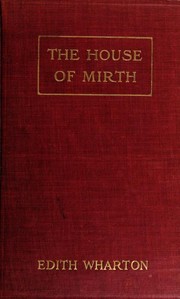
Edith Wharton
1905 · 348 pages · 5 reviews
Others: Overwhelmingly positiveBeautiful, intelligent, and hopelessly addicted to luxury, Lily Bart is the heroine of this Wharton masterpiece. But it is her very taste and moral sensibility that render her unfit for survival in this world.
What made the match, strongest first
Loved iti think is such a wonderful novel it's so well written it's so beautiful and so powerful